Page 1 of 1
There are currently 2 reader reviews for Master Slave Husband Wife
Write your own review!
 Cathryn_Conroy
This History Book Reads Like a Thriller: It Is a Captivating and Compelling Story of True Courage and Faith
Cathryn_Conroy
This History Book Reads Like a Thriller: It Is a Captivating and Compelling Story of True Courage and Faith
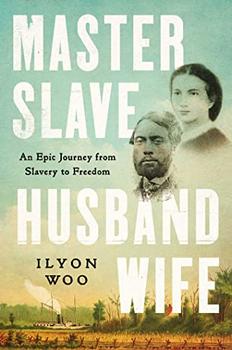
Extraordinary. Stupendous. Masterful. This is one of those history books that reads like a thriller that kept me on the edge of my seat even though I knew the outcome. To be able to write a page-turner history book says so much about the talents of author Ilyon Woo.
Beginning in December 1848, this is the true story of William and Ellen Craft, married slaves in Macon, Georgia, who in four days planned a most daring escape—something that belonged on the pages of a novel, not printed later as fact in newspapers. Ellen's skin color was so pale that she routinely passed for white. She was a small woman, while her husband was quite tall and dark-complected. The plan was masterful: Ellen, a talented seamstress, would dress as a wealthy young man in clothing she mostly made herself so it would fit. William, a skilled cabinetmaker, would be her trusted slave. She required his services because she feigned illness—her arm in a sling and her face partially covered with a scarf. She walked with a limp and leaned on William. The ruse was a trip to Philadelphia where physicians there might heal her. It took years, but the two had saved enough money for the trip, which required travel by train and ship, as well as walking. But it wasn't enough to look the part. For this bold plan to succeed, Ellen had to act and talk like a man—without ever slipping up.
William and Ellen Craft escaped slavery by hiding in plain sight.
How they pulled off this stunning feat while at so many times along their journey they could have been caught in this monstrous lie and returned to face horrific punishment, is what makes this such a thriller. And once they safely made it out of the South, they told their story. It was so extraordinary that it was picked up by newspapers, and that meant the folks back home in Macon found out what happened to these two missing slaves. The enslavers weren't happy about it and meant to get their property back. The thriller continues.
While this reads like a novel, author Ilyon Woo is quick to point out that every description, quotation, and line of dialogue comes from historic sources, including the Crafts' own written account of their quest for freedom. Find out the backstory of their enslavers, why the Crafts chose to escape when they did, and the small details that allowed them to pull it off, as well as the times when they almost failed. And even when the Crafts were safely in Boston, the Fugitive Slave Act of 1850 meant that anyone at any time could kidnap them and send them back to Macon. Danger stalked them at every turn; they were no longer safe anywhere in the United States. Best of all, find out about the life they created for themselves after they self-emancipated.
This exceptional book, the 2024 winner of the Pulitzer Prize in Biography, is truly an epic—a captivating and compelling story of true courage and an unshakable faith in God.
Anthony_Conty
How Did I Not Know about This?
"Master-Slave Husband Wife: An Epic Journey from Slavery to Freedom" by Ilyon Woo takes a topic many have written about but makes it fresh and new. William and Ellen Craft met through slavery yet wanted to reunite in freedom as a married couple. The light-skinned Ellen passes for White, and William plays the part of her loyal enslaved well enough.
How they pulled this off is the most exciting part of the early pages. In 1840, the "one drop" rule was in effect, and if Ellen even looked "a little black," it could endanger her. They travel through several states on several modes of transportation to the free spots, and nearby Aberdeen and Havre de Grace make an unexpected appearance.
The novel suffers a bit when it leaves the story of the Crafts to describe more about the politicking surrounding slavery in the mid-1800s since most experienced readers have heard the stories before. They were sometimes necessary, but most people are informed enough to know most of them.
The author speaks of Henry Clary and Frederick Douglass a great deal as they played roles in the emancipation process. The Crafts transitioned to activism and were the protagonists we knew little about before reading this. I wanted to know more about them. For that reason, any fault I found was with the writing, not the story itself. My history buff friends may have heard this story before.
William and Ellen Craft inspire us all since they found a way out when the world did not seem willing to give them that chance. Like most nonfiction writers, Woo researched tirelessly to provide a story that few history textbooks have touched. The 1840s, as a period of slavery, deserves more attention since people had to write their own rules even to sniff freedom.