
White Lies: How the South Lost the Civil War, Then Rewrote the History
by Ann Bausum
You May Not Agree, But You Must Read. (7/10/2026)
In a country where we tear down Confederate statues and also whitewash any history that reflects poorly on the United States of America, politics confuse me. Ann Bausum has no such problem. “White Lies: How the South Lost the Civil War, Then Rewrote the History” will tick people off who have learned to believe a certain version of historic events.
They say that you are doomed to repeat mistakes if you do not study them, and this theory that a repeated lie becomes a truth really hit home with me. Generations of people looked upon Confederates as heroes, which makes the re-teaching of the past more problematic, as films like “A Birth of a Nation” and monuments to Southern heroes prove.
Bausum has some tricks up her sleeve to make her novel different, following the lies of the Confederacy to the days of World War I and movies like “Birth of a Nation.” Since the beloved “Gone with the Wind” has endured cancellation on all sides, I enjoyed the author’s perspective on how that great work remains problematic.
The book examines history vs. propaganda, and many have chosen the version of the story that suits their political needs. Even those who supported the North had to rely on their own prejudices. The heritage vs. history debate drives the narrative, and most will not agree with all of the author’s assertions. The past is messy, complicated, and full of grey areas.
I always recommend books with caveats, and if you are firm in your opinion that we should celebrate Confederate heritage in public forums, you probably will disagree with this motif; that said, the anti-cancel culture crowd tends to deny that a large chunk of people feel this way and only notice the naysayers that support their stance. Bausum doesn’t care.
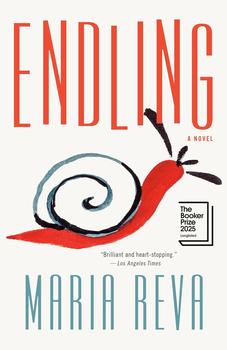
Endling: A Novel
by Maria Reva
Are We All the Last of Our Kind? (6/30/2026)
“Endling” refers to the last remaining member of a species. If that was not new information to you, I apologize, but I had no idea. Titles with double meanings rock! Maria Reva, a Ukrainian author, tells a unique tale of kidnapping, wartime suffering, and sisterhood that reads like nothing I have ever read. Ukraine is known for its sharp, biting wit.
You cannot set a novel in Ukraine in 2022 without the war becoming a character, even if the heist is the main story. Too much was going on then. The author makes an ambitious attempt at a faux-finis and ends the story on page 140, complete with acknowledgments and “About the Author,” leaving me confused about the remaining 198 pages.
One of the main characters is Pasha, a Canadian with good intentions who gets caught up in the hostage situation. The men obviously worry about themselves while focusing on the war as it relates to their nation and their individual selves. Some parts drag on, but readers will appreciate the marked chaos characteristic of a war-torn atmosphere.
Having relatives in Canada, Ukraine, and Russia gives you a multi-faceted perspective of the conflict. Few supported violence but appeared resigned to a long period of strife, making the rest background noise. Focusing more on the cultural and political aspects may have kept me more interested, since a misguided sub-plot at the end of the novel distracted me more than it added.
The ending is special and ties everything together, but if someone gave me a quiz on the third or fourth, I might fail. War today is unorganized chaos, and that led Reva to create little chaos that probably means more than my mind can process. Politics aside, it is hard to imagine normalcy, order, or calm in Ukraine right now.

Taiwan Travelogue: A Novel
by Shuang-zi Yang
They Need to Teach This in American Schools (6/21/2026)
Taiwan has an immense, rich history for a land the size of Maryland with a population about the same as Florida. You could spend forever on their relations with China and Japan. “Taiwan Travelogue” by Yang Shuang-zi focuses on a curious Japanese novelist in Taiwan who falls for her Taiwanese interpreter on a culture bus-esque trip around the island nation.
Although I expected to learn some things, I did not expect so much about food, leading me to realize that I know less about Japanese and Taiwanese cuisine than I previously thought. Luckily, like any worthy translator, King takes a lot of time to teach you new vocabulary, though those of average aptitude will need to look back a few times.
For about the third time this year, Goodreads spoiled a plot twist by naming a genre that would not apply unless “something” happens that did not even begin to occur by the middle of the novel. This did not detract from the cultural experience I enjoyed, but it does not allow the reader to discover things organically.
The most engaging parts take the form of dialogue, when you can really see the bizarre relationship between the two women evolve and devolve. Can you ever truly love your implied oppressor? Are conflicts between individuals and those between cultures often the same thing? With so much left unspoken, the risk of misunderstanding increases. A language barrier only exacerbates these difficult moments.
If you tend to skip over the author’s notes at the end of the book, I would recommend giving them a chance here. So many writers and translators kept this story alive, and I forgot that we were reading about real people. They do not teach us enough about Taiwan and Japan in school, and we would benefit from learning.

Legendary Frybread Drive-In: Intertribal Stories
by Cynthia Leitich Smith
A Community I Barely Knew (6/12/2026)
People sometimes interpret reading books from minority cultures as virtue signaling, but I see it as an essential way to genuinely learn about communities I wouldn't otherwise encounter. With only two personal interactions with Native Americans—both culturally involved and memorable—I turn to books like this, which centers on a Frybread Drive-In, as a way to connect with authentic voices through stories by prominent Native authors.
The selections are true YA as far as the characters are concerned, but a lot of deeper meaning hides here. The bonds formed at the Frybread Drive-In connect seemingly separate individuals across different tribes, revealing how their paths intersect. You will find various lengths of writing and even an intense dose of poetry by Kaua Mahoe Adams that will resonate with you if you have ever felt that your anxiety was too much.
As often happens with collections of multiple voices, the audiobook comes highly recommended. Among the selections, I particularly enjoyed Kaua Mahoe Adams’s verse and the heartfelt, simple emergency baking in Andrea L. Rogers’ “You Had One Job.” For those who have lost a loved one, “I Love You, Grandson” by Brian Young offers clear, poignant resonance.
Continuing with the standout stories, “Hearts Aflutter” by A.J. Eversole captures the nuances of young love and confusion, evoking the awkwardness of first dates between people not quite ready. In “Jilly Bean and Jessa Jean,” Angeline Boulley—author of “Firekeepers’ Daughter”—thoughtfully explores youth relationships, attuned to a generation’s challenges in forging connections.
Successfully creating a YA collection that allows readers to truly meet and understand a diverse community is rare. This book achieves that, making the whole greater than the sum of its parts and offering readers not just entertainment, but an introduction to voices they might otherwise miss.

Things in Nature Merely Grow
by Yiyun Li
Live for Yourself, Live for Others (6/3/2026)
The phrase “trigger warning” triggers people in opposite directions. Some think it represents the weak in society, while others shy away from any book that could conjure up unwanted memories. Author Yiyun Li tells people with preconceived notions about suicide to stop reading “Things in Nature Merely Grow” after the first 40 pages, repeating the phrase “There’s no easy way to say this.”
Lit attempted suicide in her youth, and she lost two sons to the same end. To subject anyone to this well-written, pathos-driven piece, you would need to know about their history. I, for one, classify this as I do “Schindler’s List” and “Saving Private Ryan” as a brilliant, emotional work that I may struggle to endure again.
Li has a lot of questions about grammar as it relates to the tragic loss of a child, but they are not the ones that you consider. Are you still a parent if you die or your kid does? These thoughts populate the mind of a grieving parent who needs to move on but must do so at her own pace.
The ending of one’s life brings about many philosophical questions that require deeper thought. Do people actually want to die or just for their pain to end? Is it selfish, even among those who feel like a burden to their loved ones? To answer that, we will say that there are no answers, only empathy for the suffering parents.
The fact that Li finishes this book in a way that not only affirms life but also teaches you why your life is worth living is nothing short of a miracle. I still recommend the novel with caution because I would not dare tell anyone how to grieve. I, for one, will remember that people are counting on my presence.

The Original: A Novel
by Nell Stevens
Long-Winded in Parts, but What an Ending! (5/26/2026)
In “The Original,” Nell Stevens transports you back to 1899 to meet a forger named Grace and a cousin, Charles, or at least a replica of him, giving the title a quirky double meaning. You will spend a lot of time trying to figure out what is going on, who is who, and what is what, but it is fun.
Charles, whoever he is, is a mysterious character, and Grace cares about him but worries about what he will do next. This takes the reader along for the extended ride. Stevens teaches us about art, portraiture, and sexual identity as Grace processes these ageless topics as well. How difficult was it to be yourself in the late 19th-century Great Britain?
I went for long periods without knowing what was going on, then found one part very interesting. The overarching story about Charles’s identity remained at the forefront of my mind. A major shift in the narrative occurs near the halfway point of the story, revitalizing it and marking a significant departure from what the flap describes as the main plot.
The true sign of a great, multi-story book is when you start worrying about the other when reading about the first. Without revealing anything, I will say that you need both for it all to make sense. Without limiting Stevens to a genre, it works best as a character study of Grace as we try to live as a copyist.
I will recommend the book for its beautiful imagery and interesting take on the LGBTQ community at the time, despite its lengthy stretches of inactivity testing my patience and interest. Not everyone will be patient enough to learn, but its ending is a doozy that brings the whole story together in a way that helps you appreciate each individual character.

Brownstone: A Heartwarming Coming-of-Age Tale of Self-Discovery and Found Family?a Printz Award Winner
by Samuel Teer
Kids are Resilient (5/16/2026)
“Brownstone” by Samuel Teer won the Michael Printz Award in 2025 for Excellence in Young Adult Literature, and for good reason: it is a family tale that keeps you engaged. It goes about as well as you would expect for an American child living with a father she never met for three months when that parent does not speak English.
This is the quick read to end all quick reads, with few words per page. Almudena somehow could learn to fix up a house more quickly than she learns Spanish. The language barrier plays a key role, but learners of all levels of Spanish should understand what is happening. These interactions could lend themselves to stereotypes, and Teer avoids them admirably.
Almudena has relatable qualities, and I respected her unique situation. An absentee father would not waltz easily back into someone’s stable life as a teenager and expect a warm welcome. That does not replace familial bonds. When someone with blood ties is hurt, you hurt as well. Family and neighborhood remain a key part of who the proud characters are.
Since Almudena’s living arrangement is atypical of literature, you have limited expectations for what will occur. I could not relate to the split-home arrangement, but I still had empathy. The idea of cultural pluralism is real: people want to recognize all their cultures, which makes them feel they belong to none and struggle with identity.
As a father of three, I have trouble sympathizing with an absentee father; that said, Xavier was a likable, hardworking character, and Alumdena learns a great deal from him during her brief stay. The ending left me sad and full of joy at the same time, with hope for the future. My students make broken families work, and something tells me they will, too.

Broken Country
by Clare Leslie Hall
You Think You Know, and Then...BOOM! (5/6/2026)
“Broken Country” by Claire Leslie Hall is obviously fiction, but the characters seem real. The murder of a dog sets events in motion, but another tragedy lurks around the corner. Since so much depends on “the twist,” book clubs across America will discuss how a romance faltered and altered the future for all involved. Do not limit this to one genre, though.
The 50s and 60s serve as the backdrop to love, loss, and death. A farming community in Great Britain provides all of the claustrophobia that you would expect. I personally connected with the complicated relationships within the family and their past. Learning about Beth and Gabriel, exes reunited, reminded me why my mental health would have faltered if I had stayed in my hometown.
Character Development is an easy target when critiquing a book, but it flows without notice when done correctly. Once the plot changes dramatically around the halfway point with adultery and death, I felt bad for everyone, even those who brought the conflict on themselves. The book’s structure helps with this, since the lack of a true genre ensures that you don’t know what to expect.
I am very anti-spoiler, so I will tread carefully. Hall has a big task here since I loathe any attempt to glorify adultery. It almost took me out of the novel. The twist was strong enough that I came back, as always, fooled by my expectations for similar stories.
The ending will sadden and satisfy you, and you will anticipate the resolution the way you would with any thriller worth its salt. It had just enough intrigue that I did not want to put it down. It has four confirmed curveballs for the read, but each one stayed true to who the people were and how they usually acted.

Wild Dark Shore: A Novel
by Charlotte McConaghy
Slow Burn and then...BAM! (4/26/2026)
People have accused me of loving every book, but I appreciate it when a 5-star novel reveals the true capability of thought-provoking fiction, like “Wild Dark Shore” by Charlotte McConaghy. The author sets the mystery in motion almost immediately, as a stranger washes up on a remote island that serves as a seed bank. We have a lot to learn after that basic premise.
This is the kind of story that would work well with a book club, as there are many details despite few characters, and people would pick up on different things. One friend even told me I missed out on the audiobook experience, since the multiple-narrator format made for a rich, engaging listen to those who tried.
The fact that Goodreads labels this as a thriller means that stuff is going to hit the fan in ways that you do not see coming near the halfway point. As with every genre, nonetheless, once you care about the characters, almost nothing else matters, even when you receive a foreshadowing hint that one of the characters is about to go bad.
The best novels do not hit you over the head with their lessons and messages but rather make you think about them. Relationships and loss carry much weight. You will learn a lot about life and familial love, and understand the hardest decisions you can make for your family’s well-being, even if you are alone on an island.
To get the full effect, I highly recommend reading the author’s note and acknowledgments to find the inspiration for some of the events. McConaghy is a family woman, and that seeps through in her writing. “Slow burn,” as a genre, will turn off some readers, but I promise a very big payoff. More happens in Shearwater than you would think.
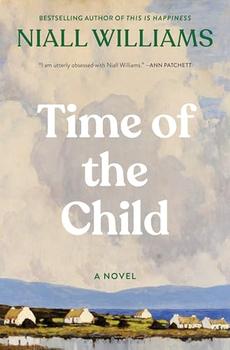
Time of the Child
by Niall Williams
Literary Fiction for the Uninitiated (4/16/2026)
“Time of the Child” by Niall Williams has a very slow start, establishing its universe in the fictional Irish town of Faha. The plot remains secondary to the quirky people. The story from the flap begins around page 60, so we learn a lot about the importance of a town doctor and a local priest in Ireland.
Faha is a congested town, both metaphorically and literally. They are struggling through their day-to-day and cannot handle much more, or so they think, until a baby randomly arrives and alters their routine. The importance of daily monotony in literary fiction lies in making the unexpected event have a greater effect on the fully developed characters the author has created.
I broke my own rule and asked AI a question when part of the plot confused me, and our imaginary friend had a lot of extra facts to share about symbolism for melancholy. Apparently, Williams wrote several metaphors about the birth of Christ and creationism that I missed at first glance, but they reminded me why I enjoyed Comparative Literature in college with guidance.
Goodreads categorized the novel as “literary fiction,” which the casual reader cannot differentiate from “fiction.” Williams greatly prioritizes a message over plot and events, which requires some patience in reading. The last act, the contents of which I will not reveal, covers many themes, including single motherhood, societal norms, and nature vs. nurture in families.
Full disclosure: I went for long periods without knowing what was going on and feared that the author would lose me. If you love children and recognize that bond between parent and child, however, the ending will move you. Daughter Ronnie is a well-developed character, and you will root for her, as you do all the great protagonists in literature,, and it will make sense.

Angel Down: A Novel
by Daniel Kraus
A Visceral, Non-Stop Experience (4/7/2026)
“Angel Down” by Daniel Kraus has a quirky style that may distract some. It technically consists of one continuous sentence, engaging some and leaving others struggling to take a break, but the action of World War I did not slow down for anyone, so I assume the whirlwind stream of consciousness is by design. Imagine “Saving Private Ryan” years ago.
Since the crew has to euthanize someone instead of saving them, it comes as more of a shock that the being is a heavenly creature, blurring the realistic/fantasy lines in most war literature. We descend into the surreal, as many tales of war violence do. The characters, days, and conflicts start to run together, making it unclear whether you'll enjoy the story.
The process is long, as they locate a spirit, suffer from in-fighting, and learn about themselves. War is hell, and authors have to come up with new ways to show us that. We experience death, wounds, and the overall bewilderment usually associated with the Great War. Adding the mystical only adds to the soldiers’ confusion about their roles.
Books with a late climax require the utmost patience, and Kraus rewards those who stick with him. You have to buy into the fantastical setting and go along for the ride. Is there really a resolution when we discover an entire world we didn’t acknowledge? If our goal is to illuminate the horrors of war, do we reveal anything new?
If you like a more visceral experience, give “Angel Down” a try. I spent long periods wondering what was going on, but the ending tied things together significantly. In a world where “Saving Private Ryan” has been remembered more than “The Thin Red Line,” we have to remember 1998, when the latter had significant supporters. This is why that happened.

The Invention of Charlotte Brontë: A New Life
by Graham Watson
Quite the Slice of Literary Life (3/29/2026)
“The Invention of Charlotte Brontë” is about true information. That makes it a biography, but it reads like fiction. Author Graham Watson takes on the tricky job of telling a story that so many already know. The 1830s were a fabulous time for art, and those of literary and theatre arts had a special relationship, and the Brontë family was at the forefront.
Brontë’s life had many “players” who appreciated her talent and brought their own skills to the table. They were intrigued by her and her disinclination toward romance. When she finally married, she came out of her shell and relished having someone care about her and take care of her. Arthur was not perfect, but perfect for her.
I feel guilty that the novel did not pick up for me until our heroine died. Everyone struggled to summarize her life and separate the gifted writer from the person. She was troubled and imperfect, and only the most unreasonable fans expected otherwise. Scholars and relatives alike tried to hide her skeletons from public consumption, unnecessary scrutiny, and unwanted attention.
Author Graham Watson faces quite a challenge in establishing a universe in which the Brontë family lived and died and in convincing readers to accept the results of Charlotte’s biography as an irrefutable fact. He paints some brilliant imagery along the way that makes me recommend this book, but only a true Brontë fan or history buff will appreciate it.
If biographies are your thing, read it. If “Jane Eyre” or “Wuthering Heights” rank among your favorites, put this on your TBR list. Watson has a knack for the English language and provides enough details about the literature to understand why this book is necessary. It is a quick read when you add up the notes and timelines from non-fiction.

Raising Hare: A Memoir
by Chloe Dalton
Why I Love Exotic Animals (3/20/2026)
The opening scenes in “Raising Hare” involve political advisor Chloe Dalton creating a habitat for a leveret, a one-year-old hare without a mother. The odds appeared stacked against her, and we root for success. I read critics that said there was “too much hare” in this book, but if you have ever connected with a baby animal, as we did with our hedgehogs, you will relate.
If you struggled to know that hares and rabbits were different (like me), their tendencies will be new to you, like their ability to conceive while already pregnant. They can also be flighty, but always return to the same spot eventually. This made Chloe’s life challenging as she plotted a return to the city. Could she abandon this lovely creature, and would it notice?
The attention to detail here, both in writing and in description of the animal, will impress you. Dalton obviously paid attention to the animal. The adventure begins when Dalton discovers the animal’s sex and realizes that more problems associated with caring for the animal are afoot, leading her to question her importance in the hare’s life.
Dalton achieves the most when describing the animal kingdom with the drama it deserves. When you develop an attachment, it seems unfair that one being serves as prey. The short lifespans of hares in the wild make this all the more dramatic, while scores of hares begin to appear around Dalton with varied results.
Considering that this is Dalton’s first novel, you have to tip your cap to her on her imagery here. You were right there in the fields in the English countryside. If you did not appreciate hares for their idiosyncrasies and role in the ecosystem, you will after reading “Raising Hare.” Those who have embraced exotic pets will remember their motivation.

All the Blues in the Sky
by Renée Watson
Grief is Good. (3/11/2026)
“But nothing can be as hard as referring to someone you love in the past tense.” Expressing grief is tough, but processing it through the eyes of a child is a slippery slope. As adults, we can only relate our shared experiences and hope to serve as the best mental health guides possible, even as we suffer on our own.
“All the Blues in the Sky” by Renee Watson thinks through things like a kid and reminds us that they are capable of more than we expect, especially as teachers. We teach children and provide support, such as grief groups, and know that they can do more harm than good in the short term, despite huge benefits in the future.
The author specialized in drama therapy at college and knows how to heal with her words, both for characters and readers alike; for this reason, she allows the main character, Sage, to have imperfect, messy answers. Sage flips out on people and has unrealistic expectations, constantly asking for her best friend back. If you know, you know what is happening.
Middle-grade novels are a tough sell for adults, but I find empathy easy when I have lived some of it before, although no one close to me died so young. Sage has to go through Angel’s stuff and recognize that she is not coming back. Even if you cannot relate to the experience directly, you will feel her acute pain.
I often debate when to stop reading, and here the author’s note helped me, since I thought Sage endured too much pain narratively. Watson explained those choices well and left me with hope. As a father, I have spent a lot of time explaining death to my kids, and the book gave me more ideas on how to do so.

Heart the Lover
by Lily King
It Will Have You Reminiscing (3/2/2026)
Lily King’s bizarre “Heart the Lover” paints the kind of social arrangement (the terms“relationship” and “friendship” do not necessarily cover what they have) that none of us knew in college. If you were in Honors, you may relate to their relentless pursuit of academia. Perhaps I just saw it as a means to an end, while the protagonists think deeply.
When modern literature describes a “love triangle” in the short blurb, you expect something very literal. Sam, Yash, and Jordan have something more intellectually incompatible, leading to deep, meaningful conversations. The friends reunite over the span of three timelines, some hopeful and others tragic, when they share their banter even in the face of suffering and the recognition of mortality.
If you are in your forties and have had past loves in college that you thought were the one, your mind will wander to those “off-ramps” immediately and understand Jordan’s plight. King tries the tricky second-person narrative in the middle without revealing to whom she is speaking, although we have an inkling. She is at the right age for reminiscing.
“Heart the Lover” refers to the Queen of Hearts in a game called “Sir Hincomb Funnibuster,” and how the main character, Sam, signs his letters. You learn the rest slowly. All of this drama and hardship lead to an incredibly sad but predictable ending that packs enough emotion and significance to let you forgive yourself for seeing it coming early.
Most well-known critics point out that the ending is sad, and they are not wrong, but I found peace in their acceptance of life. The philosophy that the present is the only reality holds true, as the past confounds the characters here, and they struggle, despite their advanced education, to accept that they cannot change what has already occurred there.
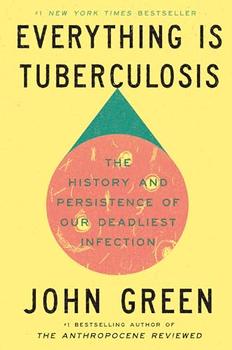
Everything Is Tuberculosis: The History and Persistence of Our Deadliest Infection
by John Green
I Had No Idea (2/11/2026)
“Everything is Tuberculosis: The History and Persistence of our Deadliest Infection” by John Green discusses an illness we have forgotten, as it has become less common in the fortunate United States. The U.S. has 3 cases per every 100,000 people, whereas Sierra Leone has 372. It is debilitating but we have forgotten it after COVID and HIV took over the news.
The disease's history is long, as people romanticized it as an artist’s ailment that heightened creativity. Green quickly points out how this can be as detrimental as absolute condemnation. Tuberculosis has a long history, and like in the case of the common cold, cancer, and AIDS, we recognize that learning about an illness and finding a cure are challenging.
Green tells a lot about history, but also through the development of a boy named Henry afflicted with the malady. He has so many meds and lives in a facility, leading to a discussion about how medical conditions affect some ethnic and socioeconomic groups more than others; unfortunately, assumptions about self-care and responsibility exist among factors beyond their immediate control.
The cost of illness vs. wellness plays a key role in the non-medical author's analysis of the inability to access appropriate treatment. Most are required to use the cheapest method. Americans tend to call Africa a country, and that advances in, say, Lesotho, mean affluence in Sierra Leone. You cannot read this type of literature without feeling for the poor.
Novels like this require hope, or they come off as manipulative and sensational. One has reasons for positivity and fear. Green manages to engage the reader while exploring the problem area. Fun fact: Green thanks a guy from Penguin Random House who lived down the hall from me freshman year at PSU and majored in English for publishing his book!

One Day, Everyone Will Have Always Been Against This
by Omar El Akkad
It Will Make You Angry and Uncomfortable (2/2/2026)
“One Day Everyone Will Have Always Been Against This” by Omar El Akkad explores how we dehumanize people to justify their destruction. Many will deny its premise and dismiss it. One cannot point out the hypocrisy of one side without cueing “whataboutism” from another groupthink. When focusing on Ukraine and Hamas, emotions will force the argumentative side out of us.
Some claim to call out both political parties while carefully favoring one or the other. El Akkad has no interest in such excuses and is tired of them in discourse, providing examples when the United States, China, and Israel make sects of people that you did not know existed find themselves wiped out, as influential people rationalize their genocidal actions.
Nonviolence has interesting roots in America. We tell countries that end warfare when one side is clearly the oppressed, to make it go away. Don’t tread on us, though. The act of condemning an entire culture out of fear wins elections on either side of the political aisle, mentioning Mexico, Russia, China, or Venezuela, and responding with dismissive stereotypes.
Over the years, people have framed my thinking on violence and conflict resolution. They pay people a lot of money to combat terrorism by killing more, but it never ends. In the West, we become hypersensitive to what we deem as threats to our way of life, which is how we trick people into condoning endless bloodshed and international interference.
A government movement exists to whitewash challenging history that portrays America negatively, so you really have to appreciate how El Akkad takes a novel about horror and ends with a glimmer of hope. One of my eighth-graders saw my book, said she read it, and feared a story with so much pathos. I could not have said it better myself.
Skipping Christmas: A Fable
by John Grisham
Christmas for the non-Christmassy (1/24/2026)
Did any author have a better start to their career than John Grisham? “The Firm,” “The Pelican Brief,” “The Client,” “The Chamber,” and “The Rainmaker” broke an extended reading drought. I DNFed a few of his middle works and did not return. “Skipping Christmas” is a cute piece of writing that reminds you of his skill and gifts.
“Skipping Christmas” became the critically panned movie “Christmas with the Kranks,” starring Tim Allen and Jamie Lee Curtis, but the book was fairly popular in 2001. It made a nice Christmas gift. Protagonist Luther questions the forced Christmas Spirit and calculates that a cruise will cost less. Even though we anticipate a change by story’s end, we question the process as well.
The usual hijinks ensue, and you wonder how the novel would be different now as opposed to 2001. With housing authorities, you anticipate snide, indirect punishment for pure, unbridled nonconformity. When the Kranks’ plans inevitably unravel, you do not know what to root for. Is this a “true meaning of Christmas” piece or a thought-provoking alternative to the commercialized norm?
In the spoiler alert department, a famous critic came up with a solution to their predicament that would have made most of the story unnecessary, but I enjoyed the ride. We expect syrupy lessons in a holiday movie and appreciate the resolution if it allows us to yearn for Christmas. Grisham isn’t reinventing the wheel here, but he knows that.
The only knock on this I can say is that I didn’t really laugh out loud, as the jacket said I would in its promotional statements. It was a nice Holiday story without going overboard in delivering a Yuletide message. Storytelling is Grisham’s gift, and here he does not disappoint. It holds up well 25 years later and satisfies me.

New and Selected Poems
by Marie Howe
A Wordsmith that You Will Envy (1/15/2026)
“New and Selected Poems” by Marie Howe contains some brilliant pieces you will love, and others that will have you doubting your aptitude. She sure summarizes 2020 pretty well. “What the Angels Left” uses a pair of scissors as a vehicle for exploring loss, uncertainty, and power. What does a random sighting mean, and do we need material items?
Out of about 100 pieces, I had a strong reaction to about 6. Poetry is not really my thing, but it is magic when it works. “Sixth Grade” tells about bullying like an adult would remember childlike emotions. “The Cold Outside” represents a recurring theme of mortality and the shame of being a burden.
“Buddy” explores the mundane aspects of the owner and dog, but it will place you right there and remind you of interactions with your best friend. She cherishes these relationships while feeling loss from others. “Before the Fire” makes poetry out of staring at a fireplace and wondering what everything means. It took several re-reads before I grasped what the short poem was truly saying.
“The Affliction” does not cover any new ground, the act of seeing yourself as if you were someone else, but it does it in a new way that makes you relate and visualize. Overall, the work has a lot of poems that, as a white male, do not relate to me specifically about motherhood, sexual desire, and childbirth, but they taught me a lot.
I only read poetry once a year when the Pulitzer Prizes come out, but I am glad I do. The line between poetry and prose is narrow, and anyone who loves the English language will admire Howe’s way with words. Even though it is a collection, the overall theme resonates as a true literary experience that you will enjoy.

The Correspondent: A Novel
by Virginia Evans
Pretty Emotional and Effective (1/7/2026)
“The Correspondent” by Virginia Evans has received some fair comparisons to the Olive Kitteridge series, thanks to its retired, misanthropic heroine. As a quirky epistolary, the obvious similarities end there. I haven’t read many collections of letters, and I didn't see the appeal. Evans does and develops a great character and story about a life well-lived with regrets and what-ifs.
Cynicism will say that you cannot fall in love with a character if all of the action takes place off the page, but Evans ends those fears quite efficiently. It will inspire you to write to friends via snail mail and maintain communication. Even the customer service at a DNA testing organization inspires a back-and-forth that shows Sybil’s enviable persistence.
Maintaining correspondence is a lost art that many of us have not mastered or implemented since the ‘90s. Sybil has enough introverted extroversion for us to meet her this way. Evans embodies this through the inclusion of “unsent” messages, showing the self-editing necessary and the uncanny power of unspoken thoughts. You relate to this quirky 77-year-old woman more and more.
All the communication builds to something I will not reveal, and the late climax makes it a surprise. You do not get the point until it hits you hard. We, as humans, tend to underestimate the written word as opposed to the spoken, even though many of us do not appreciate the tact that comes with writing before speaking foolishly.
The best novels do not tell what they are about, but rather allow you to experience the life of the protagonist and empathize. Sybil will make you apprehensive about getting older and allowing regret to fester. In a society where letter writing died in the 1990s, you will envy Sybil for saying (in sent and unsent mail) what many cannot.










 Power Reviewer
