
Villa Coco: A Novel
by Andrew Sean Greer
An Absolute Delight to Read! Charming, Entertaining, and Richly Imagined (7/10/2026)
This book is everything—an original, clever story, quirky characters, and superior writing. It's also funny, as in laugh-out-loud funny and at the most unexpected times. I lost count of how many times I laughed loud enough for someone to ask me what was so funny. (Can't explain…you just have to read the book.)
Written by Pulitzer Prize winner Andrew Sean Greer, this is the story of Giovedì, which in Italian means Thursday. It is set in the 1990s. Giovedì is a brand new American college graduate with a degree in archival management, but one who never took his studies seriously. He is packed off to the small village of San Drago in Tuscany for four months to organize and archive the treasures, tchotchkes, and bizarre knick-knacks accumulated over the decades by the 92-year-old Baronessa Lisabetta, nicknamed Coco. She lives in a magnificent villa surrounded by a forest, olive trees, and an unreliable road. (We only find out Giovedì's real name at the end of the novel; the nickname Giovedì is bestowed upon him by the baronessa as a kind of joke. Instead of her "Man Friday," he is her "Man Thursday.")
Giovedì's head is spinning. Apparently, archiving the villa's contents, which includes a painting by Picasso, is only a minor part of his job. Primarily, he assists the baronessa in her daily whims, which range from driving her on impulsive trips, helping repair a backed-up sewer, eating scrumptious meals, harvesting olives, entertaining her many eccentric friends, and (most of all) listening to her stories that are so filled with exaggerations it is impossible to tell what's true or not. He is instructed in no uncertain terms that he must immediately learn Italian, learn how to dress properly for dinner, and learn about art and history so there will be something to talk about at dinner. The bossy baronessa may be 92, but she believes she has a lot of living still to do and plans on doing just that.
Along the way Giovedì meets the very handsome (and also very married) Giacomo, a lovely man who is a cousin of the baronessa, with whom he strikes up a sexual relationship (after swearing off such affairs after his aimless college days), as well as befriending Oscar, an elderly, secretive man who imparts much wisdom and life advice. In addition, there are other eccentric characters—friends, servants, and animals—who frequently come in and out of the villa, adding color and laughter to this convoluted story. Each one is richly and deeply depicted.
The villa, which Giovedì calls Villa Coco, is not only filled with treasures, but also secrets to which Giovedì is excluded until the very end when he starts to finally figure out what has been happening right under his nose.
This is an unlikely coming-of-age story as Giovedì learns that the world does not revolve around him and begins to treasure the friendship, companionship, and love of other people in a way he never has before. It is a story filled with hope for the future—even when you're 92 years old.
Oh, I adored this book. It is charming, entertaining, and richly imagined. It is an absolute delight to read.
Bonus: The intricate and colorful cover art is beautiful and filled with details of the story. Do take the time to really study it.

Whistler: A Novel
by Ann Patchett
A Sweet, Sentimental Story Written with Flair and Genius: Captivating and Delightful (7/7/2026)
This book grabbed my heart on page one and never let go. While it's a lot more sentimental than other Ann Patchett books, that's just fine. Sometimes sentimentality is just what we need.
Jonathan and Daphne Fuller are enjoying a rare free afternoon by touring the Metropolitan Museum of Art in their hometown of New York City. At age 70, he is recently retired as a hospital administrator; she is 53 and teaches literature at a posh private girls' school. Jonathan is leaving the next day to fly to Wisconsin to help his sister clean out their mother's house after her death six months ago. As they are strolling through the American Wing, Jonathan notices a strange man following them. Daphne laughs it off. But the man is definitely following them, and eventually Jonathan sidles up to him to find out why.
And what a reason he has for following them! The man is Eddie Triplett, and once upon a time a very long time ago for just a very short time, he was Daphne's stepfather, the second of her mother's three husbands. It was Eddie that Daphne and her younger sister Leda loved the most of their three fathers, but they were only nine and seven when the divorce happened—and poof! Eddie disappeared from their lives forever. Until now. For reasons that made total sense to a nine-year-old, Daphne has always carried enormous guilt because she knows she was the cause of the divorce.
Daphne and Eddie reunite, and this new adult relationship is beautiful, filled with love and laughter, and a bit of sentimentality. Old memories are shared, and new memories are made as they get to know each other all over again.
It is during one of the most poignant scenes in the book that Eddie tells nine-year-old Daphne the story of Whistler, the horse. It's only a few pages long and occurs well into the novel, but that story is the groundwork for it all. (Just so you know, this is not a book about a horse, despite the beautiful cover art.)
And the ending? Oh, it's perfect…I cried happy tears.
This sweet novel is the story of this delightful—often funny and sometimes sad—reunion, and it's written with such flair and genius that it's also a captivating tale that's hard to put down. Most of all, this is a story about forgiveness and love, a very special love that we all wish we could have.
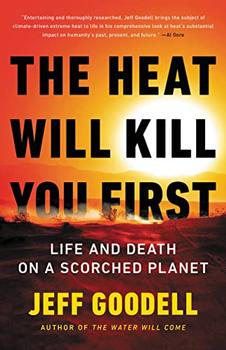
The Heat Will Kill You First: Life and Death on a Scorched Planet
by Jeff Goodell
Fascinating and Frightening: Why Our Planet Is Heating Up and What That Means—for This Summer and the Future (7/5/2026)
Stephen King, move over. This book is far more frightening than anything you could write. It's not only a dire warning for the future, but also for today. I read this book during a newsworthy, week-long heat wave, which just emphasized even more the horror of what we are already facing and will be facing in the not-so-distant future.
The heat waves we are experiencing now are not just typical summer weather. They are caused by human beings and the choices we make and have made for the past 200 years. We are doing this to ourselves.
Prodigiously researched and masterfully written by Jeff Goodell, this book explains in basic and often gruesome terms what it means when our planet gets hotter…and hotter…and hotter. While much of the text is scientific, it is always presented in ways everyone can understand. The power of this book is not only in the scientific facts and figures and interviews and opinions of climate experts, but also the personal stories of people who have been tragically affected by intense heat for which they were not prepared.
We're not talking about uncomfortable heat. We're talking about heat that can kill you—and already is killing people every year from Phoenix to Paris and many, many places in between. In 2019, nearly a half-million people died of extreme heat, which is more than all other natural disasters combined. We're talking about heat that melts the asphalt on highways and bends the steel of railroad tracks.
To research this book, author Jeff Goodell traveled around the world, including the Arctic and Antarctica, as well as the hottest cities in Europe and the United States. He also interviewed climate scientists and experts, asking hard questions and gamely deciphering even the most complex answers.
Some of the topics covered in this book include:
• Find out why most life on Earth, including humans, must live in a Goldilocks Zone of temperature and why that Goldilocks Zone is being threatened now.
• We know exactly why the Earth is warming up: the burning of fossil fuels that releases CO2 into the atmosphere. Even if all fossil fuel production globally was stopped this minute, it wouldn't lead to cooler temperatures. All it would do is stop the temps from rising more. Find out some innovative (perhaps crazy??) ideas that might just help.
• Learn how heat-driven chaos exploits the poor and minorities more than anyone else. After all, if you have money, you can turn up the air conditioner; if you're poor, you probably don't even have an air conditioner.
• Find out why climate change is more strongly seen in heat waves than any other weather event. How hot can it get? Could Phoenix, which has seen temperatures as high as 122 degrees, hit 135 degrees or 140 degrees? What are the limits? And how many people will die when those high temperatures become a reality?
• Learn why the largest single global change that threatens food security is high temperatures. In addition, find out the occupations that are most at risk for heat exposure, including construction and farming, and what happens to the human body that toils under these conditions. Note this: In the United States, there are no federal regulations related to heat exposure for workers—inside or outside.
• Find out what is happening in Antarctica and the Arctic and the warnings we should heed from the melting ice. It's not only rising sea levels, but also a new risk for diseases that can spread worldwide.
While this book is fascinating and so very important, it can also feel a bit overwhelming simply because it is so terrifying. After all, extreme heat kills. It's a force for extinction of all life on Earth. Even so, the book should be required reading for everyone, especially our political leaders at the state and federal levels who make the decisions and laws that can help.
And P.S.: Take a minute or two to ponder the deeper and most important meaning of the title of this book.

The Storm: A Novel
by Rachel Hawkins
ChickLit Murder Mystery/Thriller: An Entertaining and Smart Summertime Novel (7/2/2026)
The air is hot and sultry. And another hurricane is forming in the Caribbean with it's eye on St. Medard's Bay on the Gulf Coast of Alabama. Here's a word to the wise: Not everyone who dies during a hurricane in St. Medard's dies from the storm. Sometimes people are murdered during hurricanes in this tiny beach town.
Written by Rachel Hawkins, this ChickLit murder mystery/psychological thriller/suspenseful soap opera novel (yes, it's quite the genre mish-mash) is a gripping page-turner.
This is the story of Geneva Corliss, a 40-year-old unlucky-in-love woman who has taken over running the Rosalie Inn, a beachfront hotel her family has owned for generations. The inn has an eerie reputation: When hurricanes strike St. Medard's, which they seem to do with great regularity, the Rosalie survives when so many other structures are destroyed.
Worried about the financial impact of so many empty rooms at the Rosalie, Geneva is thrilled when a writer named August Fletcher calls to book two rooms for an indefinite period of time for himself and the subject of a book he is writing. The subject in question is Gloria Bailey, who goes by Lo and grew up in St. Medard's. Lo has quite the reputation. Beautiful and sexy, she had an affair at age 19 with Landon Fitzroy, who was 11 years older and the son of the governor. When he turned up dead in a hurricane in 1985, his injuries were not consistent with a vicious storm—more like a vicious human being. Lo was arrested and tried for murder, but a hung jury resulted in her release. Now she is back, hoping to write her memoir with August and finally set the record straight.
Ah, but nothing is as simple or straightforward as it would seem. Lo has secrets…lots of them. And one by one, she spills them, shocking Geneva and August and making Geneva wonder if Lo returned to St. Medard's not to write a book but to get revenge.
Oh, and guess what? Another hurricane—Hurricane Lizzie—is headed straight to St. Medard's. Who will survive? Who will die? And will anyone be murdered? (And for what it's worth, fairly early on I thought I had figured out Landon Fitzroy's murderer…and I was almost right save for a major twist to it all.)
Rachel Hawkins cleverly and seamlessly tells the story from each character's point of view—some of whom are more reliable and truthful than others—as well as going back and forth in time.
As the temperatures rise and the monster storm approaches, the electrifying plot simmers with tension making this an entertaining and smart summertime novel—even if it does read like a soap opera at times.
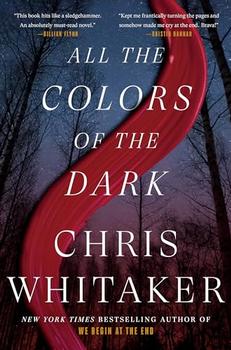
All the Colors of the Dark
by Chris Whitaker
An Intense, Pressure-Pounding Thriller/Mystery That Is Grounded with Compassion and Caring (6/29/2026)
This psychological thriller by Chris Whitaker is by turns frightening and gentle, heartbreaking and heartwarming. It reached out and grabbed my heart (and sometimes my throat) and wouldn't let go.
It's 1975 in Monta Clare, Missouri. Joseph Macauley, 13, is nicknamed Patch because he was born with only one eye and wears a patch, something his mother told him from a young age made him a pirate. He and his mother are desperately poor. Patch's only friend is Saint Brown, an orphan with big glasses and ill-fitting clothes, who lives with her widowed grandmother. Saint is fascinated with nature—from bees to birds. Both Patch and Saint endure much ridicule from their classmates and the townspeople.
One day as Patch is cutting through the woods on his way to school, Patch hears a girl scream—a frightened, terrified scream. He runs toward it to find that Misty Meyer, the most popular girl in school who is from the wealthiest family in town, is being assaulted by a strange man. Patch intervenes, which allows Misty to run away, but Patch is captured by the demon. He awakens in a pitch black room and quickly realizes there is someone else in the room with him, a girl named Grace. She tells him that she is the only one who has survived this brutal man's killing spree of teenage girls. And Grace says she has done this by loudly reciting biblical scriptures whenever the man—Eli Aaron—comes near them.
Meanwhile, Saint is obsessed with finding Patch, and even though she is only a young teenager, she nags and prods the police to do more. It's not a spoiler to say that Patch is rescued (although I won't reveal the drama behind it) because the rest of the book is about both Patch and Saint's mutual obsession with finding abducted girls—even if all they find are their bones. Everything these two become and do as adults is determined by this one act of evil perpetrated on young Patch that day in the woods.
As much as this is a page-turning thriller/mystery, it is also a perceptive novel about human endurance when hope is all there is—and even when there isn't much of that. It is a story about the many kinds of love that keep us all alive.
This is an intense read, sometimes a pressure-pounding and unsettling read, because the subject matter is so chilling and formidable. But through it all, it is grounded in compassion and caring.
And the ending? Let's just say is surprising, astounding, and very (very!) good.
True to the title, this book presents a palette of colors through words, painting mind-pictures with color names that reach far beyond our typical lexicon, from ochre to titanium white, from viridian to carbon black, from cardinal to mulberry. In fact, the descriptions of color—from a young woman's eyes to a church's stained glass windows—are breathtaking. I've never read anything like it.
Not only is the novel filled with color symbolism, but also colors serve as a metaphor for finding a greater meaning in life when all is covered in darkness.

The Things We Never Say: A Novel
by Elizabeth Strout
A 10-Star Book in a 5-Star World: A Deeply Resonant Novel About Human Connections and Loneliness (6/25/2026)
Oh, this book. This is a ten-star book in a five-star world! Written by Pulitzer Prize-winning author Elizabeth Strout, this is a novel for our times—our angst-filled political times when the world seems as if it has turned upside down and we are incapable of righting it.
This is the story of Artie Dam, a beloved high school history teacher, whose 11th grade students—even (or maybe especially) the troubled, insolent ones—learn so much from him, not only about the Civil War, but also about life. Artie, who is 57, has been married to Evie for 34 years, and they have a grown son, Rob, who is 27. The couple live in an extraordinary, light-filled home that overlooks the Massachusetts Bay, a house that Evie inherited from her parents and one they could never afford to buy now.
Artie, who is an accomplished sailor and loves nothing more than spending time on the water in his boat, doesn't understand why he is experiencing frequent thoughts of suicide. He doesn't particularly want to die, but he doesn't want to keep living. One day Artie has an accident while trying to board his sailboat, and he realizes then that he does want to keep living. It is soon after the accident that a shaken Rob tells Artie a shocking and life-altering secret someone recently confided to him. Life-altering, indeed. Somehow Artie has to learn to live with this long-buried secret, and this makes him realize how much we lie to each other. Meanwhile, Artie keeps going to school and teaching his students, making such a significant difference in so many young lives.
Very subtly overshadowing all of this is the 2024 presidential election, the results of which left half the country jubilant and the other half stunned. Artie is one who is stunned, and this colors his deepest feelings about his personal life with a sense of wariness and weariness.
This book is about both the deep connections we make with other people by showing kindness and compassion, especially to strangers, as well as the deep loneliness each of us often experiences. After all, even those we love the most never really know the deepest secrets of our souls. Ultimately, each one of us is alone. And we have to figure out how to live that way—with all the things we never say.
Bonus: This is also a love letter to that one favorite teacher we all remember. Teachers, especially those who truly feel called to the profession, are essential and vital to our society and make such a difference in their students' lives. Yay for teachers!
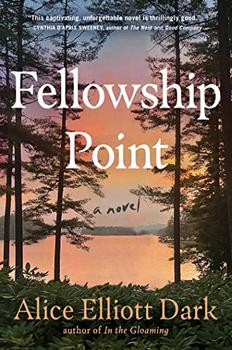
Fellowship Point: A Novel
by Alice Elliott Dark
An Epic Novel About Friendship, Family, and the Legacy We Leave to Others (6/20/2026)
This smartly structured novel is a slow burn that eventually becomes a captivating and imaginative story that is ideal for summer reading.
Written by Alice Elliott Dark, this is the delightful story of two best friends, Agnes Lee and Polly Wister, both of whom are 80 years old when the book begins. Friends since they were babies, the two have spent summers together for eight decades at Fellowship Point, a secluded and private stretch of preserved land in Maine overlooking the Atlantic Ocean. Winters are spent in their nearby homes in the posh section of Philadelphia on Rittenhouse Square, until eventually Polly moves to nearby Haverford. They are both (very) wealthy Quakers.
The two women could not be more different. Agnes, a cantankerous old lady who cherishes her solitude and independence, is the published author of a wildly popular children's book series in which each of the more than 30 titles begins "When Nan…," such as "When Nan Was a Lobsterman" and "When Nan Ran a Wind Farm." She also has a big, big secret that no one else knows—not even her editors and publisher. She is the pseudonymous author of the bestselling ChickLit series known as "The Franklin Square" novels. She fiercely decided to never marry so she could always be solely in charge of her life. So there.
Polly is the happily married mother of three sons, as well as a daughter who died in childhood. Her husband, Dick, is a bloviated professor of philosophy and ethics at the University of Pennsylvania, and now into his 80s, he is finally and begrudgingly retiring. He overstayed his welcome, and he definitely feels he is being kicked to the curb. Dick is very needy, having spent a lifetime being waited on by Polly, something she happily does and something that galls Agnes to her core.
Nearing the end of their lives, Agnes and Polly face various crises—from death and intense grief to worry about preserving pristine Fellowship Point as the bird sanctuary it always been.
And then a young, smart, and ambitious book editor named Maud Silver befriends Agnes in the hope of convincing her to publish a memoir about the origin of the "When Nan" books, one of the secrets that Agnes has always held close. Needless to say, Agnes is quite resistant to the idea, but is enthralled by Maud, a single mother of a three-year-old girl and caretaker of her own mother who has serious mental health issues.
Keep reading for one big plot twist, which alert readers will see coming. (Kudos to Alice Elliott Dark for sprinkling tiny clues along the way.)
Structurally, the novel is a bit of a hodgepodge, but it works. While the majority of the book is told in narrative story form as one expects, there is a significant amount told in letters, which is more like a diary or journal that Agnes writes to her dead sister, Elspeth. These letters provide background material from years past, adding much detail to the current day story.
This is an epic novel—nearly 600 pages—about friendship, family, the meaning of land ownership, and the legacy we leave to others.
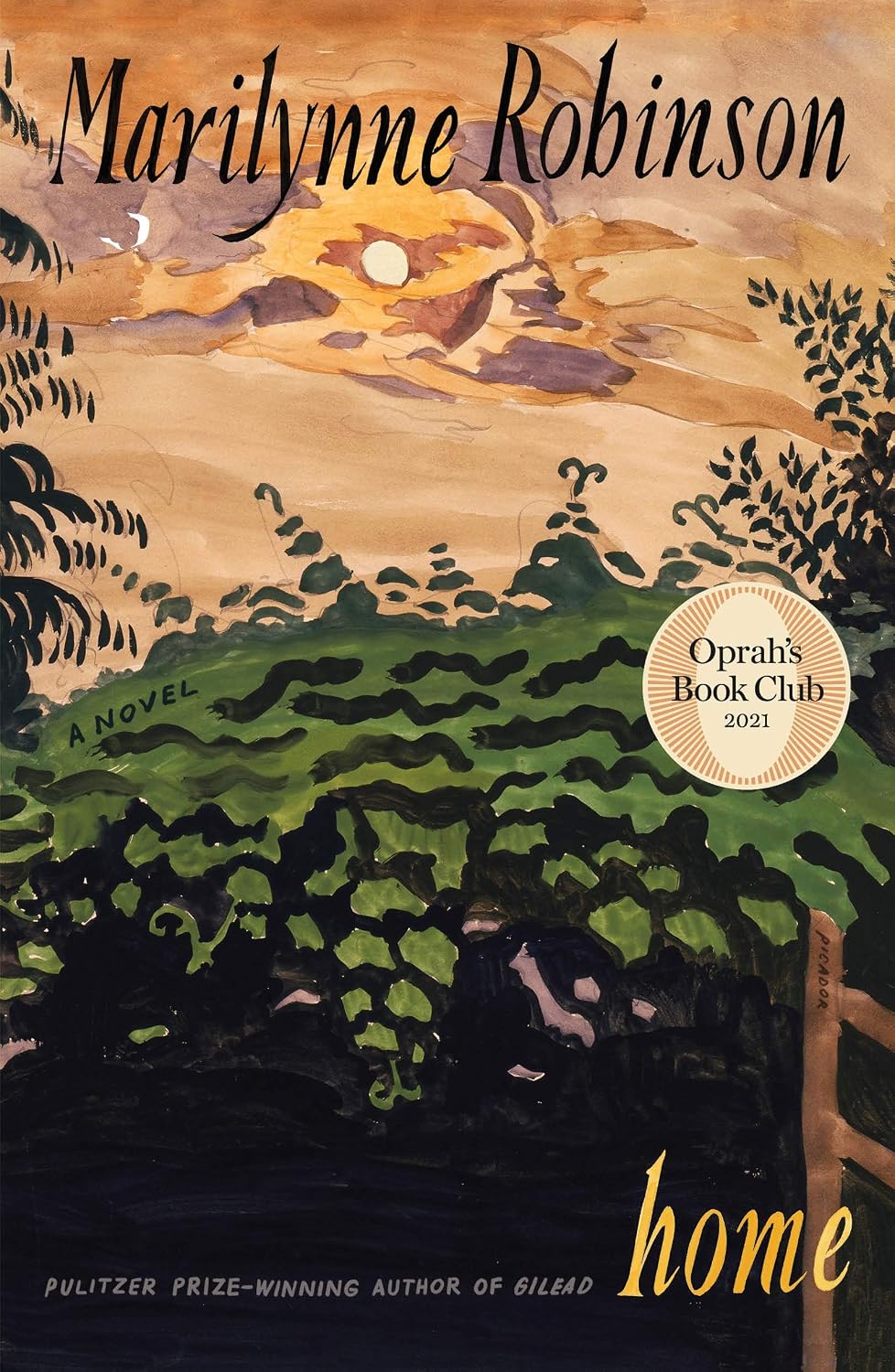
Home: A Novel
by Marilynne Robinson
A Contemplative Novel About Healing and Hope, Secrets and Confessions, Forgiveness and Understanding (6/8/2026)
This is a quiet and contemplative book with very little plot; instead, it's a character study that is both profound and deeply sad. Like "Gilead" and "Lila," this novel philosophically examines life's biggest questions, but in this case it does so in a retelling of the Gospel of Luke's parable of the prodigal son: How do we forgive, especially ourselves? Why are we here? What is a soul? What is a family? Who is God? What does it mean to die?
Written by Marilynne Robinson, this novel continues the story of the Rev. Robert Boughton in his old age as he is nearing death. Retired as a minister in the Presbyterian church, he is a widower and the father of eight children, all of whom have moved away from their hometown of Gilead, Iowa. The youngest, 38-year-old Glory, a schoolteacher who was burned by a young man she thought of as her fiancé, has moved back to Gilead to care for her father in his last days. Surprising both of them, her brother Jack—the black sheep of the family, who has been incommunicado for 20 years and up to all kinds of mischief and misdeeds—suddenly appears on their doorstep. And while the other seven children did exactly what their parents expected, Jack did not. Yet, he remains his father's favorite child.
It's a hot summer in 1956. This is the story of the three of them as Rev. Boughton slowly dies and Glory and Jack begin to come to life again after experiencing heartbreak, disappointment, and despair. Jack is harboring some big secrets, and he's not disclosing any of them—for now. Meanwhile, he and Glory, who barely knew each other as children, begin a cautious and ever-so-careful dance toward one another, eventually forming a tight, loving bond as they both try to heal. Still, it's difficult. Jack is hostile. Jack is a thief, a liar, a coward, and a drunk. And Glory is suffering from her own secretive heartbreak.
This is a book that seems almost like a kind of prayer…a prayer for healing and hope, secrets and confessions, forgiveness and understanding.
As I wrote in my review of "Gilead: A Novel," this quartet of novels is an intelligent and accomplished literary achievement. Read this and the other three because they are masterpieces, but don't expect a compelling, page-turner of a story.
Unlike most book series, you do not need to read these novels in any particular order. They each—"Gilead," "Home," "Lila," and "Jack"—blend into the others in an imaginative way. And while each one stands alone, together they form a resonant whole.

Life: A Love Story: A Novel
by Elizabeth Berg
Literary Comfort Food for the Soul: A Lovely and Heartwarming Escape from the Real World (6/7/2026)
This is a lovely, thoughtful, and heartwarming escape from the real world. It is filled with joy and love. I call it literary comfort food for the soul.
Florence Greene is 92 years old, a widow who lives alone in the house she and her beloved husband, Terrence, owned for decades. Flo has just found out that she has four to six weeks to live, so she is spending this last precious bit of time writing a very long letter to Ruthie, the little girl who grew up in the house next door. Flo and Terrence weren't able to have children of their own, so Ruthie was a substitute. She spent hours and hours in their home, talking to Flo. And now Flo is leaving the house and all its contents to Ruthie, who is married with children of her own.
Flo describes the letter as an autobiography of things in the house and what they mean to her: a rubber band that is in a matchbox tied with a ribbon, a giant safety pin, a Mrs. Hen coffee mug, a metal box filled with recipes, and a teddy bear who lives in a blue cardboard suitcase, to name just a few.
About half the book is epistolary—the letter that Flo is writing to Ruthie to be delivered upon her death. The rest of it is the story of Flo's life past and present, as well as the people she is meeting now, mostly new neighbors and a funny encounter with Mimi the librarian. Oh, and Flo gets the first pedicure of her life and along with it a blue streak dyed in her hair.
This is a sweet, lovely novel with delightful characters and a simple plot that will light up your day. It is filled with solid life advice, offered in a tender and wise way. Like so many of Elizabeth Berg's books, especially the "Arthur Truluv" series, this one brilliantly captures the magnificence of life—and in this case, life at the end of life.
It's a treat! This is ChickLit at its finest.
Bonus: There is a fabulous recipe for corn-on-the-cob on page 51. (I read this on a Kindle, so the page numbers are a little wonky. If it's not page 51, it's close to it.)
Another bonus: The book cover is gorgeous!
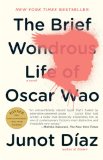
The Brief Wondrous Life of Oscar Wao: A Novel
by Junot Diaz
This Is a VERY Strange Book, Much Like a Fever Dream on Steroids (6/6/2026)
Well, this is a very strange book. Bizarre. Weird. Peculiar. The storyline of this multigenerational epic is convoluted—skipping around in time in a way that is abrupt and confusing. The prose is breathless and fast-paced—so much so that reading this book felt like the literary equivalent of being punched in the face.
Oh, and it won the Pulitzer Prize for Fiction in 2008, as well as winning The National Book Critics Circle Award and being named one of The New York Times's 100 Best Books of the 21st Century. So who am I to quibble?
And then something interesting happened. When I started the book, it was a one-star rating in my mind, but soon enough it elevated to two or even three stars. About halfway through, it rose to four stars. Why? It is the power of fiction to tell a story from history that is so much more formidable and personal than a recitation of facts. NOW I understand why it won the Pulitzer.
Written by Junot Diaz, this is primarily the story of a smart, nerdy kid named Oscar de León who weighs more than 300 pounds and is obsessed from a young age with losing his virginity. But even more so—the title not withstanding—this is the story of Oscar's family, all the way back to his grandparents who died under mysterious circumstances during the reign of terror of Rafael Trujillo, the dictator of the Dominican Republic, who ruled that country with an iron fist. Oscar's family is said to have a curse on it, so subsequent generations blame all the bad things that happen to them—and there is a multitude of bad things that happen—on this curse.
The story follows several characters, but most especially Oscar's grandmother (who is really his great aunt), La Inca; his mother, Belicia; and his sister, Lola. The family now lives in Paterson, New Jersey, but there are frequent flashbacks to Santo Domingo, and toward the end of the book, they visit their island home. As teenage Oscar dreams of becoming the Dominican J.R.R. Tolkien, he spends his time reading science fiction, writing novels, and chasing girls. As a young man in his 20s, Oscar—still a virgin—travels to his family's homeland with his mother, sister, and uncle, and his life forever changes when he falls in love with a middle-aged prostitute who lives next door to his grandmother. Ah, but nothing is simple, is it? Her boyfriend is a police captain…a very jealous police captain.
Although this is a novel, the book contains dozens of footnotes, some of which are several pages long. The footnotes primarily provide historical background on the plot developments, as well Dominican legends, myths, voodoo, and superstitions. The book makes more sense if you read the footnotes.
This is not an easy book to read. It's like a fever dream on steroids that is touched with a bit of magical realism. This is obviously an important part of our literary heritage, but read with caution.

Yesteryear: A Novel
by Caro Claire Burke
This Is Not Great Literature, but It is a Gripping Page-Turner (6/3/2026)
Oh, the hype! And, yes, it's all true. Even the venerable New York Times fell all over itself with praise and made it their June 2026 online book club selection.
While this is not great literature and will no doubt fade from the literary canon in a matter of years, this psychological thriller is a gripping page-turner that speaks volumes about our current culture.
Written by Caro Claire Burke, this is the story of an Internet influencer who is blatantly and falsely using her tradwife status to find fame and fortune—lots of fame and fortune. Natalie Heller Mills grew up in a poor family—single mom, one sister—in Idaho and studied hard to get to Harvard. Once there, feeling totally mismatched and out of place, she meets Caleb Mills, the youngest son of an incredibly wealthy and political father and a mother addicted to pills. Natalie falls for Caleb and drops out of Harvard to marry him. The fun and romance end with the wedding reception.
Caleb is weak, stupid, and completely unambitious, having no clue what he wants to do. Through some conniving and planning on the part of his frustrated wife and rich daddy, Natalie and Caleb buy a massive farm in the Idaho mountains where Natalie realizes she can make a living for her growing family by posting videos online of how she lives a pioneer-style life. A life that is simple, where everything is done from scratch. Except it's pretty much a lie. All the appliances and kitchen conveniences are hidden behind cabinets. Also off-camera are the two nannies who care for the five children and the producer who shoots the videos, as well as the hired hands who work the farm fields and care for the animals. Still, she has millions of followers and an online store. She is raking in the money! But what goes on behind the scenes is appalling and if her followers only knew…well, let's just say, Natalie would be finished.
And then one day, Natalie inexplicably wakes up in her house (but not her house), with her husband (but not her husband), and with her children (but not her children). It's 1855, and suddenly—like it or not (and she mostly hates it)—Natalie is a tradwife for real. She is horrified and terrified and very, very confused.
The plot twist at the end is big, but the author leaves several small clues and one big clue so we readers who pay attention are not totally blindsided.
While the plot is so compelling that it's hard to stop reading, I felt torn about the book for one simple reason: Natalie is not a likeable protagonist. She is not only meanspirited and unkind, but also malicious and spiteful. She actively dislikes—and even hates—her family and treats them accordingly. I found it difficult to sympathize with her.
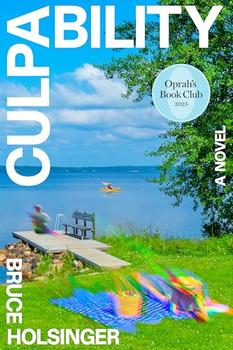
Culpability: A Novel
by Bruce Holsinger
A Gripping Page-Turner with a Profound and Philosophical Message About the Power—and Hazards—of AI (5/27/2026)
As much as this is a gripping page-turner, it is also an incredibly thoughtful, profound, and philosophical novel about the power, future, impact, and horror of the emergent field of artificial intelligence as it takes over so many aspects of our lives—like it or not.
Written by Bruce Holsinger, this family drama is peppered with suspense, secrets, and a smart storyline that will keep you glued to the novel.
A wealthy and privileged family of five is traveling from their home in tony Bethesda, Maryland in an AI-controlled minivan to son Charlie's lacrosse tournament on the Eastern Shore of Delaware. In a few months, handsome and athletic 17-year-old Charlie is headed to the University of North Carolina at Chapel Hill on a lacrosse scholarship. Charlie is driving…well, the AI system is actually driving, but Charlie is in the driver's seat. Riding shotgun is Charlie's dad, Noah Cassidy, an attorney for one of the top law firms in the country. But unlike many of his colleagues, Noah grew up with little money and attended less-than-prestigious schools. Riding in the backseat is the children's mother, Lorelei Shaw, a brilliant, double Ph.D. who is a world-renowned expert on artificial intelligence ethics and its future. Next to her is Alice, the middle child at age 13, and behind her in the very back is the youngest, Izzy, age 10.
As they are tooling along on a Delaware highway, it is Alice—not Charlie, whose head is down looking at his phone—who sees what is about to happen. A Honda Accord traveling in the opposite lane is crossing over and is about to hit them head-on. Alice screams. Charlie reacts to his sister's scream, but not quickly enough. Because Charlie jerked the wheel in a futile attempt to avoid the crash, the AI autonomous-mode controls switched off and did not take evasive action. The two cars collide, and the elderly passengers in the other car are killed, burned to death. Only Charlie and Noah escape without injuries. The Delaware State Police investigation begins. (This is not a spoiler. All of this happens in the opening pages and sets the premise for the rest of the book.)
So who is to blame for the fatal collision? Who has culpability? Is Charlie at fault for vehicular homicide? Could he land in prison for the next 20 years? Or is Noah to blame, as the responsible adult in the front seat? And the biggest question of all: What is the difference between legal guilt and moral responsibility?
In an attempt to recover emotionally and physically from the crash's horrors, the family retreats for one week to an isolated summer cottage on the Chesapeake Bay located on Virginia's Northern Neck. Nearby is a mammoth estate, a ridiculously ostentatious mansion owned by an AI billionaire named Daniel Monet. As the two families interact, beginning with Charlie falling head over heels for Daniel's 18-year-old daughter, Eurydice, secrets start to unravel—secrets big and small and some so big, so dark, and so insidious that they could tear apart the family.
This is a super-timely novel that has a fast-paced, compelling plot and a provocative, thoughtful message. In addition to being the perfect summertime read, it's ideal for book clubs because there is so much to discuss.
And for what it's worth: When I was not reading, I often thought to myself, "Oooh! I want to go read that book 'Calamity."" Except that is not the title. The title is "Culpability," but it might could also have been subtitled "Calamity." Because for this family, what happens is truly a calamity…a catastrophe or disaster.

A Far-flung Life
by M.L. Stedman
A Deeply Sorrowful and Melancholy Book That Celebrates the Power of Families (5/23/2026)
This is a big family saga about secrets—big, scandalous secrets—that are so devastating and so shameful that their revelation will not only ruin a respected family's reputation in a close-knit community, but also destroy lives.
Written by M.L. Stedman, this is the story of the MacBride family, who for generations have operated the sheep station Meredith Downs in Western Australia, breeding some 20,000 sheep for wool and meat. They own nearly one million acres of land in an arid, harsh and unforgiving climate prone to drought, cyclone windstorms, and excess heat.
The novel opens on January 10, 1958 when Phil MacBride and his two sons, Warren and Matt, are driving on their massive property. A tragic accident with a kangaroo leaves Phil and Warren dead. Matt survives—barely. This is not a spoiler as it happens in the opening pages and sets the scene for the rest of the book. Until then, the MacBrides were a blessed family. And then everything changed one hot summer morning.
Meanwhile, Rose, the only daughter and middle child, harbors a secret about that tragic day—a secret that explains why she wasn't in the vehicle instead of Matt. As Matt slowly recovers, Rosie is filled with guilt and remorse, and does everything she can to help her little brother regain some foothold on his former life. It is during this time that something horrific happens, and the consequences will last for decades to come.
Life goes on. But is there hope? Is there forgiveness? Is there honesty? Each character grapples with the past and what it means for the future in a way that is both profound and promising because grounding everything is the solidity of family—in all its incarnations.
One persistent theme in the novel is memory, as well as those things we forget. One of the children in the novel coins a term that I love: "forgetment." It's the opposite of memories; rather, it's those things we don't remember. And do our forgetments figure into our ability to forgive others and ourselves?
This is a deeply sorrowful and melancholy book that celebrates human resilience, emotional endurance, and the everlasting power of abiding family love.
Important Note No. 1: This novel is VERY slow to get revved up. Very, very slow. If you're the kind of reader who will give a book about 50 pages and then toss it aside if you're not enjoying it, resist that temptation with this one. It (finally) picks up about 100 pages in, and from then on it's excellent. Just give it time.
Important Note No. 2: You will learn far more about Australian sheep stations than you probably ever wanted to know. Just wade through it. The story that lays atop all this information is well worth it.
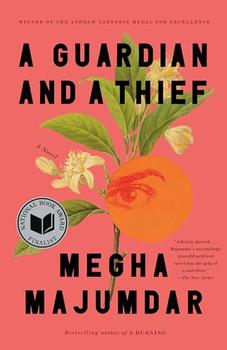
A Guardian and a Thief: A Novel
by Megha Majumdar
A Haunting, Almost Thriller-Like Novel with an Ending You'll Never See Coming (5/22/2026)
Desperate times. Even more desperate people. What would you do to feed your family and keep your loved ones safe if everything around you was collapsing?
Written by Megha Majumdar, this remarkable, multilayered novel takes place in the near future in Kolkata, India where temperatures have soared so high that the vegetation is dying, fish are swimming away to cooler waters, water is a precious commodity, and people are fleeing in droves. Those who are left are suffering from heat, hunger, and hopelessness.
Ma and her elderly father, Dadu, live in the house in which Dadu grew up. Mishti is a happy, precocious two-year-old, oblivious to the suffering all around her. The small three-generation family is preparing to move to Ann Arbor, Michigan where Ma's husband awaits them. They are climate refugees, securing the valuable and long-awaited passports and visas that will allow them entry into the United States. Their booked flight leaves in seven days. In the middle of the night one week before their departure, a thief breaks into their home, stealing not only the precious food they have hoarded and hidden, but also Ma's purse in which the prized passports, much of their money, and her cell phone are stored. When they awaken in the morning and discover the robbery, their small, safe world collapses.
The thief is Boomba, a teenager who has fled from the country to the city to try to make a better life for his parents and beloved baby brother, Robi, who are currently living under a leaky tarp. Boomba was essentially Robi's guardian, the one the little boy loved most in the world. Once he gets to the city, Boomba has a series of misadventures in which he gets work, makes money, and loses the money. He sleeps in a shelter, and it is there that he sees Ma—and what he sees is startling. Ma, who works in the shelter, is stealing food meant to go to the shelter's residents. He follows her home to rob her of the food. Boomba quickly sells the twice-stolen food; he also swiped the purse and tosses most of its contents into a garbage hillock, including the passports.
And so this haunting, almost thriller-like story begins. Ma and Boomba are both guardians and thieves. Will they be able to save themselves? Even if they are moral and ethical humans at heart, what is the breaking point when a fight for survival is paramount? This is a very close-up and personal look at the havoc and disaster wreaked by climate change.
And the ending? It is devastating and gut-wrenching. I never saw it coming, but it's a perfect statement on the ultimate meaning of the book.
With unexpected plot twists and wrenching emotional insights, this book is as much a chilling warning for the future as it is a gripping page-turner in the present.
Just a thought…a haunting, disturbing thought: I think of myself as a kind and compassionate person. I think that is who Ma was—in the before times. Who do we become when we are desperate? Who Ma becomes is frightening. Is that what happens?
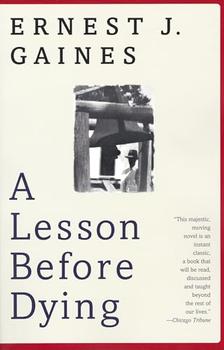
A Lesson Before Dying
by Ernest J. Gaines
A Tragic Novel Filled with Difficult, Heartbreaking Truths About Living, Dying, and Loving (5/17/2026)
He was barely a grown-up…really just a boy. He made one unwise decision, accepting a ride with friends who ended up robbing a liquor store and killing the White owner. Before he died, the owner shot back and killed the two Black robbers, leaving the boy/man standing there amidst the carnage. Guilty! And sentenced to die in the electric chair.
Written by Ernest J. Gaines, this elegiac novel is the story of that young Black man named Jefferson, in the months following his trial and before his execution. It is 1948, and segregation is the law of the land in Cajun country. While he is being held in the sordid and wretched small town jail of (fictional) Bayonne, Louisiana, Jefferson's godmother Miss Emma, whom he calls Nannan, asks her best friend's nephew, Grant Wiggins, to regularly visit Jefferson. In a misguided and deeply hurtful attempt to help his client, Jefferson's defense attorney told the all-white male jury that Jefferson was nothing more than a hog. And who would put a hog in the electric chair? The argument failed to win Jefferson an acquittal and only served to change his own opinion of himself.
Meanwhile, Jefferson has sunk into a deep depression, barely eating or sleeping, and yelling out about being nothing more than a hog. It is Grant's job to try to turn him into a man before he meets his death, a job Grant is reluctant to do. Grant is a teacher—his nickname among the Blacks in his tightknit community is Professor—and he is struggling in his job to teach all the Black children in one room in the church's sanctuary.
And now he must give a man who has been sentenced to death a lesson on living, to help Jefferson regain a sense of dignity and self-respect that he lost in the courtroom when he was so harshly labeled a hog. The lesson they both learn is something filled with grace and redemption—and power!—as both men realize that Jefferson has only one freedom left as he languishes in chains and in a lonely cell: He has the ability to choose whether he accepts death or not. His freedom is in the power of his mind.
This is a worthwhile novel to read—it is listed in "1,000 Books to Read Before You Die: A Life-Changing List," by James Mustich—but it is also a tough book to read not only because it is inherently tragic and deeply sad, but also because of the overt and cruel racism that affects all the Black characters.
Emotionally searing and deeply tragic, this is a novel filled with difficult, heartbreaking truths about living and dying—and most of all, loving.
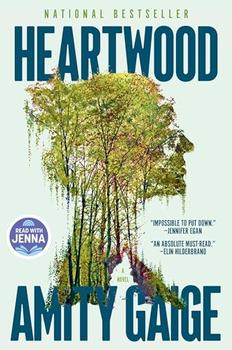
Heartwood: A Novel
by Amity Gaige
Taut, Thoughtful, and Simming with Tension: A Gripping Summer Read (5/16/2026)
Where ever you are going on vacation this summer—road trip, beach, mountains, hiking the Appalachian Trail—this is the book for you. Oh, wait. Nix the AT. If you're hiking that, you might not want to read this thriller about Valerie Gillis, a 42-year-old registered nurse, nicknamed Sparrow, who hiked the Appalachian Trail to help heal and recover from Covid trauma and then…disappeared some 200 miles from her final destination at the northern terminus of the trail. Poof! She just seemingly vanished into the unforgiving wilderness of Maine.
Written by Amity Gaige, this is a twisty-turny, suspenseful thriller as hundreds of trained searchers on foot, as well as planes, helicopters, and K-9 teams, comb hundreds of acres of deeply forested woods, streams, and ridges in Maine during two weeks in August. Why did Sparrow veer off the Appalachian Trail? Was it a simple mistake or did something more sinister happen to her? As each day passes, her chances of living through this greatly diminish.
The story, which is more of a slow-burn than it is action-packed, is told primarily in the first-person by Maine State Game Warden Beverly Miller, a 57-year-old single woman who has devoted her 30-year career to finding lost people in the treacherous, deep forests of Maine. But we also learn tidbits about Sparrow from the journal entries she makes—a journal that is later found with her abandoned backpack.
And as much as this is a thriller against time to find a missing hiker and the quest for wilderness survival at its most basic level, it is also a love story about mothers and daughters and the many joys and complications of this relationship.
This beautifully written novel is so much more than a compelling page-turner that will keep you up past your bedtime. It is also introspective. Gaige has fleshed out the characters so we get to know their backstories, their hopes and dreams, and their crushing disappointments.
Taut, thoughtful, and simmering with tension, this is a gripping summer read.
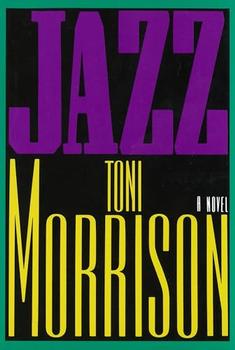
Jazz
by Toni Morrison
Masterful, Brilliant, and Daring: But This Is a Difficult Book to Read (5/11/2026)
This is a difficult book to read. The story is heartbreaking, if not devastatingly tragic with very little to lighten it—until the end. But in addition, its form, structure, and plotline make it a challenge to read.
That said, it's a profound and important book by one of our country's most talented writers. It's message is vital.
Written by Nobel Prize-winning author Toni Morrison, this short novel is designed to be a literary form of musical jazz, especially the improvisation, invention, and rhythm of that musical genre. As a reader, you will definitely know when she is improvising because the storyline can go off the rails into new and uncharted territory. Someone could be thinking or talking about THIS…and then without warning the story swerves and then it's not THIS, but THAT. There are no chapter breaks, making the text seem rather breathless. But stick with it because it's brilliant—even if it means rereading whole sections to figure out what just happened.
This is primarily the story of Joe and Violet Trace, who fled the poverty and Jim Crow laws of the rural South to arrive in Harlem. It's the 1920s, and life on the streets is at fever pitch. For the first time in his decades-long marriage, Joe has an affair. His new beloved is an 18-year-old girl named Dorcas. The novel opens just after Joe has murdered Dorcas, and at her funeral Violet—just learning of the affair—tries to knife the corpse in the face. (This is not a spoiler. It happens on the first page.)
The rest of the novel, which jumps around in time and location, examines how Joe and Violet got to this point and how they are now suffering without redemption or hope after such a vicious act as they try to ascertain who they are and their place in the world. Both of them, especially Violet, become obsessed with Dorcas. The couple may have physically fled the South, but the vestiges of slavery still have a hold on their souls.
A mysterious narrator who may or may not be reliable but is supposed to mirror the improvisational nature of jazz adds to the mystery—and perplexity—of the book.
This novel is masterful, brilliant, and daring. It is also audacious, fearless, and gutsy. Read it, but read it slowly and carefully.
Bonus: Do read the foreword by Toni Morrison as it elucidates her thinking and purpose in writing this book, which is said to be her favorite of the 11 novels she wrote.
A fun note: From February 18, 2026 through February 18, 2027, Ohio is celebrating the life, literature, and legacy of Toni Morrison, a native of Lorain, Ohio and the first African American woman to win the Nobel Prize in Literature.
Did You Ever Have A Family
by Bill Clegg
An Extraordinary Novel: What Is the Point of Living and Loving? (4/28/2026)
In the hands of a lesser writer, this book would have been totally different. The basic plot point that undergirds it all is so shocking and horrific that most writers would have made that the primary focus, but author Bill Clegg instead uses it as the small central hub of a wheel and the spokes radiating out of that hub—the characters who are most impacted by the event—are the focus. It's brilliant.
What is that shocking and horrific plot point? It's a lovely May evening in a tony small town in Connecticut, the night before a wedding reception is to take place on the grounds of an old and storied stone house. The house is filled with sleepers—the bride and groom, the bride's father, and the longtime boyfriend of the bride's mother, who happens to be Black when everyone else is White. The house explodes, killing everyone inside. The only survivor is the bride's mother, June, who was outside, having fallen asleep beneath the wedding reception tent.
As tragic and horrific as that is, the point of the entire book is not the gruesome explosion. The point of the entire book is the effect the explosion and deaths have on the bride and groom's families, their closest friends, and the townspeople as each of them deals with what happens—from grief to guilt—and how they eventually find forgiveness, solace, and hope that allows them each to keep living.
Each chapter focuses on one person, bouncing around in time and place. That said, it is never confusing and always flows in exactly the way the reader would expect. Some of the characters' stories are astonishing, some made me weep, some made me happy, and all of them are remarkable in the way they are written and presented. Eventually, each character must answer this most pivotal question: What is the point of living and loving?
This is truly an extraordinary novel.

The Diamond Eye: A Novel
by Kate Quinn
Historical Fiction at Its Finest: A Piece of World War II History You Probably Don't Know (4/26/2026)
This is historical fiction that (almost) doubles as a history book. Prodigiously researched by author Kate Quinn and then mixed with a those bold human emotions of love, envy, and duty, this book about a brave young Russian woman in World War II left me stunned and enthralled.
You see, this is a story about a woman who served as a sniper, officially taking out 309 Nazi Germans and unofficially far more. This is a fascinating piece of World War II history you probably don't know.
Lyudmila Mikhailovna Pavlichenko—Mila for short—is working as a senior research assistant at the Odesa Public Library while writing her dissertation in history at Kyiv State University. She lives in Kyiv, which at this time is part of the Soviet Union, with her parents and five-year-old son. Technically, she is married to Dr. Alexei Pavlichenko, but he is a cad. Attracted to young teenagers, he seduced and impregnated her when she was just 15 and fully planned to abandon her and the child. However, Mila's powerful father made sure Alexei married his daughter. But it's a marriage in name only as they never see each other. Puzzlingly, he won't divorce her, much to her frustration and chagrin.
When the Germans invade Russia and Ukraine in World War II, Mila enlists, and shocking everyone around her except for herself, she is a talented marksman. She is soon assigned to become a sniper and racks up the kills so quickly that she is dubbed Lady Death.
This novel is about her wartime experiences as a "lady sniper," fighting not only the Nazis, but also the rampant sexism in the Russian army. At times it is gritty and even brutal, but then again, this is a book about war on the front lines.
While Mila's experiences and actions in the war are all based on historical fact, there is a compelling subplot that is pure fiction but adds much tension and suspense to the book, setting Mila up for the most difficult battle of her life.
First, the real history: Mila did travel to the United States in the summer and fall of 1942 as part of a Soviet delegation of students whose goal was to convince the USA to become part of the war in Europe. The Nazis were beating the Russians, and the Russians needed American assistance—assistance that President Franklin Roosvelt was reluctant to provide since he was also waging war in Japan. During this trip, Mila and First Lady Eleanor Roosevelt became good friends and confidants—a friendship that lasted for years.
Now for the fiction: The fictionalized subplot involves an unnamed marksman who is plotting to assassinate the president and set it up so it looks like Mila pulled the trigger. This secondary story is interwoven throughout the novel and then takes over the entire plot at the end, turning it into a real page-turner.
This is a well-written, highly readable story about a brave and remarkable young woman who became something she never would have except for the struggle of wartime. With plot twists and turns and a sprinkle of love and romance, this book had me spellbound. This is historical fiction at its finest.
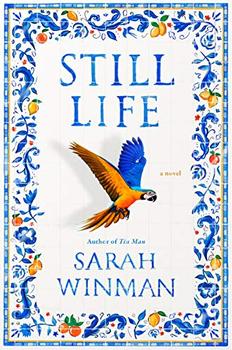
Still Life
by Sarah Winman
One of the Best Books I Have Ever Read! A Brilliant Novel That Is a Literary Gift (4/21/2026)
This is one of the best books I have ever read. Yes, it's that good.
Written by Sarah Winman, this is a story about life and love, about the families in which we are born and the families we create. This is a story that captured my heart and soul and would not let go.
It is also a poetic and charming love letter to Florence, Italy. Just beware: This book will make you want to immediately book a trip to Florence—and maybe even move there.
The novel opens on August 2, 1944 somewhere in the Tuscan Hills. World War II is raging. Bombs are dropping. Life as people know it is being destroyed. We soon meet the two pivotal characters of the book: The 64-year-old spinster Evelyn Skinner, a Renaissance art expert, and Ulysses Temper (Temps for short), a young British soldier stationed nearby. Their serendipitous encounter sets the stage for a delightful novel of lives lived well and the interconnectedness of it all.
The two return to their separate lives in London. Ulysses goes back to work in a pub called the Stoat and Parot and returns to his wife, the beautiful Peg, whom he deeply loves. She doesn't feel the same way, and so begins a decades-long quest for her to find love. Because of a good deed Ulysses did while he was a soldier in Florence saving a man from suicide, he surprisingly inherits several large apartments in Florence into which he moves, along with eight-year-old Alys (a child Peg had with an American soldier who has long disappeared), his good friend Cressy, and Cressy's talking parrot, Claude. The bulk of the novel is the wonderful life they create together in Florence, initially surrounded by wary neighbors who soon enough lovingly adopt this eccentric group of Brits as their own.
Each character is richly and deeply depicted—so real, so alive, so fully animate that I wanted to live with them—be their friend, be their family, be with them.
This is a delightful and imaginative book that celebrates life, love, family, and art, especially Renaissance art. It is extraordinarily well written with humor, joy, and breathtaking descriptions of nature and food (oh the food!). The writing ranges from casual and witty to lyrical and poetic. It is perfect!
Bonus for English majors: There are fun and creative parallels to the pensione in E.M. Forster's "A Room With a View" with Mr. Forster himself making a major appearance at the end of the book.
This brilliant and magical novel is a treasure and a literary gift. I am in awe of this book!









 Power Reviewer
