-
Your next favorite book
is waiting.
Summary | Excerpt | Reading Guide | Reviews | Beyond the book | Read-Alikes | Genres & Themes | Author Bio

A Novel
by Rachel Hochhauser Book Reviewed by:
Lady Etheldreda Tremaine is a noblewoman with a secret: she's completely broke. She lives in a beautiful manor house, has two faithful servants, and her young adult daughters are always beautifully dressed, but it's all a mirage. The home is crumbling, the "servants" are more like roommates who help out in return for a place to live, and the family has scrimped and saved to buy the nice clothes. When her husband died several years ago, he left all of his wealth in a dowry for his daughter from a previous marriage, Elin, accessible only to her future husband. Etheldreda and her daughters have been left with nothing, and they've cut every corner they can to keep up appearances while living in virtual poverty. It's not pride that motivates her to put forward a good face, but rather a desire to secure prosperous husbands for her two daughters—their only possible path to financial stability. So when she hears their kingdom's prince is seeking a bride, she'll do anything to ensure her daughters get a fair shot—but the prince has his eye on Elin.
Yes, this is a Cinderella retelling (see Beyond the Book), told from the stepmother's perspective. In this version, Lady Tremaine is not a vindictive social climber, but a struggling single mom at the end of her rope. The motivations behind her intense interest in her daughters' romantic prospects are clear—there's no path out of poverty for women in their kingdom except for marriage. And although she cares about her stepdaughter, she's less concerned about Elin's marriage opportunities, because her dowry pretty much ensures she can find a good husband.
Etheldreda is a resilient woman, a falconer who hunts much of the family's food. Meanwhile, Elin, the Cinderella character, is only a burden to the overstretched family. Reared in luxury, she spends all her time studying how to be a virtuous woman, and she doesn't contribute to the household's many chores. When she is finally assigned the task of gathering cinders from the fireplace to sell, it is a last-ditch effort from Etheldreda to get her to financially contribute to the costs of attending the ball. Worried about getting her dress dirty, Elin fails to do it.
In a retelling centering Cinderella's stepmother as the heroine, it would be easy to cast the Cinderella character as a villain. Elin is not malevolent, however; she's just deeply impractical. She's a pampered noblewoman who has never adjusted to her new circumstances in the decade since her father's death. She's often a source of comic relief, such as when she scatters crumbs on her windowsill to attract her friends, the mice and birds, only to attract Etheldreda's scorn. The last thing the decrepit mansion needs is more mice! Elin would not think of herself as selfish. She does not actively seek to elevate herself above others. But she is so wrapped up in her own privileged bubble that she can't conceive of others' problems. It feels only natural to her that others take care of the house and prepare the food. As much as Etheldreda tries to show her tough love, Elin has never known a life where her needs are not meant by those around her.
Scrappy, resilient, and shrewd, Etheldreda is the anti-Elin. She's a refreshing break from the sea of young adult heroines in other fairy tale retellings. At nearly 40 years old, she has experienced the pain of real loss and spent years struggling to survive. Her daughters' father was her true love, and after she was widowed she married Elin's very dull father to stop her in-laws from selling off her daughters as child brides. The difficult life she has lived and the sacrifices she has made lend her character real depth. Parents especially will relate to her all-consuming desire to give her children a better life
This novel's wisest choice is allowing both Etheldreda and Elin to experience character growth. Though they butt heads in the beginning, they end up teaming up to fight a bigger injustice. Rather than being a story about women pitted against each other, this novel ultimately shows the wider impact women can make when they work together.
 This review
first ran in the March 25, 2026
issue of BookBrowse Recommends.
This review
first ran in the March 25, 2026
issue of BookBrowse Recommends.

If you liked Lady Tremaine, try these:
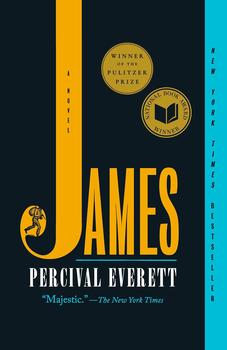
by Percival Everett
Published 2026
A brilliant, action-packed reimagining of Adventures of Huckleberry Finn, both harrowing and ferociously funny, told from the enslaved Jim's point of view. From the "literary icon" (Oprah Daily) and Pulitzer Prize Finalist whose novel Erasure is the basis for Cord Jefferson's critically acclaimed film American Fiction.

by T. Kingfisher
Published 2024
From USA Today bestselling author T. Kingfisher, Thornhedge is the tale of a kind-hearted, toad-shaped heroine, a gentle knight, and a mission gone completely sideways.
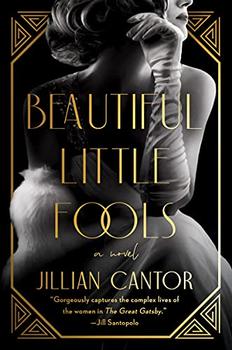
by Jillian Cantor
Published 2022
USA Today bestselling author Jillian Cantor reimagines and expands on the literary classic The Great Gatsby in this atmospheric historical novel with echoes of Big Little Lies, told in three women's alternating voices.


I like a thin book because it will steady a table...
Click Here to find out who said this, as well as discovering other famous literary quotes!

Can you name the title?
Test your book knowledge with our daily trivia challenge!
Your guide toexceptional books
BookBrowse seeks out and recommends the best in contemporary fiction and nonfiction—books that not only engage and entertain but also deepen our understanding of ourselves and the world around us.