
-
Your next favorite book
is waiting.
Summary | Excerpt | Reviews | Beyond the book | Read-Alikes | Genres & Themes | Author Bio

A Novel
by Harriet Clark Book Reviewed by:
I did not realize until I reached the end of Harriet Clark's debut novel The Hill and read an interview with the author in the New York Times that this book is based on events from her real life. When Clark was a baby, her mother Judy, a member of the far left group the Weather Underground, took part in the robbery of a Brink's truck outside the Nanuet National Bank in Nanuet, New York (see Beyond the Book). Judy Clark drove one of the getaway cars. A guard was killed during the robbery, as well as two police officers who pursued the robbers. Clark was sentenced to 75 years to life in prison.
The crime in the novel is a fictionalized version but roughly the same. The details are barely sketched in—it is described as politically motivated, the mother and the grandparents who raise the main character Suzanna belong to a community of Jewish Holocaust survivors and are socialists. The crime is the mother's story, and this novel is Suzanna's.
It is a story centered around a place: Hillcrest Prison, where Suzanna visits her mother every Saturday for her entire childhood and adolescence. When she is very young, too young really to make such a promise, she vows she will never stop these weekly visits. And she is tested. When her grandfather dies, her grandmother refuses to take her, clearly attempting to punish Suzanna's mother for her crime and its consequences, including the abandonment of her child. Suzanna must travel back and forth between the prison that houses her mother and the prison of her grandmother's anger (she makes Suzanna promise she will never have children, presumably to stop this runaway train of generational trauma). It is easy to imagine that the separation from her daughter and the seemingly permanent rift with her mother feel like a more devastating punishment for Suzanna's mother than imprisonment. As it becomes clear Suzanna's grandmother is nearing death, a letter arrives from her mother, presumably asking for reconciliation. It goes unopened. Prison doesn't allow for deathbed reunions.
Watching Suzanna's devotion play out over the span of many years is both crushing and, in some ways, exhilarating. She never wavers in her decision—the only time she does not visit for any substantial period of time is when her grandmother is dying and begs Suzanna to stay by her side. We see her experience some of the normal milestones of youth, such as hanging out in the park with friends for hours, with no particular agenda. But for the most part, The Hill is explicitly about the impossibility of carving out a normal life when your loved one is incarcerated. Or put another way, about how the abnormal becomes normal.
There is an extended scene in which, as a reward for good behavior, Suzanna's mother is allowed to stay overnight with Suzanna in a trailer on the grounds of the prison. We see how desperate she is to create a small pocket of normalcy for herself and her daughter, how desperate she is to be Suzanna's mother. She compulsively wipes down the kitchen in the trailer, cooks scrambled eggs, remarks on how strange it is to be handling a knife. We see how small prison has made her life, as her sole conversational focus is pointing out various landmarks: the window of her cell, the windows of other women's cells, the guards' trailers, the nursery. She tells Suzanna that with twenty years of good behavior, she can apply to have them stay together in the trailer for four nights, and we know that this is a prospect that keeps her going through hours and months and years of numb boredom and loneliness.
I would be remiss not to note that the writing in this book is incredible and there is a great deal of humor, particularly in the grandmother's blunt speech and Suzanna's deadpan observations of the small world around her ("This rich woman had a face you could bang with a pole and nothing would happen").
At the beginning of the novel, Suzanna makes her vow: "I took the vow that seemed the greatest vow I knew: to stay right where I was, to stay no matter what." By the end of the story, when she has graduated from high school and feels adrift, refusing to fill out college applications because this would mean embarking on a life away from her mother and the prison, some readers may be hoping she will break that vow and go out into the world. This is what is supposed to happen in a coming-of-age novel. I wasn't hoping for this. Suzanna tethering herself to her mother despite all obstacles and consequences is such a powerful, profound act of love and demonstration of real endurance of care. It is perhaps not fair that Suzanna must make sacrifices. But it is so beautiful to keep a promise.
 This review
first ran in the May 6, 2026
issue of BookBrowse Recommends.
This review
first ran in the May 6, 2026
issue of BookBrowse Recommends.

If you liked The Hill, try these:
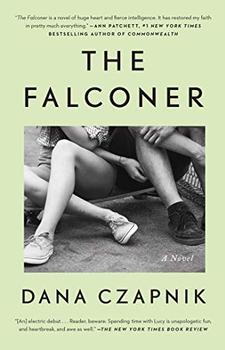
by Dana Czapnik
Published 2019
Told in vibrant, quicksilver prose, The Falconer is a coming-of-age story, providing a snapshot of the city and America through the eyes of the children of the baby boomers grappling with privilege and the fading of radical hopes.
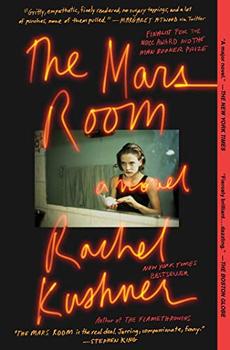
by Rachel Kushner
Published 2019
From twice National Book Award–nominated Rachel Kushner comes a spectacularly compelling, heart-stopping novel about a life gone off the rails in contemporary America.
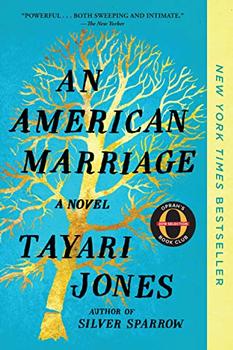
by Tayari Jones
Published 2019
An American Marriage is a masterpiece of storytelling, an intimate look deep into the souls of people who must reckon with the past while moving forward - with hope and pain - into the future.
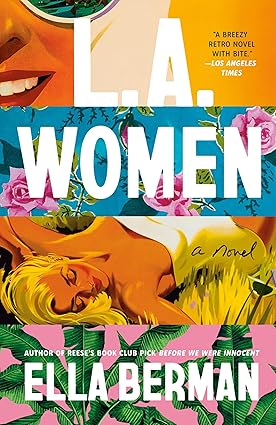
L.A. Women by Ella Berman
Two ambitious writers in 1960s LA face betrayal when one writes a novel based on the other's life.

Your guide toexceptional books
BookBrowse seeks out and recommends the best in contemporary fiction and nonfiction—books that not only engage and entertain but also deepen our understanding of ourselves and the world around us.

