
-
Your next favorite book
is waiting.
Summary | Excerpt | Reviews | Beyond the book | Read-Alikes | Genres & Themes | Author Bio

A Novel
by Ananda Devi Book Reviewed by:
The unnamed protagonist of Ananda Devi's All Flesh was born weighing 22 pounds. From that day on, she has been tormented by an insatiable hunger. Exhausted by the constant demand for more—and the relentless judgment of others—her mother soon flees. Her father takes up the role of devoted caregiver, showing his love through an endless stream of indulgent, gourmet meals that cause her to grow bigger but never quite sate her appetite.
Whether as a misguided attempt at kindness, or a justification for his questionable role in contributing to her continued weight gain, the girl's father creates a myth to explain her size: that she absorbed a twin sister in utero, and thus her body contains two souls that require equal nourishment. Well-meaning or not, the specter of this imagined sister haunts the girl as she grows to the brink of adulthood. By the age of 16, daily tasks like washing and dressing herself have become physically taxing, and she is left entirely housebound in the care of her father. Desperately lonely and hitting a limit, where even standing and breathing feel labored, she knows she is rapidly approaching a breaking point. More than ever, she craves to be seen and accepted, or else to be free of the prison that is her body once and for all.
All Flesh is certainly not to be entered casually. It's unflinching in its look at the struggles of day-to-day life for someone dealing with physical health problems and systemic fatphobia at the same time. On this front, it can make for deliberately uncomfortable reading, confronting damaging societal prejudices head-on. The language throughout is emotionally charged, with the narrator often using controversial and harsh words to describe herself. While this could prove triggering for some, it highlights the lived experiences of many people. Namely, our protagonist has faced such relentless bullying for so long that she begins to internalize and believe the negative views of herself held by others.
Early in the novel, the narrator derides society for its inability to see beyond her physical appearance to the mental value she has to offer:
"Nobody would listen to me with the compassion they had for the disabled. Nobody would admire my lively mind when my whole body contradicted that. A gelatinous mass couldn't possibly have truths to tell the world."
This touches on the nuanced connections between body image, self-esteem, fatphobia, and disability, such as in how fat people are often denied compassion under the misconception that fatness itself is always a problem, or is the self-inflicted cause of any physical or mental health issues. In our protagonist's case, for example, she is aware she has a diet that isn't good for her and makes poor choices, but several important factors are out of her control. There are implications of an underlying health condition that predisposes her to be larger than average. Her father, rather than encourage or facilitate a balanced diet, has always reveled in providing her with ever more indulgent foods. Eating itself can be an addiction, a fact the character recognizes, yet cannot address alone. With these influences, and the anxiety of constantly failing to live up to society's impossible standards, it seems no surprise she has fallen into a self-destructive spiral.
The most successful aspect of the novel is the dynamic introduced by the phantom twin that haunts the main character. She envisions this twin as the embodiment of everything she is not, everything that society expects her to strive for. In this way, the twin comes to represent the idealized beauty standards that haunt many young women and girls. Her father's creation of this twin, purported to bring comfort, instills within her an inescapable sense of guilt and self-contempt, by implying that she alone is not enough: "He stole part of my humanity and spent the rest of my life trying to restore it to me through his earthly food and his heavenly love. Dad. My adorer. My executioner." The idea of the twin, rather than helping, merely fuels her negative relationship with food. As she explains, "I silenced her by filling my mouth with food. I buried her by stuffing myself. I ate and ate, sad and alone."
The narrator often speaks, too, of "the eye" that constantly watches over her—as it watches over everyone. The pressure of its relentless, judgmental gaze fosters a fixation on her perceived flaws and a deep self-loathing. Broadly, this "eye" can be interpreted as society in general, and its vilification of anyone viewed as Other. As the narrative progresses towards its shocking climax, it can be taken to represent social media more specifically. Once, we were at least granted safety from bullies within the walls of our home. But now, there is never truly an escape from the prying eyes and cruel words of others. Describing her father's naïve understanding of social media's reach, the protagonist explains:
"He couldn't imagine the vastness of the virtual world. There was no escaping it. It was forever. It was everywhere. Forgetting was impossible: it was outside time, outside space. We'd invented hell."
The decision to leave the protagonist nameless is also key to this theme. So great is the derision of others, she has become a mere spectacle, stripped of her identity. Though she may crave anonymity as a form of protection, she wants above all else to be seen and valued as a human being.
With little in the way of hope and a climax that tips into true body horror, All Flesh is a novel that many will find difficult, but for reasons that make the truths within its pages all the more vital to face.
 This review
first ran in the May 6, 2026
issue of BookBrowse Recommends.
This review
first ran in the May 6, 2026
issue of BookBrowse Recommends.

If you liked All Flesh, try these:

by Nnedi Okorafor
Published 2026
In this exhilarating tale by New York Times bestselling and award-winning author Nnedi Okorafor, a disabled Nigerian American woman pens a wildly successful Sci-Fi novel, but as her fame rises, she loses control of the narrative—a surprisingly cutting, yet heartfelt drama about art and love, identity and connection, and, ultimately, what...
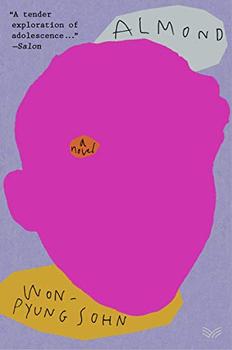
by Sohn Won-pyung
Published 2021
The Emissary meets The Curious Incident of the Dog in the Nighttime in this poignant and triumphant story about how love, friendship, and persistence can change a life forever.
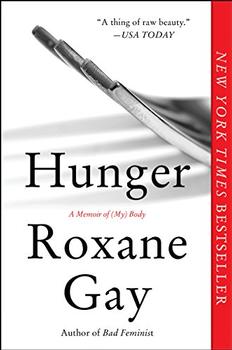
by Roxane Gay
Published 2018
From the New York Times best-selling author of Bad Feminist, a searingly honest memoir of food, weight, self-image, and learning how to feed your hunger while taking care of yourself.
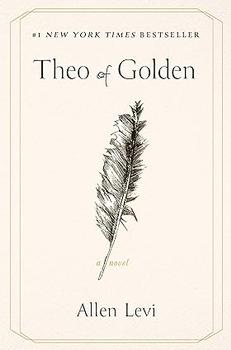
Theo of Golden by Allen Levi
One spring morning, a stranger arrives in the small southern city of Golden. No one knows where he has come from…or why…




Your guide toexceptional books
BookBrowse seeks out and recommends the best in contemporary fiction and nonfiction—books that not only engage and entertain but also deepen our understanding of ourselves and the world around us.

