
-
Your next favorite book
is waiting.
Summary | Excerpt | Reviews | Beyond the book | Read-Alikes | Genres & Themes | Author Bio

A Novel
by Evelyn Clarke Book Reviewed by:
On April Fools' Day 2025, HQ (an imprint of HarperCollins) posted a cryptic message on Instagram: "Secrets don't stay a secret for too long." It marked the beginning of an ambitious marketing campaign for The Ending Writes Itself, one of the most anticipated murder mysteries of 2026.
Fittingly, the novel was shrouded in mystery, especially around the true identities behind the pen name Evelyn Clarke. For five months, HarperCollins orchestrated an elaborate media rollout: twelve influencers received exclusive proofs accompanied by cryptic clues about the authors; there was a 72-hour race (mirroring the timeframe of the story) to deliver advance copies and themed gifts to bookshops all across Great Britain; the novel appeared on NetGalley for just 72 hours, and was accessible to only 72 readers; even a "golden proof" giveaway added to the build-up. The campaign sparked hundreds of comments and speculation before the final reveal in September 2025—that the novel was written by V.E. Schwab, American fantasy bestseller, and Cat Clarke, UK young adult author and screenwriter.
It's a level of marketing and budget that, ironically, the seven characters within The Ending Writes Itself can only dream of.
The novel follows seven struggling authors invited to a secluded island off the coast of Scotland owned by Arthur Fletch, the world's most famous writer, for what they believe will be one of his legendary literary salons. But Fletch is nowhere to be found, and soon his agent appears to deliver shocking news: Fletch is dead, and his final novel, the one meant to conclude the saga that brought him global fame and a castle on a private island, remains unfinished. These seven authors are given an irresistible offer: they are to complete the novel within 72 hours and the best ending will win one million dollars and a three-book deal with Fletch's publisher, Merriweather Press. For a group of midlist writers long ignored by the publishing industry, it's a life-changing opportunity—and more than enough motive for murder. Unsurprisingly, death soon enters the equation.
And so Evelyn Clarke sets a plot in motion that leans heavily on a classic trope of the genre: the "closed-circle mystery," involving a limited number of suspects, all with motive and opportunity, often confined in an isolated, inaccessible location. The closed-circle mystery was famously perfected by Agatha Christie in And Then There Were None, and The Ending Writes Itself has been marketed as one for her fans. Much like the setting of the Christie novel, the rugged island of Skelbrae with a storm brewing creates an atmosphere that mirrors the increasing tension developing inside the walls of Fletch's castle, were everyone seems to be keeping secrets.
The reading experience is tense, but also witty and fast-paced, packed with cliffhangers, twists, and revelations that keep the pages turning, arguably the most important quality in a murder mystery.
One of the novel's strongest aspects is its characterization. Each of the seven authors initially appears to be defined by very specific, almost stereotypical traits, much in Christie's vein: there are Sienna and Malcolm, a married couple authoring thrillers under the pen name Penn Stonely, she talented but tired, he oblivious and charming; the science fiction writer Jaxon, a pretentious douchebag; the YA author Millie, loud and bubbly; the romance writer Priscilla, serious and disciplined; the horror writer Kenzo, smart and cynical; and the young, inexperienced and unpublished Cate, shy and quiet, but apparently, according to Fletch's agent, as good as Fletch himself. However, unlike many of Christie's characters—often criticized for remaining archetypal—these figures gradually deepen. As the narrative shifts between their perspectives and each is allowed their own point of view, the reader gains a better understanding of and attachment toward them.
If the novel feels more "modern" than Christie in its character development, it falls short in its final twist. The who can be guessed relatively early on, even if the why remains unclear. And when the motive is finally revealed, it feels somewhat underwhelming, lacking the punch one expects from the build-up.
Still, wisely, the novel allows some space after the reveal to linger with its themes. Because The Ending Writes Itself is not just a murder mystery. It is also a sharp, satirical commentary on the publishing industry—an industry that "will eat you alive if you let it," driven by money and notoriety; the same forces that motivate the seven authors on the island, fuel countless classic mysteries, and ultimately give this novel its blend of the classic and contemporary, justifying its high anticipation, and justly placing it as, if maybe not the best murder mystery of 2026 (time will tell), surely one of the year's most enjoyable.
 This review
first ran in the April 8, 2026
issue of BookBrowse Recommends.
This review
first ran in the April 8, 2026
issue of BookBrowse Recommends.

If you liked The Ending Writes Itself, try these:

by Jean Hanff Korelitz
Published 2025
After the "insanely readable" (Stephen King) and "perfectly told" (Malcolm Gladwell) New York Times bestseller The Plot comes Jean Hanff Korelitz's equally captivating new novel: The Sequel.
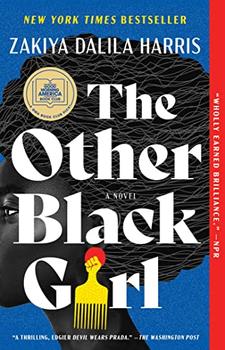
by Zakiya Dalila Harris
Published 2022
Urgent, propulsive, and sharp as a knife, The Other Black Girl is an electric debut about the tension that unfurls when two young Black women meet against the starkly white backdrop of New York City book publishing.
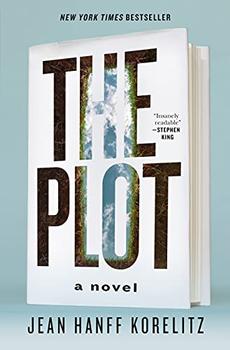
by Jean Hanff Korelitz
Published 2022
Hailed as "breathtakingly suspenseful," Jean Hanff Korelitz's The Plot is a propulsive read about a story too good not to steal, and the writer who steals it.
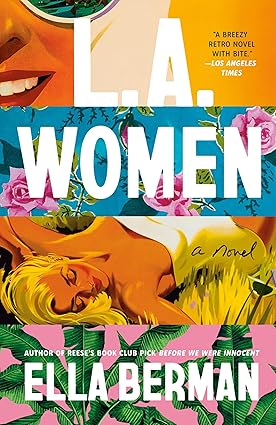
L.A. Women by Ella Berman
Two ambitious writers in 1960s LA face betrayal when one writes a novel based on the other's life.






Your guide toexceptional books
BookBrowse seeks out and recommends the best in contemporary fiction and nonfiction—books that not only engage and entertain but also deepen our understanding of ourselves and the world around us.

