-
Your next favorite book
is waiting.
Summary | Excerpt | Reviews | Beyond the book | Read-Alikes | Genres & Themes | Author Bio

A Novel
by Tara Menon Book Reviewed by:
Marissa's life has been defined by two key factors: grief, and a deep love of the ocean. After losing her mother at just the age of five, Marissa moved with her marine biologist father from New York to Thailand, where he intended to carry on her late mother's study of manta rays. Almost immediately, Marissa formed a powerful bond with local girl Arielle. The duo became inseparable, exploring islands together, with a particular shared passion for diving and observing the reef's rich array of marine life. Their paradise is shattered in 2004, when Thailand is hit by the cataclysmic waves of the Indian Ocean tsunami. Marissa survives the horror, but once again loses the most important person in her life.
In the wake of Arielle's death, Marissa returns to New York, where she attempts to come to terms with everything she has lost: her best friend; her home; and her powerful connection to the ocean. Fast forward to 2012 and the city holds its breath in anticipation of Hurricane Sandy. Alongside potential devastation, the impending cyclone forces Marissa to confront her existing trauma.
Throughout the narrative, chapters alternate between the past—Marissa's childhood with Arielle, leading up to the tsunami—and the present, in the days leading up to Hurricane Sandy. This creates tension, as we move simultaneously towards two unavoidable tragedies, while emphasizing how much Marissa's present life is haunted by the ghosts of her past. It also allows author Tara Menon to explore the contrast between the times leading up to both events. In 2004, the tsunami hits with next to no prior warning, while in 2012, New York buzzes with fear, as warnings dominate the headlines and people scramble to fortify their homes and hunker down. It's a simple yet effective way to highlight the legacy of the Indian Ocean tsunami, which led to vast international improvements in monitoring and preparing for natural disaster.
While the impact of major events like tsunamis and hurricanes can be felt immediately, Menon is keen to emphasize that the slow-burn influence of climate change can be just as devastating. In one example, Marissa laments the damage being done to the islands' reefs:
"We watched bright corals dim before our eyes. It was like watching a technicolor film fade to black and white. Every day, the reef turned whiter and whiter. Every day, there were fewer and fewer fish. […] There was no way to convince people that these gorgeous ghostly castles illuminated by the blue-green light of the ocean were a signal that the world was ending."
On the eve of Sandy's arrival, she elaborates:
"So many people imagine that climate change, when it comes, will be spectacular. […] They cannot conceive of catastrophe any other way. The ocean that day was spectacular. The storm tonight might be spectacular. But most of the time devastation is quiet, subtle, humdrum."
For all the fear and loss brought about by the natural world, Menon also celebrates its beauty and wonder. Marissa and Arielle's childhood passion for Thailand's splendor is clear, and though it becomes too painful to face in the aftermath of the tsunami, Marissa continues to find solace in nature, even in the urban surroundings of New York:
"I get off the train at Christopher Street and walk west toward the Hudson. At the river, a small crowd of people is standing still and looking up — against the dusky sky, a murmuration of starlings lifts and plummets, cleaves and converges. Children are pointing, even the eyes of adults are wide with wonder. A lone starling, determined not to be overlooked, imitates a car alarm. His glossy black feathers glisten under the fluorescent light of a nearby food cart."
But if Under Water is successful in looking outward at the large-scale impact of climate change and natural disaster, it is even more assured in its exploration of deeply personal grief. Marissa is unmoored by the loss of Arielle, and she resents the implication that her pain should be deemed any less valid than that of those who lost blood relatives or romantic partners:
"When people find out I was there that day, they ask if I lost any family. I don't know how to answer. Sometimes, I almost say yes. But then I get angry at them and at myself. I hate when people say we were like sisters. She was not my sister. You don't get to choose your sister. We chose each other. […] There is no place in our language for grief about friends, or love for them. Our language is tainted by the love and loss of lovers."
As Marissa gradually confronts the exact circumstances of Arielle's life and death, she must learn to make peace with everything they never got the chance to say, to find her place in the world, and to heal her connection to the beautiful yet brutal ocean she once loved.
 This review
first ran in the March 25, 2026
issue of BookBrowse Recommends.
This review
first ran in the March 25, 2026
issue of BookBrowse Recommends.

If you liked Under Water, try these:

by Susanna Kwan
Published 2026
An utterly transporting debut novel about the unexpected relationship between an artist and the 130-year-old woman she cares for—two of the last people living in a flooded San Francisco of the future, the home neither is ready to leave.

by Emma Pattee
Published 2025
Set over the course of one day, a heart-racing debut about a woman facing the unimaginable, determined to find safety.
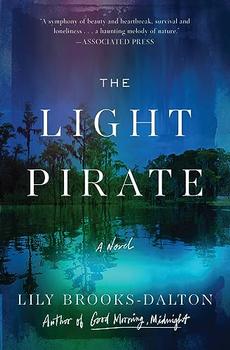
by Lily Brooks-Dalton
Published 2024
For readers of Station Eleven and Where the Crawdads Sing comes a hopeful, sweeping story of survival and resilience spanning one extraordinary woman's lifetime as she navigates the uncertainty, brutality, and arresting beauty of a rapidly changing world.
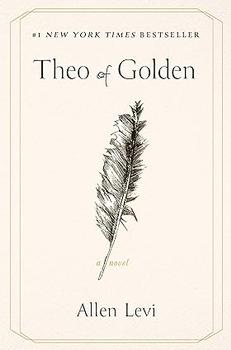
Theo of Golden by Allen Levi
One spring morning, a stranger arrives in the small southern city of Golden. No one knows where he has come from…or why…



Your guide toexceptional books
BookBrowse seeks out and recommends the best in contemporary fiction and nonfiction—books that not only engage and entertain but also deepen our understanding of ourselves and the world around us.