
-
Your next favorite book
is waiting.
Summary | Excerpt | Reviews | Beyond the book | Read-Alikes | Genres & Themes | Author Bio

Stories
by Lauren Groff Book Reviewed by:
A high school student on the diving team watches her mother splinter and disintegrate from a mysterious illness. A recently retired woman finds new depths within herself after joining a gardening club. A teenager living in Florida in the 1950s is compelled to confine her brother to an institution. A woman travels to the bedside of her former best friend from high school to hash out buried secrets, traumas, and desires. Groff's first story collection since Florida (2018) can be bleak, but it glides through emotional registers with finesse, lighting upon exquisite moments of human connection, and disconnection.
Brawler opens with an abrasive, racing story called "The Wind," which begins on the morning a 12-year-old girl, her mother, and her two brothers are attempting to escape from the man who is abusing them. The night before, the girl stepped between her mother and her father's fist, a catalyst for the mother to decide, once and for all, to flee. One mistake threatens to undo their carefully laid plans, to snap the bear trap of vengeance around them. The story ends with an acknowledgment of how misogynist violence is an epigenetic trauma, how it creates a way of looking at the world where there is danger around every turn, "this wind that is dark and ceaseless and raging within."
The collection's centerpiece is a novella-length story called "What's the Time, Mr. Wolf," starring a man named Charles, aka Chip, who has failed his way out of the family business but is too rich to fail at life entirely. After he is let go from the bank managed by his (almost equally useless) uncle, another Charles, Chip is sent by his sister to the palatial estate of his grandparents, with the perfectly chosen Massachusetts old-money nicknames Bear and Slim (worth noting that Bear is also a Charles), to dry out.
Groff demonstrates with devastating accuracy the ways in which wealthy men are immune to consequences. When Chip is nearly failing out of boarding school, his grandfather suggests he might not gain admittance to the university that the family have been attending for generations. Slim snaps back at this whiff of repercussions for her grandson: "Charles, are you utterly insane? He's a legacy a hundred times over and there is nothing that the right donation cannot do." Later there is an incident involving "a girl invited home" in which "something happened in the bedroom that Chip honestly didn't remember...charges brought, only to be dropped when Slim stepped in."
With his grandparents living in Arizona, Chip is alone on the property and begins to lose himself in the manual labor of renovating the boathouse (and in the fantasy of becoming a different kind of man, the kind that does manual labor, or labor of any kind for that matter). While so engaged, he meets an older woman named Pearl who owns a restaurant in town, and she propositions him sexually. But when he tries to turn the sex into a relationship, imagining he can refine her into something more polished that his family will accept, she brushes him off, reminds him that she is not looking for a boyfriend. This refusal from someone he deems so clearly, obviously beneath him drives Chip into an obsessive spiral. He starts drinking again and the story, just like "The Wind," careens toward a seemingly preordained and violent end.
It's a running thread in the collection, human unpredictability. It's the only thing that can break through a system carefully designed to protect the most privileged, like Chip, from the consequences of their own actions. At one point he indulges in a fantasy about his future with Pearl, despite her already having rebuffed him multiple times:
"And when he lived with her, he could slowly work on her, buying her cashmere sweaters, pearls, modeling manners until she'd accidentally acquired some from him; he'd treat her to a makeover day at a salon to fix the gray hair, introduce her to his friends in the city, eventually even make her presentable for Slim."
To Chip, Pearl is just a doll he can pose and move around, and ultimately bend to his will, because how could she not see that he is better than her and that she is fortunate to be given the opportunity to be improved by him? But she doesn't see, and she doesn't want him.
The collection ends on a similar note, with "Annunciation," in which a woman reflects on a mistake she made in her youth. The story's narrator befriends a coworker named Anais, who has a shy, cornered-animal vibe. She learns over time that Anais lives with her young daughter in a "Vanagon," which is a "boxy olive-green Volkswagen van," and that they have fled the girl's father after he tried to murder Anais. The narrator makes an offhand comment to another colleague about her concern that Anais may not be vaccinating her daughter, meaning well in the moment but also, she understands in retrospect, flexing her own might in the situation—disclosing privileged information to feel important. She, like Chip, feels a sense of ownership over people who do not actually belong to her, and as a result, Anais disappears. From that moment forward, the narrator is haunted by "the black spot, the sin, of having sent a traumatized woman bolting out of her life."
These stories are wracked with a simmering ominous tension, but they are also very funny in their capacity to capture the finer details and foibles of human behavior (for instance, in "What's the Time, Mr. Wolf," we're told that Chip's uncle Charles "rescued Diana from a yoga studio when he married her, which is why she was always saying the kind of thing she was saying now, Surely the desert is haunted, but in a very special way"). They capture the futility of trying to wrestle for control in a world where the best we can usually do is react to others' actions, making split second decisions under less than ideal circumstances. But also, these stories feature an abundance of tenacity—a refusal to give up (even when perhaps one should) on happiness, on true safety and security, on fulfillment, in a world where these things feel so often out of reach.
 This review
first ran in the February 25, 2026
issue of BookBrowse Recommends.
This review
first ran in the February 25, 2026
issue of BookBrowse Recommends.

If you liked Brawler, try these:

by Sarah Braunstein
Published 2026
Prescient and idiosyncratic stories about the cost and joys of caretaking from a "sharp-witted, ravishing" (New York Times) writer.

by Tony Tulathimutte
Published 2025
From the Whiting and O. Henry–winning author of Private Citizens ("the first great millennial novel," New York Magazine), an electrifying novel-in-stories that follows a cast of intricately linked characters as rejection throws their lives and relationships into chaos.
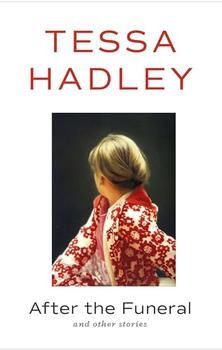
After the Funeral and Other Stories
by Tessa Hadley
Published 2024
A masterful collection of stories that plumb the depths of everyday life to reveal the shifting tides and hidden undercurrents of ordinary relationships.
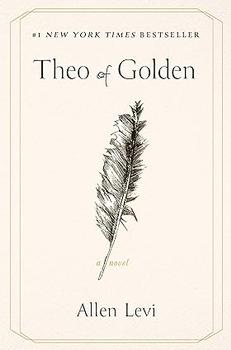
Theo of Golden by Allen Levi
One spring morning, a stranger arrives in the small southern city of Golden. No one knows where he has come from…or why…






Your guide toexceptional books
BookBrowse seeks out and recommends the best in contemporary fiction and nonfiction—books that not only engage and entertain but also deepen our understanding of ourselves and the world around us.

