
-
Your next favorite book
is waiting.
Summary | Excerpt | Reviews | Beyond the book | Read-Alikes | Genres & Themes | Author Bio

A Beginner in the Wood
by Adam Nicolson Book Reviewed by:
Birds have the somewhat unique quality of being simultaneously very familiar yet entirely foreign to us humans. They are everywhere, we see them every day, and we immediately recognize birdsong as the sound that emanates from them. And yet birdsong is impossible for humans to understand—despite our best efforts, birds' language remains frustratingly impenetrable to the human brain—and the ability to fly has been a source of wonder and envy for millennia.
In his new book, Bird School: A Beginner in the Wood, Adam Nicolson tells his story of becoming awakened to this paradoxical nature of the avian world and setting out to understand it better. Nicolson is a former journalist and author of books on topics ranging from epic poetry to marine life to seabirds. In this one, he stays closer to home in southern England and studies how the birds around him interact with their world. The result is an entertaining blend of observation and science with ruminations on art, religion, and literature.
Nicolson lives on a sprawling former farm in Sussex. To satisfy his burgeoning interest in birds, he builds what is essentially a hunter's blind, but not for hunting—it's a "birdhouse" raised above the ground from which he can observe the avian residents of his relatively unkempt fields and woods. He sets up feeders, attaches actual birdhouses to the exterior of his own, and sits there every day for months throughout different seasons, even in pre-dawn darkness and in the snow of winter.
He gets to know the local songbirds, including thrushes, blackbirds, wrens, and tits. He logs when they start singing in the morning and becomes a devotee of the Merlin Bird App, an ingenious program that identifies birdsong based on machine learning identification of spectrographs. He maps out how robins establish their territories throughout the farm, how tawny owls memorize their surroundings for incredibly effective nocturnal hunting, and how ravens are strangely reminiscent of intelligent yet fickle humans. He anthropomorphizes the ravens a bit, but that's forgivable in light of their importance in human culture, which Nicolson also talks about; for example, according to an indigenous Siberian myth, ravens are the ones responsible for other birds' geographic distributions: "Raven said, 'It would not be well for all kinds of birds to be in one place. It will be better for people if the birds are scattered. Henceforth the birds shall be scattered throughout the country, and each kind shall live in a different locality.'"
More literary digressions are sprinkled throughout, but there's plenty of science, too. Nicolson explains how light pollution impacts birds' circadian rhythms and the timing of their songs; and he explores birds' evolutionary history and the harsh realities of breeding, nesting, and raising chicks. His first-hand observations form the basis for these subjects, but he also shares scientific research in accessible prose. The chapter on birdsong delves into musicology, with fascinating anecdotes such as how pigeons were taught to distinguish successfully between Bach and Stravinsky. But Nicolson is wise to highlight the unknowable quality of birdsong to humans. Birds have different organs for singing than we do and they hear differently; while we can see the effects of their language upon their interactions, we can never truly know what they're saying. "The [bird]songs we know, all the songs that people through the ages have attempted to describe, are no more their meaning to the birds," he writes, "than the paper, ink and boards of a book are the essence of what it has to say [to humans]."
In a chapter on the extraordinary feat of migration, Nicolson includes species-specific mileages and maps, and he describes birds' sensing of Earth's magnetic field for guidance—another capability we can marvel at but never achieve. He finishes by exploring the devastating impact of humanity upon bird populations, both during their migrations and generally from hunting and habitat destruction. It's grim reading: many species in the UK have seen 90% population declines, and figures are similar throughout Europe and North America (see Beyond the Book).
So what to do? Ultimately, Nicholson comes to advocate not for a full "rewilding," but for a gentler approach. He doesn't want to do away with the hedges, fields, and other human-influenced features of his woods that have been there since the Middle Ages. Rather, he chooses to add more woods and hedges, increase plant diversity, and let the human and avian worlds peaceably coexist. (Interventions like birdfeeders, despite their popularity, only further skew biodiversity by favoring certain species over others.)
Bird School is a charming, meditative book that showcases its author's impressive breadth of knowledge: from scientific research to references to the Iliad to discourses on Christian saints, the book is much more than one birdwatcher's observations. It takes seriously avian life on its own terms, while still exploring birds' connections to and differences from humans. Perhaps most importantly, the book may inspire more people to see the value in the familiar yet unknowable aspects of nature around them. Like its subjects, Bird School wanders oddly sometimes but ultimately lands softly and pleasurably.
 This review
first ran in the November 19, 2025
issue of BookBrowse Recommends.
This review
first ran in the November 19, 2025
issue of BookBrowse Recommends.

If you liked Bird School, try these:

by Robert Macfarlane, Jackie Morris
Published 2026
From the best-selling authors of The Lost Words, a dazzling celebration of endangered birds.

by David George Haskell
Published 2026
An exquisite exploration of the power of flowers, placing them at the center of the story of how evolution created the world we know today.

by Rebecca Renner
Published 2024
David Grann meets Susan Orlean in this page-turning true story of an underground operation into the mysterious world of alligator poaching and its larger than life Floridian characters
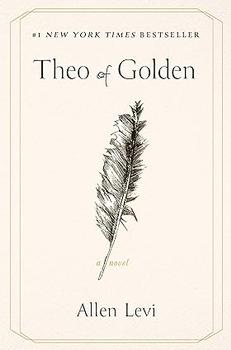
Theo of Golden by Allen Levi
One spring morning, a stranger arrives in the small southern city of Golden. No one knows where he has come from…or why…






Your guide toexceptional books
BookBrowse seeks out and recommends the best in contemporary fiction and nonfiction—books that not only engage and entertain but also deepen our understanding of ourselves and the world around us.

