-
Your next favorite book
is waiting.
Summary | Excerpt | Reviews | Beyond the book | Read-Alikes | Genres & Themes | Author Bio

A Novel
by Sacha Bronwasser Book Reviewed by:
When Marie hears from her home in the Netherlands that terrorists have attacked Paris, her first thought is of Flo. While others check in as "safe" on social media, Flo stays silent—"ominously silent," as Marie notes. The two haven't spoken in almost 30 years, but Marie has been carrying their shared history with her like "a pebble in [her] shoe." The attack proves to be the occasion to unburden herself—to tell the story of their relationship as she lived it. All she asks of Flo, to whom she relates the story, is one thing: "Listen."
Sacha Bronwasser, an established art historian turned fiction writer, takes Marie's forceful command as the title for her engrossing second novel, translated from the original Dutch by David Colmer. Ranging over three decades and telling the stories of people whose lives merely brush against each other, Listen defies easy summary. Marie herself begins her story in a roundabout way. Never abandoning her second-person narration, she starts by telling Flo about Philippe Lambert—a man her old acquaintance has never met but who sits at the heart of their brief relationship.
The youngest child of a well-heeled Parisian family, Philippe is considered different even before he begins having "premonitions" at an early age. These hazy visions of the future correctly foretell everything from the momentous (the traffic accident that will kill his grandmother) to the relatively mundane (a water pipe that will burst in the family's five-bedroom apartment). To his parents' relief, however, Philippe seems to outgrow his adolescent peculiarities. From then on, his life unfolds at a reassuringly familiar rhythm: he marries, moves to a pleasant apartment near Place de la Nation, and has two sons. In the adult Philippe, Bronwasser sculpts the perfect model of the self-assured French bourgeoisie.
When Philippe's wife goes back to work, the couple decides to bring in an au pair—a girl from northern Europe, someone "clean and quick to learn the language." The arrangement works well for a while; each year they welcome a new apple-cheeked German or Scandinavian to look after their sons, replacing her with another anonymous face when the time comes. Marie will eventually take up the position in 1989. But that's only after Eloïse enters the Lamberts' lives.
Unlike previous au pairs, Eloïse is far from anonymous—in fact, the first time Philippe sets eyes on "the full-figured girl in tight jeans," he collapses on the floor. The young Fräulein quickly becomes a fixation, and Philippe falls back to making the sort of morbid predictions that marked his youth. He knows his obsession won't end well, but that doesn't stop him skipping work and secretly following Eloïse around the city. The reader may sniff a stale cliché (as Marie herself remarks, dealing with a father's "impropriety" is more or less part of an au pair's job description), but Listen's greatest strength is its ability to swing the narrative down an unexpected boulevard. And there are more than a few sharp turns.
By the time Marie ends up in the Lamberts' service, the family isn't mentioning what happened between Philippe and Eloïse. Frankly, Marie doesn't care. Having dropped out of university following her own messy entanglement with a charismatic photography professor—recounted in a devastating flashback sequence—she's just happy to be leading a new life in a new city. Paris is full of possibility again after a spate of terror bombings during Eloïse's stay, and Marie throws herself into that brave new world. She learns the language and has the obligatory romantic flings; in other words, she embarks on exactly the kind of carefree existence that she left the Netherlands to pursue. Only when the gloomy Philippe starts cropping up in unexpected places does her Parisian dream get more complicated.
Eloïse in the 1980s, Marie in Paris and the Netherlands, Flo caught up in the attacks of 2015: readers expecting Listen to resolve itself into a cohesive whole may find themselves disappointed. Bronwasser doesn't limit herself in this slim novel—she writes skilfully and intelligently about photography and perception, about abuse of power in all its forms, and about the joys and anxieties of young adulthood—but her attempts to gather those disparate strands together are never entirely successful. At times, Listen feels more like a short story collection than a novel. But it's not surprising that it made such a splash in Bronwasser's home country, running to twelve reprints since its original publication in 2023. Even if it stumbles down the occasional cul-de-sac, Marie's twisting tale never quite leads you where you expect—and intrigue is sure to keep the reader following relentlessly at her heels.
 This review
first ran in the November 19, 2025
issue of BookBrowse Recommends.
This review
first ran in the November 19, 2025
issue of BookBrowse Recommends.

If you liked Listen, try these:

by Linn Ullmann
Published 2026
Called a "masterpiece" (Ali Smith), this stunning novel explores desire and anxiety, beauty and youth, memory and power.

by Aria Aber
Published 2026
An electric debut novel about the daughter of Afghan refugees and her year of nightclubs, bad romance, and self-discovery—a portrait of the artist as a young woman set in a Berlin that can't escape its history.
A girl can get in almost anywhere, even if she can't get out.
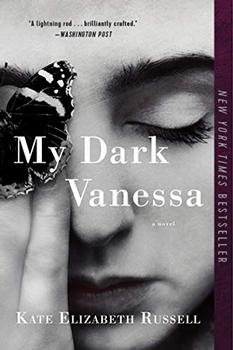
by Kate Russell
Published 2021
Exploring the psychological dynamics of the relationship between a precocious yet naïve teenage girl and her magnetic and manipulative teacher, a brilliant, all-consuming read that marks the explosive debut of an extraordinary new writer.


Beliefs are what divide people. Doubt unites them
Click Here to find out who said this, as well as discovering other famous literary quotes!

Can you name the title?
Test your book knowledge with our daily trivia challenge!
Your guide toexceptional books
BookBrowse seeks out and recommends the best in contemporary fiction and nonfiction—books that not only engage and entertain but also deepen our understanding of ourselves and the world around us.