
-
Your next favorite book
is waiting.
Summary | Excerpt | Reading Guide | Reviews | Beyond the book | Read-Alikes | Genres & Themes | Author Bio

 Book Reviewed by:
During the summer of 2020, I began a low-key, self-imposed challenge to reread Carol Shields' work. I'd read most of her books during my twenties, after a coworker passed me copies of Happenstance and The Stone Diaries. Revisiting her complete fiction in my late thirties and early forties has been hugely rewarding. Not only do I have more life experience that allows me to appreciate the author's insight into gender roles, memory, and chance, but I have also been able to track the development of themes across her oeuvre: marriage, travel, the writer's craft, the unreliability of history and (auto)biography, and the possibilities of language versus what is unspoken.
Swann (1987), my final reread for the project, has many concerns in common with Shields' other fiction, as well as a wry tone. At the same time, it feels more ambitious structurally (see Beyond the Book) and in its plot. The "joke" in this dark, sophisticated literary comedy is that Mary Swann, a murdered poet from small-town Canada, is the title character and yet a minor figure throughout. In fact, nearly every remnant of her minuscule body of work—and conventional life—seems to be vanishing. That makes the novel something of a mystery, one in which the crime is not an unsolved murder (it's established that her husband, Angus, shot and dismembered her) but the ease with which genius can slip into obscurity.
Swann lived in Nadeau, Ontario and was remembered as a pleasant farmer's wife with no particular distinguishing features. Hers was a rural subsistence life with no telephone, driver's license, or washing machine; she left no medical records behind. And like Emily Dickinson, she was virtually unknown as a poet in her lifetime. Her simple but profound verse rhymed and used everyday domestic vocabulary:
"Blood pronounces my name
Blisters the day with shame
Spends what little I own,
Robbing the hour, rubbing the bone."
At age 49, just hours before she was killed, Swann submitted a handwritten sheaf of poems to a publisher. Swann's Songs was published posthumously the following year, in 1966, in a limited edition of 250 copies; by the time of the events of the novel, two decades on, only 20 of them are still in existence. The only known photographs of Swann are held by a local history museum, one of which is blurry and has her with eyes closed against the sun. Few artifacts of her life survive and those that do have been disappearing.
Swann follows four characters whose lives become intertwined with Swann's legacy; they search desperately for information about her, yet also discard facts about her that are less than flattering, hoping to preserve the mystique of their beloved poet. Dr. Sarah Maloney is a feminist scholar in Chicago who is trying to decide between two suitors and fretting over her mother's health. She first fell in love with Swann's poetry when she stumbled on a copy of Swann's Songs on the shelf of a Wisconsin vacation cottage. Her prized possession is a diary that once belonged to Swann; and though it contains nothing more enlightening than shopping lists and harvesting and weather notes, she guards it jealously. Except it has gone missing, as has her copy of Swann's poems. And her little secret is that she once had another item of Swann's, a rhyming dictionary, but threw it away, aghast that her self-taught heroine used such a crutch.
Biographer Morton Jimroy's new undertaking proves frustrating: Swann's letters seem pedestrian and his attempts to glean more information about her are futile. He's divorced and has a crush on Dr. Maloney; they maintain a flirtatious correspondence, but she refuses to share Swann's notebook. All that Nadeau librarian and local historian Rose Hindmarch, who is suffering from mysterious gynecological problems, can tell him is that Swann loved Pearl Buck and Edna Ferber, popular writers he'd prefer that readers didn't associate with the poet. And publisher Frederic Cruzzi—widowed, looking back on his life and wondering if a second chance awaits—has nothing to impart about Swann's appearance or habits from his sole meeting with her, except that she liked orange pekoe tea with milk and sugar. It's ironic, and surely part of the point, that readers come to know these four central characters much better than they do Swann.
The Toronto symposium that brings the four together—in the book's fifth and final section, written as a screenplay—is as marked by dead ends and absurdity as the search for Swann's life has been. Most scenes are entirely dialogue, with people often talking over each other—a humorous and true-to-life strategy that Shields used to great effect in several of her other novels as well. The way Shields turns an academic conference into a farce is reminiscent of David Lodge's Campus Trilogy, while the mischievous approach to biography recalls Julian Barnes' Flaubert's Parrot. And coincidentally, Swann was published in the UK the same year as A.S. Byatt's Possession, which also concerns the search for a mysterious poet.
The three authors above are my favorites, so it's no surprise I've become such a Shields fan, especially after years of rereading her fiction. Swann isn't one of my favorites of Shields'—it seems more of a cerebral experiment than an emotionally resonant story—but I value how it comments on the fragile legacy people leave behind, especially women without power or influence, encourages us to marvel at life's contingency, and celebrates ordinariness: "Dailiness to be sure has its hard deposits of ennui, but it is also, as Mary Swann suggests, redemptive," Dr. Maloney thinks. Shields was underrated in her lifetime and even now seems appreciated more as a provincial Canadian novelist than a world-class one, but she deserves to be as much of a household name as, say, Margaret Atwood, another Canadian author with a feminist outlook and success in various genres. Shields' oeuvre truly rewards deep analysis, and digging into the structure, style, and literary context of her work has given me an even greater admiration for it.
 This review
first ran in the November 5, 2025
issue of BookBrowse Recommends.
This review
first ran in the November 5, 2025
issue of BookBrowse Recommends.

If you liked Swann, try these:
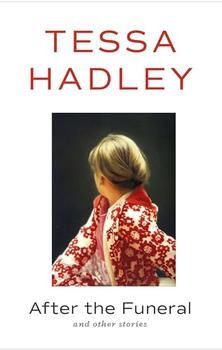
After the Funeral and Other Stories
by Tessa Hadley
Published 2024
A masterful collection of stories that plumb the depths of everyday life to reveal the shifting tides and hidden undercurrents of ordinary relationships.

by Susie Boyt
Published 2023
Love and Missed is a whip-smart, incisive, and mordantly witty novel about love's gains and missteps. British writer Susie Boyt's seventh novel, and the first to be published in the United States, is a triumph.
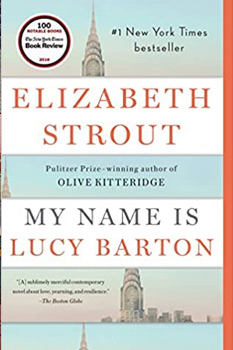
by Elizabeth Strout
Published 2016
The profound mother-daughter bond is explored through a mother's hospital visit to her estranged daughter by the Pulitzer Prize-winning author of Olive Kitteridge and The Burgess Boys.
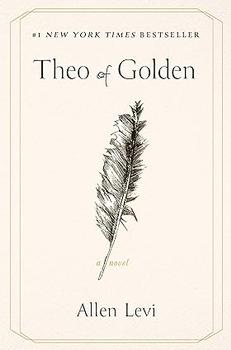
Theo of Golden by Allen Levi
One spring morning, a stranger arrives in the small southern city of Golden. No one knows where he has come from…or why…






Your guide toexceptional books
BookBrowse seeks out and recommends the best in contemporary fiction and nonfiction—books that not only engage and entertain but also deepen our understanding of ourselves and the world around us.

