
-
Your next favorite book
is waiting.
Summary | Excerpt | Reviews | Beyond the book | Read-Alikes | Genres & Themes | Author Bio

 Book Reviewed by:
Eighteen-year-old Mary Katherine "Merricat" Blackwood is a pariah. She lives in a sprawling mansion in a rural village with her agoraphobic sister and disabled uncle. Once a week, she buys groceries in town, where she is insulted by locals. The standoffish, upper-crust Blackwoods were never a particularly popular family, but they became the subjects of outright derision six years ago, when Merricat's older sister Constance was accused, then acquitted, of fatally poisoning the other members of their family. So the Blackwoods live in a tightly isolated bubble until a distant relative arrives—and becomes a catalyst for chaos.
Though Merricat is technically an adult, she comes across as much younger. She imagines the family cat can speak to her, fantasizes about visiting the moon, and impulsively demands that Constance bake a cake for her and the cat. It seems as though her emotional growth was stunted when her family died and her isolation began. This immaturity is fed by the way she is indulged by Constance, who responds to her whimsical musings—and even her most selfish actions—with "silly Merricat." Constance, 10 years her senior, also reminds Merricat to comb her hair and wash her face as though she were a toddler.
While Merricat takes for granted that Constance will care for her, freely demanding specific, time-intensive meals, she also adores her older sister. She notes that when she was younger, she thought that Constance was a princess out of a fairytale. Theirs is a codependent relationship, and when the relative comes to stay and seeks out Constance's company, Merricat grows fiercely jealous. Her love becomes toxic as she subjects this interloper to glares and cruel pranks. Protective, maternal Constance, as always, minimizes Merricat's actions
Shirley Jackson based the characters of Constance and Merricat on exaggerated versions of her own daughters, but that's just one of the autobiographical elements inspiring We Have Always Lived in the Castle. When her husband was a professor at Bennington College in rural Vermont, the former city dweller never fit in with the locals, who in turn were not fans of her, an urban intellectual. This fueled a complex tension where each looked down on the other, a dynamic woven into the novel. (For more on the ways We Have Always Lived in the Castle handles class tensions, see the Beyond the Book article.)
This novel fits firmly within the gothic genre, with its sense of foreboding and domestic setting. But unlike Jackson's other famous gothic work, The Haunting of Hill House, it features no supernatural forces. The horrors of this book hit much closer to home—which makes them even scarier. The monsters of We Have Always Lived in the Castle are normal, otherwise good people who love their families and work hard at their jobs. But when they have the chance to unleash their resentment toward a family they've long hated, they seize it.
Constance is in many ways the sort of person others feel morally OK about verbally attacking. After all, many of them really do believe she killed her family. When they look at her, they see a wealthy, beautiful young woman who escaped any consequences for her monstrous actions. One only needs to take a quick scroll through social media to see how accurately Jackson has nailed the human tendency to cast blame. Some who read this book may be uncomfortable with just how clearly they see themselves reflected in the angry villagers. Others may identify with ostracized Merricat, only to realize, as they get deeper into the story, the darkness that also lies in her heart. Jackson, a master of horror, outdoes herself in this book by showcasing the potential for the monstrous that lies within each person.
 This review
first ran in the November 5, 2025
issue of BookBrowse Recommends.
This review
first ran in the November 5, 2025
issue of BookBrowse Recommends.

If you liked We Have Always Lived in the Castle, try these:

by Kate Riley
Published 2026
In this mesmerizing and profound novel, the arc of a woman's life in a devout, insular community challenges our deepest assumptions about what infuses life with meaning.
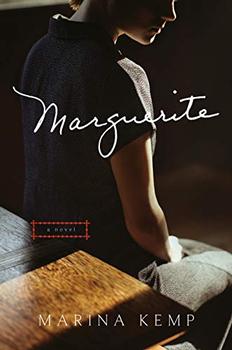
by Marina Kemp
Published 2020
In this haunting novel, a young nurse forms an unlikely connection with the elderly man she cares for, and finds herself confronting the guilt she carries from her past.
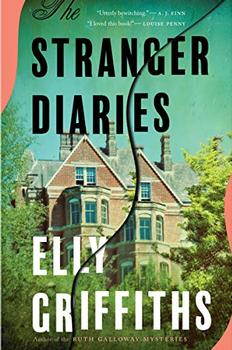
by Elly Griffiths
Published 2019
Death lies between the lines when the events of a dark story start coming true in this haunting modern gothic mystery, perfect for fans of Magpie Murders and The Lake House.
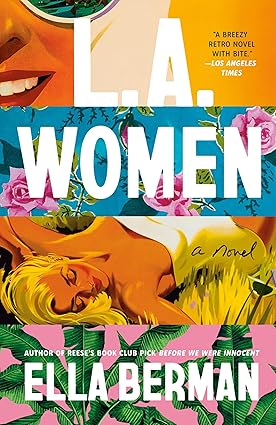
L.A. Women by Ella Berman
Two ambitious writers in 1960s LA face betrayal when one writes a novel based on the other's life.






Your guide toexceptional books
BookBrowse seeks out and recommends the best in contemporary fiction and nonfiction—books that not only engage and entertain but also deepen our understanding of ourselves and the world around us.

