
-
Your next favorite book
is waiting.
Summary | Excerpt | Reviews | Beyond the book | Read-Alikes | Genres & Themes | Author Bio

The Real Science Behind the Death of the Dinosaurs
by Gerta Keller Book Reviewed by:
Like many people, I was fascinated by dinosaurs as a young child. My brief period of intense self-education about the prehistoric creatures that once roamed the Earth left me with a few broad concepts—carnivores like the T. rex vs. herbivores like the brontosaurus, pterodactyls being the ones with wings, and that they were all wiped out by a huge asteroid impact that caused drastic temperature changes.
It turns out that at the time—the early to mid-1980s—what is now known as the "impact theory" was widespread but far from confirmed, as Gerta Keller details in The Last Extinction. The theory was published at the start of the decade by Nobel Prize-winning physicist Luis Alvarez and his son Walter, a geologist. Alvarez had major influence in the scientific community, extending to the scientific media. According to Keller, he was able to exercise this influence to soon present impact theory as indisputable, despite many behind the scenes, including paleontologists and geologists, pointing to a lack of evidence in the fossil record.
As Keller unfolds the story of how she subsequently sought to bring her own, contradictory research to light, she presents readers with both hard data and her personal journey from an impoverished childhood in Switzerland to a career as an accomplished geologist who had to fight hard for visibility among her largely male peers. Despite the gender discrimination she experienced early on, she still chose the rocky path (pun intended) of gathering evidence for her hypothesis that the fifth mass extinction, which included the death of the dinosaurs, was not caused by an asteroid impact but something else.
The Alvarez theory was based on the discovery in Italy of a significant concentration of iridium in a layer of clay dated to the time of the mass extinction. Because iridium is such a rare element on Earth and often appears in the form of extraterrestrial material, the Alvarezes believed that it must have come from an asteroid impact, proving that a massive asteroid hit at the time the dinosaurs died out. However, Keller points out that iridium also exists deep inside the planet in the form of space debris that lodged there at the time of its formation, and can conceivably rise to the surface due to volcanic activity, which she considers a much more likely explanation for its presence. Keller's own research, itself centered on volcanic phenomena, falls in favor of the Deccan volcanism theory, first proposed by paleontologist Dewey McLean in 1978, which states that volcanoes in the area now known as the Deccan Traps in India produced greenhouse gases over a period of time, causing extreme warming. The book details her research methods, including sediment analysis to date asteroid impacts alongside the extinction of life forms, and collaboration with a chemist to achieve more complete information about the iridium presence that bolstered the Alvarez theory.
The data and explanations Keller presents are convincing to the lay reader, and her accounts of the sexism, bullying, and attempts at silencing (ranging from general dismissal to sabotage, intimidation, and withholding of data and resources) she experienced in the scientific community in reaction to her persisting in her work will ring true to those who have witnessed similar phenomena in any field. The attitude she encountered that impact theory must be correct simply because so many scientists wouldn't have agreed with it otherwise falls apart in the face of what media-literate people know: it is highly possible, and even normal, for unconfirmed "facts" to become viewed as "science" among the educated public via the right amount of influence, often with the complicity of some in science and the media, and often with the shameless goal of supporting the interests of the wealthy (see Beyond the Book). In the decades of climate change denial, for example, or, more recently, the popular misinterpretation of the "hygiene hypothesis" leading to the false concept of "immunity debt" (an idea implying that getting sick is good for your immune system, when what the hygiene hypothesis actually suggests is that exposure to certain environmental microbes, not viruses, is beneficial to immunity), propped up knowingly or passively by many journalists.
Readers may be annoyed by the book's packaging and framing—the phrase "real science" in the subtitle and attempts to make Keller's story exciting in a rather basic way may not be the best choices. But Keller doesn't beat the reader over the head with her theory. In discussion surrounding the publication of this book, some online commenters have painted her as a staunch extremist, which isn't reflected in the content. She believes that she's right and that she's been wronged, but her grievance seems to be not with impact theory itself or good-faith supporters of the theory, but rather with those who have tried to sabotage any opposition. While she advocates for what she sees as the logical conclusions of her research, one can read the book without feeling that the point is to accept her ideas without question. She recalls attending a conference in 2013 where she was grateful for a more respectful and open atmosphere than she had experienced in years past: "Though few dogmatic impactors attended, the idea that an impact played a role in the mass extinction was well represented. Some, like me, suspected that volcanism was likely the primary cause of the extinction, but many others proposed a synthesis of the theories. Nevertheless, I welcomed the viewpoints of my fellow scientists and remained curious about any new facts that were brought to the debate."
That said, Keller's story is written not only as a scientific treatise but as something of a personal hero's journey, so it seems relevant to ask not just whether we believe her but whether we can root for her. Disappointingly, this isn't always the case (which is still different than saying she's a hysterical woman attempting to disrupt the status quo in a way that would be sexy if a guy did it). Anecdotal snippets about travels for her research that seem inserted to entertain or amuse frequently come across as out of touch and exoticizing, such as when she recalls having bought a tortoise in Tunisia from a boy whose family would have slaughtered it for food, paying with the smallest bill she had (a bizarre detail to include), and making the animal her pet after charming her way through customs with it.
More substantially, she glosses over important connections between her theories and real-world concerns. She uses the climate crisis to frame her research of volcanic activity in India as morally and existentially significant, but doesn't appreciate the irony of how in order to conduct this research, she had to collaborate with an Indian oil corporation. Scientists must often be faced with ethical compromises, but rather than remarking thoughtfully on the situation or approaching it with restraint, she appears to enjoy recounting her elaborate shmoozing with high-ranking people and to expect the reader to share her glee. Generally, the book lacks a moral center even as it leans heavily on dramatic notions of personal and scientific integrity. The social and political elements of The Last Extinction make a willing entrance into the storyline but remain untouched by the analysis and imagination afforded to Keller's life's work.
The Last Extinction is educational in more ways than one. Readers of this book may find themselves most interested not in the hard science or the personal details of Keller's life, but in her (albeit sometimes unexamined) account of the social-scientific machine. She seems to have a keen understanding of how she has been affected by the culture around her, and her perspective is enlightening and still relevant, one imagines, to current machinations in the government, academia, and publishing. And what, one may wonder, is the alternative to all that? What, ultimately, does the world owe scientists and what do scientists owe the world? Keller may stop short of engaging with questions like these, but readers don't have to.
 This review
first ran in the October 22, 2025
issue of BookBrowse Recommends.
This review
first ran in the October 22, 2025
issue of BookBrowse Recommends.

If you liked The Last Extinction, try these:

by Cat Bohannon
Published 2025
The real origin of our species: a myth-busting, eye-opening landmark account of how humans evolved, offering a paradigm shift in our thinking about what the female body is, how it came to be, and how this evolution still shapes all our lives today
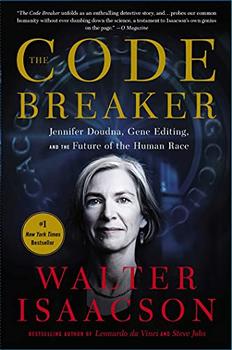
by Walter Isaacson
Published 2022
Winner of the 2021 BookBrowse Nonfiction Award
The bestselling author of Leonardo da Vinci and Steve Jobs returns with a gripping account of how Nobel Prize winner Jennifer Doudna and her colleagues launched a revolution that will allow us to cure diseases, fend off viruses, and have healthier babies.
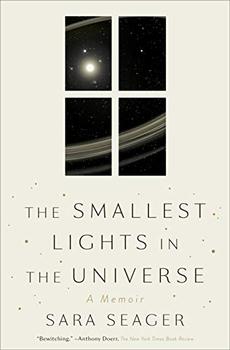
The Smallest Lights in the Universe
by Sara Seager
Published 2021
In this luminous memoir, an MIT astrophysicist must reinvent herself in the wake of tragedy and discovers the power of connection on this planet, even as she searches our galaxy for another Earth.

L.A. Women by Ella Berman
Two ambitious writers in 1960s LA face betrayal when one writes a novel based on the other's life.





Your guide toexceptional books
BookBrowse seeks out and recommends the best in contemporary fiction and nonfiction—books that not only engage and entertain but also deepen our understanding of ourselves and the world around us.

