
-
Your next favorite book
is waiting.
Summary | Excerpt | Reading Guide | Reviews | Beyond the book | Read-Alikes | Genres & Themes | Author Bio

 Book Reviewed by:
In the memoir Mother Mary Comes to Me, Arundhati Roy doesn't sugarcoat the central experience of maternal toxicity. She acknowledges poetically and also plainly that her mother, Mary Roy, was a prominent presence in her life both as a role model and as a bully. The celebrated author of The God of Small Things and Booker Prize winner refers starkly to the woman who gave her life and then emotionally abused her. She is Mrs. Roy. Arundhati Roy writes, "When it came to me, Mrs. Roy taught me how to think, then raged against my thoughts. She taught me to be free and raged against my freedom. She taught me to write and resented the author I became."
When Arundhati was two years old, her mother learned of her husband's alcohol addiction and left him for Ooty, India, a town in the hills. Her dream was to teach. In Ooty, the schools were mostly staffed by British missionaries. Mary Roy soaked up the innovative teaching strategies of the missionaries and became friendly with a Mrs. Matthews, who she eventually started a school with. (Mrs. Matthews wouldn't last two years because of certain lessons she referred to as heathen.) The classes had only seven students, including Arundhati and her brother, until Mary Roy rented out a house next door to use as a hostel for out-of-town students.
As Mrs. Roy became a famous educator and feminist, the school grew from a primary school to a junior school that was co-educational. The space was suddenly outdated. Mrs. Roy desperately needed a new campus building, and at the top of her list to execute her ideas was the brilliant Laurie Baker, a British-born Indian architect who believed in eco-building principles, which in the mid-seventies was very outside the box. Mrs. Roy and Baker were seemingly enchanted with one another the first day they met, but Baker constantly included Arundhati in the conversation, which worried her. Would her mother punish her for his attention?
On the way home, it didn't take long for Mary Roy to turn on her teenage daughter. "You couldn't think of an intelligent thing to say? Do you think it's nice for me to have people thinking that my daughter is a complete fool?" When Arundhati didn't answer, Mrs. Roy told the driver to pull off the highway and ordered Arundhati out of the car, an absurd way to manage her anger. "Get out." Hours later, as darkness settled, Mary Roy circled back and picked up a wandering Arundhati. But it was too late by then for mother or daughter to feel any sympathy towards the other.
Memoirs are a way to settle the past by reorganizing trauma and its emotional price. Difficult families and troubled situations aren't unique but what changes from person to person—someone born here or someone born there—is how maltreatment shapes the perspective of the writer.
The thirteenth chapter in the memoir is titled "You're a Millstone Around My Neck," a direct quote from mother to daughter in another fit of rage. Mrs. Roy added that she should have put Arundhati in an orphanage after she was born.
I know Mary Roy was angry when she spit out the millstone-neck comment, but I wonder, did she provide any more insight about it? Earlier in the memoir, in the chapter titled "Collateral," the author explains to the reader that she was raised in "the land of infanticide and female feticide, in which millions of daughters are done away with." Was that something Mrs. Roy briefly considered but now resented? Trying to raise a perfect daughter in a patriarchal culture that prefers sons can be overwhelming. It would be impossible for Mary Roy to unremember being a daughter herself and the violence that was inflicted upon her.
Mary Karr, who wrote the wildly famous memoir The Liars' Club, admitted years later that maybe there were things she didn't quite get right. Five years from now, will Arundhati Roy be satisfied with the stories she illustrated, and the sentiments with which they were laid out? Which brings us to the question of what truth in remembered stories is.
In one searingly painful account in the chapter titled "Doesn't She Sound Like That Person in The Exorcist?" the trust of a child not to be publicly shamed by a parent is irrevocably broken. At a dinner party, Arundhati is told by her mother to lay the table, which she has never done before—Mrs. Roy never taught her social graces—and Arundhati has anxiety about it. In front of guests, her mother's displeasure begins with uncontrollable raging. Arundhati swallows the epithets, not reacting. Her mother's screaming is so intense that even the fish in the fish tank are frightened, and at the end of it, Arundhati's brother compares Mrs. Roy's behavior to the 1973 film The Exorcist.
This is when I closed the book for a minute and wondered. Had Mrs. Roy been loving, nurturing, protective, and warm, had she been the mythical good mother, had she not broken Arundhati by calling her a whore, and had loving her children been Mrs. Roy's life's work, would her daughter have still become a revered author? Would her stunning debut novel that made her a beloved writer have grown from seed to flower?
Is it as the poet Lang Leav said? All writers aren't sad, but all sad people write? Is pain the point from which all art begins? The cover photo of Arundhati Roy, smoking a cigarette while looking up, watery tear in one eye, lends itself to the conclusion of daughter-sadness, and the mood of the image is further calcified by the opening title: "Gangster."
I went back to my copy of The God of Small Things to see if I had greater insight now that I knew about Arundhati Roy's damaged early years. The protagonist, a mother-figure named Ammu, is similar, though not exact, to Mrs. Roy. Ammu is unloving, partly because of her father's drunken abuse and the pain of being unseen in a family that idealizes sons. Even as Ammu is described as having the "reckless rage of a suicide bomber," she can be forgiven because of what she has endured. When the book came out, Mrs. Roy checked herself into the hospital to read it, convinced secrets would be laid bare to the public. She was relieved she didn't see herself in Ammu. Nevertheless, she read the book three or four times.
I imagine, had she lived long enough to read Mother Mary Comes to Me, some parts may have caused her upset. She isn't portrayed well, and what I mean is that she isn't what we want her to be, the ideal mother. I think the feminist element of the story would please her. She was dynamic and knew it. So is her daughter, who was an architect before she became a writer. Women who are broken by their childhoods can be fierce actors in a patriarchal and complicated world. In Arundhati Roy's case, her maltreatment shaped her literary excellence. Her beautiful prose and reflections illuminate what growing up with a difficult mother felt like. And if forgiveness is off the table, then perhaps understanding is all that is required.
 This review
first ran in the September 24, 2025
issue of BookBrowse Recommends.
This review
first ran in the September 24, 2025
issue of BookBrowse Recommends.

If you liked Mother Mary Comes to Me, try these:
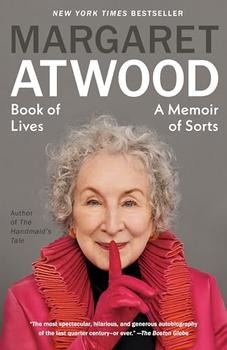
by Margaret Atwood
Published 2026
How does one of the greatest storytellers of our time write her own life? The long-awaited memoir from one of our most lauded and influential cultural figures.

by Erika J. Simpson
Published 2026
From "a writer who's absolutely going places" (Roxane Gay), a remarkable, inventive debut memoir about a mother-daughter relationship across cycles of poverty, separation, and illness, exploring how we forge identity in the face of imminent loss.
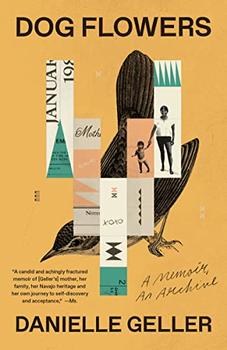
by Danielle Geller
Published 2022
A daughter returns home to the Navajo reservation to retrace her mother's life in a memoir that is both a narrative and an archive of one family's troubled history.

L.A. Women by Ella Berman
Two ambitious writers in 1960s LA face betrayal when one writes a novel based on the other's life.






Your guide toexceptional books
BookBrowse seeks out and recommends the best in contemporary fiction and nonfiction—books that not only engage and entertain but also deepen our understanding of ourselves and the world around us.

