
-
Your next favorite book
is waiting.
Summary | Excerpt | Reading Guide | Reviews | Beyond the book | Read-Alikes | Genres & Themes | Author Bio

A Novel
by C. Mallon Book Reviewed by:
Our narrator throughout Dogs is Hal, a quiet, sensitive, and contemplative teenager. Across a single night, he drives through his rural US hometown with his friends from the high school wrestling team, Cody John, Zachary, Dylan, and Carter. They are coming of age around the late '80s or early '90s—the backdrop is full of nostalgic references, from music played on cassette to Snoopy cartoons watched on VHS tape. The friends, struggling to navigate life on the awkward cusp of adulthood, consume whatever drugs and alcohol they can get their hands on, relentlessly chasing highs to try and rise above the pains of youth and the overbearing cloud of sadness that looms over their forgotten community.
Hal has been struggling most of all. A childhood marred by violence and betrayal, years of harboring dark secrets, identity struggles, and internalized shame have caused a deep depression to take root. With inhibitions abandoned, tensions rising, and secrets coming to light, Hal finally reaches a breaking point. This triggers a catastrophic chain of events that alters the trajectory of not just his own life, but the lives of everyone around him.
The delivery of Dogs is intentionally jarring, designed cleverly to reflect our narrator's fragile and erratic mindset. There are no quotation marks to set off dialogue; sections are written as vast paragraphs that span several pages, while sentences are often short and blunt. These stylistic choices are confrontational, but with patience the reader soon falls into the unique rhythm of Hal's voice. Meanwhile, his storytelling meanders—drifting off on tangents about the past or the lives of people the boys encounter throughout the night. Not only is this drawn out, non-linear path reminiscent of how people tell stories in real life, it also seems to be Hal's attempt to avoid facing the climax of his own story. He knows this ends in tragedy, and he fears the inevitable pain of confronting the consequences of his actions.
All of this is not to say the writing lacks beauty, however. Debut author C. Mallon has a knack for painting the scene in broad yet poetic strokes that show Hal's gentle and perceptive nature. Take this moment where he looks out the car window and observes the shift in the weather as fall moves in:
"There was some power to how the light hit with the sun low and open. Brittle blue haze on the broad sky. First of the hard frost the night prior. All of the leaves burnt the color of rust."
In this way, Hal is a skillfully realized character, and very much the beating heart of the novel. Flawed, complex, and utterly human, he is full of contradictions: gentle and caring yet simmering with latent violence and rage. These contradictions are explored most keenly in his relationship with Cody John. Much goes unspoken—such as Hal's inability to face his true self—but there is undeniable chemistry and affection between the two. Cody John sees Hal's self-destructive behavior in ways others miss, telling him, "[…] you think that it doesn't do anything to anybody other than you, but you're wrong, and you're dumb, and I'm tired of it, Hal." But the more care Cody John shows and the more we root for him to accept this glimmer of potential happiness, the more undeserving Hal feels, his self-loathing pushing him deeper into his depression and isolation. As he sees it, he is simply a burden: "I understood myself to be a crippling weight to carry. I understood myself to be a total nightmare all the time."
The rest of the group is also very believably drawn, feeling like real, dejected teenage boys embarking on adulthood, rather than tired stereotypes of adolescent male behavior. On the contrary, the book is peppered with touching moments of subtle tenderness and easy affection that offer hope for a break in generational cycles of toxic masculinity—be it casual hugs, hands offered in comfort, compliments given freely, or simple gestures of care:
"Dylan shrugged his jacket off and spread it over Carter, saying, be warm, big man. Be warm. Carter was trembling bad with the cold. He smiled back at Dylan anyhow."
These scenes offer much needed moments of light amidst the darkness that dominates Hal's mind. That said, readers should not underestimate the weight of Dogs and its subject matter. Painfully real, it's a bleak gut-punch of a novel that lays bare the true devastation of trauma and depression. At once both the hero and the villain of his own story, Hal is a captivating and deeply sympathetic protagonist, destined to haunt readers far beyond the novel's breathless end.
 This review
first ran in the September 10, 2025
issue of BookBrowse Recommends.
This review
first ran in the September 10, 2025
issue of BookBrowse Recommends.

If you liked Dogs, try these:

by Adib Khorram
Published 2026
Two teen boys grapple with identity and accountability and set off a ripple effect within their community after a school assembly is disrupted by a shouted slur.

by Sam Sax
Published 2025
In between the space of time when Ezra lights themself on fire and when Ezra dies the world of this book flashes before their eyes. Everyone Ezra's ever loved, every place they've felt queer and at home, or queer and out of place, reveals itself in an instant.
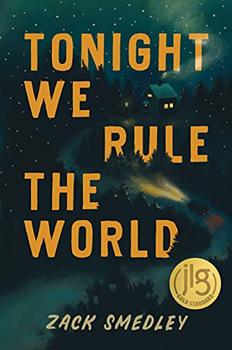
by Zack Smedley
Published 2023
From the critically acclaimed author of Deposing Nathan comes an explosive examination of identity, voice, and the indelible ways our stories are rewritten by others.
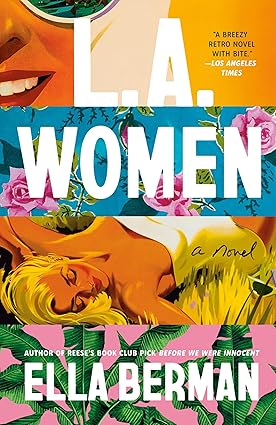
L.A. Women by Ella Berman
Two ambitious writers in 1960s LA face betrayal when one writes a novel based on the other's life.

Your guide toexceptional books
BookBrowse seeks out and recommends the best in contemporary fiction and nonfiction—books that not only engage and entertain but also deepen our understanding of ourselves and the world around us.

