
-
Your next favorite book
is waiting.
Summary | Excerpt | Reviews | Beyond the book | Read-Alikes | Genres & Themes | Author Bio

Stories
by Elaine Hsieh Chou Book Reviewed by:
Where Are You Really From is Elaine Hsieh Chou's follow-up to her acclaimed debut novel, Disorientation, widely praised for its clever humor and engaging storytelling. Her short story collection continues in the same vein, offering six unique stories and a novella that are fast-paced, elusive, deceptive, and genre-bending. We follow characters across the globe—from Taiwan, to Paris, to New York, to Hong Kong—exploring cruelties, desires, family complexities, identity quests, love, morality, victimization, and beauty.
The collection begins with "Carrot Legs," about a 13-year-old Taiwanese American girl spending the summer with her grandparents in Taipei. There, she meets LaLa, her beautiful 16-year-old cousin, and they quickly become friends. Through this closeness, she learns about the pursuit of beauty and how much the perception of it influences how people are treated. LaLa shows her all the routines, rituals, and products that make up her strict regimen to maintain her looks.
"How long have you been doing this?" I wanted to know. LaLa cocked her head. "Since I was ten, maybe younger." When she was a baby, she said, our grandma used to tug her hands down each of her legs every night before bed so she'd grow up tall and thin. I felt resentful I had not started the exercises sooner. Perhaps I would've looked like LaLa too if I had known the body was a moldable thing.
The story takes its title from when LaLa says Ayi, the wife of the manager of their grandparents' dumpling shop, has legs that look like carrots. "From her tone, I understood carrot legs were undesirable." As the story unfolds, the main character's fixation on Ayi's and LaLa's looks reveals unsettling feelings. When LaLa unexpectedly starts to distance herself, and Ayi attempts to form a bond, we see the character in turn try to distance herself from Ayi as she doesn't want to be associated with someone she views as undesirable, despite LaLa abandoning her.
In "Mail Order Love," a man opens a package from Taipei, and inside the box of seafoam-colored packing peanuts, a woman in a white wedding dress appears. "If a bride correctly followed instructions, she drifted off in one country and woke up in a new one, ready to wed an American citizen." In this America, Congress has passed a bill banning all immigration, but a loophole was created for mail-order brides; they are considered imported foreign goods, allowing many Americans and foreigners new chances at life, love, and companionship. The story follows two lonely people navigating a green card marriage (see Beyond the Book), examining whether love can be bought and how far one will go to escape difficult feelings.
"You Put a Rabbit on Me" features a woman's quest to find herself, which leads her from America to Paris to spend a year as an au pair for a French family. However, at the grocery store, she encounters a woman who looks just like her—challenging metaphysical possibilities—and discovers that she is an alternate version of herself, the French version. "Elaine B was confident and self-assured. She knew exactly what she wanted and what she didn't. She was who I had always wanted to be." What follows is a chaotic search for identity that calls the narrator's reliability into question and considers the lengths one may go to for revenge and to reclaim one's life.
In "Featured Background," a father tries to reconnect with his estranged daughter by booking a gig as a background actor on her movie set. The story focuses on how family memories can differ, the small kindnesses people may extend despite resentment, and the concept of trauma in art. "Happy Endings" and "The Dollhouse" are more provocative stories. "Happy Endings" features a man's excursion to a virtual reality sex-bot brothel that forces him to confront the realities of his actions, and a woman's quest for revenge. In "The Dollhouse," a mother tells her daughter a story using her toy dolls as characters that serves as insight into her past ("sometimes the truth gets in the way of a good story"). We receive unsettling glimpses into motherhood, the cruelty people are capable of, and the danger of maintaining a fantasy. Lastly, in the novella "Casualties of Art," Korean Chinese writer David Lee joins a three-month fellowship with three white writers. At first, he is uninterested in and cautious of the others, but things take a turn when the Korean American wife of one of them joins the retreat, and an affair sparks between her and David. "Casualties of Art" delves into how racial and life experiences affect art creation, with an ending that is deceptive in a way similar to "You Put a Rabbit on Me."
Where Are You Really From covers the messiness of desire and the search for identity, companionship, and family—along with the stories we tell ourselves. Chou's narratives stand out due to her remarkable creativity. She weaves in deceptive situations not just for her characters but also for the reader, prompting us to think deeply about what's real and what's imagined. This makes the stories both engaging and unpredictable, leaving you eager to turn page after page to see where they'll go next. I love how they explore the multiple layers within a person—particularly how even the most seemingly kind and innocent individuals can harbor the capacity for cruelty. This challenges our assumptions about who is capable of what, especially in situations of retaliation, where characters lash out against those who have upset or harmed them.
The stories also show how drawing from our own lives for the purpose of art influences creativity, all with a touch of humor and a sense of realistic absurdity that invites reflection on what we consider acceptable in fiction. They raise questions about the limits of artistic expression and the impact of real-life experiences on credibility. Additionally, they examine societal expectations within relationships—familial and romantic—with a particular focus on these expectations for men and how they negatively affect and endanger women. Chou revitalizes the short story form by stretching the boundaries of the genre, bringing a fresh and lively perspective and making readers think about what they have just undergone.
 This review
first ran in the August 27, 2025
issue of BookBrowse Recommends.
This review
first ran in the August 27, 2025
issue of BookBrowse Recommends.

If you liked Where Are You Really From, try these:

Good and Evil and Other Stories
by Samanta Schweblin
Published 2025
A haunting, unforgettable collection of tales by Samanta Schweblin, winner of the 2022 National Book Award for Translated Literature and three-time Booker Prize finalist.
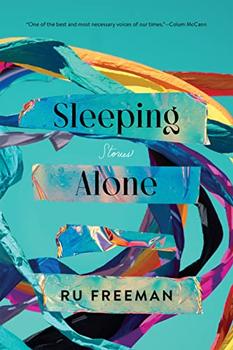
by Ru Freeman
Published 2022
In this collection of rich and textured stories about crossing borders, both real and imagined, Sleeping Alone asks one of the fundamental questions of our times: What is the toll of feeling foreign in one's land, to others, or even to oneself?
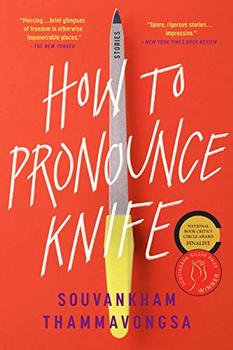
by Souvankham Thammavongsa
Published 2021
Spare, unsentimental, and distilled to riveting essentials, these "emotionally devastating" stories honor the surreal, funny, and often wrenching realities of trying to build a life far from home (Sheila Heti).




Great political questions stir the deepest nature of one-half the nation, but they pass far above and over the ...
Click Here to find out who said this, as well as discovering other famous literary quotes!

Can you name the title?
Test your book knowledge with our daily trivia challenge!
Your guide toexceptional books
BookBrowse seeks out and recommends the best in contemporary fiction and nonfiction—books that not only engage and entertain but also deepen our understanding of ourselves and the world around us.
