
-
Your next favorite book
is waiting.
Summary | Excerpt | Reading Guide | Reviews | Beyond the book | Read-Alikes | Genres & Themes | Author Bio

 Book Reviewed by:
When Grace Marks was sixteen years old, she was accused of killing Nancy Montgomery and Thomas Kinnear. On the farm that Kinnear owned, Montgomery and Kinnear had snuck around in secret; they were lovers. After the crime (Kinnear was shot, Montgomery strangled), Grace fled to the United States under an assumed name and was captured. Post-conviction, she received a death sentence, which was commuted to life in prison.
Alias Grace is a historical novel based on this true story that occurred in 1843 in Upper Canada (now Ontario). Written by Margaret Atwood and published nearly thirty years ago, Alias Grace is brilliantly structured in its balance and pacing and lovely prose that explains how violence is built. One parent, one sadness, one jealousy at a time. Atwood supplies a quote before the first page credited to South African writer Eugène Marais: "I cannot tell you what the light is, but I can tell you what it is not." It makes sense to assume Atwood's inclusion of this quote is to explain at the very beginning that her protagonist isn't easily defined or understood, even by Atwood herself. While there is inherent darkness in the escalation of violent behavior, Grace Marks defies a single description, and Atwood isn't going to appease those who want simple classifications.
The novel begins eight years after the murder when Grace is assigned a doctor named Simon Jordan. He is eager to determine if she should be freed but he is also seduced by the science of Grace and the career opportunity she presents: "It is not the question of your guilt or innocence that concerns me. I am a doctor, not a judge. I simply wish to know what you yourself can actually remember."
Atwood navigates the central question of Grace's guilt or innocence by examining her life linearly. Alias Grace is not primarily a story of how Grace feels but rather what Grace remembers. Most of which is forlorn. For instance, when Grace and her family leave Ireland for Canada for better wages, her mother falls ill, and her lifeless corpse is tossed overboard in the middle of the ocean voyage. Grace is bereft. She feels like a refugee. The waves that bounce her mother's corpse into the horizon also carry Grace's dreams of a better life into oblivion.
Atwood implies that immigrants like Grace's family can never achieve happiness. The freight of poverty, displacement, isolation, and abuse are their continuing burdens. Take Grace's father. He is written as bitter and cruel, a violent man who overdrinks. Except for Grace's uncle in Ireland, who engineered a plan to get Grace's father out of the country and out of his hair, none of the men in the novel have redeeming qualities, nor are they moral. It feels ordinary, then, that Grace fantasizes about murdering her father with an iron pot that "could smash his skull open and kill him dead."
Desperate to escape him, she takes a job with the Parkinson family in a snobbish enclave of Toronto. She lives in the attic and shares a bed with Mary Whitney, who works in the laundry. Mary is the first friend Grace ever has, and they love and protect each other ferociously until Mary dies abruptly of a high fever after an abortion. While Mary lies on her deathbed, Grace hears Mary speaking to her, something Dr. Jordan will refer to as an auditory hallucination. Grace sells Mary's few possessions in the days that follow. She admits, "I cried as if my heart would break. I was thinking of my poor mother as well, who'd had no proper burial with dirt on top the way it should be, but was just tossed into the sea."
While Alias Grace is classified as historical fiction, it is also a study of grief, and what grief does to the traumatized mind. Trauma often triggers impulsiveness and violence and misremembering. Grace told multiple stories to the police about what happened to Nancy Montgomery and Thomas Kinnear, which could be the landscape of the liar or the outcome of the mistreated.
After Mary's death, Grace goes to work for Mr. Watson, a shoemaker. She soon discovers that a farmer named Thomas Kinnear is looking for a servant girl, and he pays a hefty sum, more than Grace is making. Grace is fascinated by the opportunity because the housekeeper for Thomas Kinnear is a young woman in her twenties named Nancy Montgomery who reminds Grace of Mary Whitney. She loves to laugh and has beautiful brown eyes. Because the pay is more and because Grace is starving for the company of someone like Mary, she swallows her anxiety about living in the country and takes a coach to Richmond Hill.
Grace reports to Nancy, who oversees all the household staff, and friction begins soon after Grace arrives. This is a country house; Grace is used to aristocracy. Gold watches. Chandeliers. Ballroom-sized dining areas. Her reactions to the house are noticed and to Nancy's way of thinking Grace is ungrateful. She is an immigrant housemaid Nancy has rescued. How dare she thumb her nose at Mr. Kinnear's way of life.
Grace is shrewd and picks up on Nancy's disdain and knows she has to be careful. Nancy is not like Mary Whitney, they will not be sisters or friends, but rather competitors. Nancy's moods are stark and inconsistent. The same woman who gives Grace the day off because it is her birthday calls her a slut because her hair is unpinned when she is scrubbing the floors.
The servant class is the cartilage of Alias Grace. The other side of wealth is the housemaids who work tirelessly, rarely with a day off, and are heavily monitored. The house has to look as if it runs itself, without effort. In the nineteenth century, working immigrant girls were relegated to being housemaids, laundry maids, or lady's maids. Atwood imagines the servants as mostly supportive and clannish, a united front against the accumulation of indignities from their employers.
I was riveted by the character of Grace Marks partly because she was accused when she was sixteen and I wondered what went wrong in her life. What happened to her? I liked the narrowness of the story, and its blatant subjectivity. That said, Atwood sticks to the basics and never tips her hand. She is an experienced storyteller and rarely overwhelms with too much information. What I appreciated the most was her respect for the reader's intelligence, the assumption that we can think for ourselves.
There is a thread of thought I disagree with that remains popular. Awful things happen to horrible people, and so their personal failures and tragedies are deserved. But I believe we have an innate responsibility to know one another, even when that includes the revealing of secrets, inconsistencies, and lies, when people's fragilities are exposed. That makes us more human, not less. The takeaway of Alias Grace is just that. Secrets will be unearthed when you least expect it. Lies will unravel. People do terrible things in silence. What matters is listening to what happened to them when they were supposed to be loved—and were not—before settling on a judgment.
 This review
first ran in the July 16, 2025
issue of BookBrowse Recommends.
This review
first ran in the July 16, 2025
issue of BookBrowse Recommends.

If you liked Alias Grace, try these:

by Emily Brontë
Published 2025
One of English literature's classic masterpieces—a gripping novel of love, propriety, and tragedy. Nominated as one of America's best-loved novels by PBS's The Great American Read.

by Sarah Schmidt
Published 2018
In this riveting debut novel, See What I Have Done, Sarah Schmidt recasts one of the most fascinating murder cases of all time into an intimate story of a volatile household and a family devoid of love.
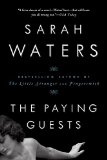
by Sarah Waters
Published 2015
A love story, a tension-filled crime story, and a beautifully atmospheric portrait of a fascinating time and place.

L.A. Women by Ella Berman
Two ambitious writers in 1960s LA face betrayal when one writes a novel based on the other's life.






Your guide toexceptional books
BookBrowse seeks out and recommends the best in contemporary fiction and nonfiction—books that not only engage and entertain but also deepen our understanding of ourselves and the world around us.

