
-
Your next favorite book
is waiting.
Summary | Excerpt | Reading Guide | Reviews | Beyond the book | Read-Alikes | Genres & Themes | Author Bio

A Novel
by Dennard Dayle Book Reviewed by:
How to Dodge a Cannonball tells the story of Anders, a poor white boy from Illinois who, like his family members before him, twirls flags during war. Naive, garrulous, and focused above all on self-preservation, he deserts from one side of the Civil War to the other and back again. When his involvement in the ill-fated Pickett's Charge at Gettysburg goes awry, he deserts the Confederacy, takes the uniform of a dead Black Union soldier, and joins an all-Black regiment, passing himself off as an "octoroon."
There, he meets Gleason, an idealistic intellectual who specializes in "speculative dramaturgy"; Thomas, Gleason's de facto second-in-command; Joaquin, a former Haitian revolutionary described by one character, not inaccurately, as a "knife pervert"; and Mole, a taciturn giant whose past as a slave still haunts him. Together, they're shunted from one lousy job to another, doing the bidding of a government that doesn't even try to hide their contempt for them and an amoral arms dealer who sells to both the Union and the Confederacy.
If this sounds like it could be the premise of a didactic satire where the only laughs are dry and mirthless, don't worry: How to Dodge a Cannonball is seriously, genuinely funny. Dennard Dayle's Twitter (now X) bio describes him as a "local prankster," and the book is suffused with a freewheeling sensibility to match. The dialogue hits the same sweet spot as a Coen brothers movie, funny and literary without getting too cute (a representative example: "At least I didn't run like a scared dog. I ran like a shrewd coyote"). And Dayle's narration is wry, ironic, and as keenly observant as the best stand-up. English matchsticks made in dangerous working conditions are described as "the kind that kept factory children from growing into factory teenagers," and the Union army "could do anything well but fight."
But How to Dodge a Cannonball never crosses the line into becoming glib. The dismissive attitude of the Union generals towards their Black soldiers is written with humorous panache, but the spite and prejudice at its root is taken seriously. At one point, Anders and Gleason give a general a crucial Confederate cipher that could turn the tide of the war—only for the general to burn it, because he doesn't believe such valuable information could possibly come from Black soldiers. And the humor drops away in occasional, powerful passages, most notably when Mole describes the mine collapse, caused by a spiteful enslaver, that led to his nickname.
It should be said that the novel does not follow the contours of history exactly. There is a bit of business involving a cult of monarchists, prevalent in New York City and with a small colony in the Nevada desert, that might throw readers for a loop. Certainly I had trouble knowing what to make of it at first. But as a hallucinatory desert interlude expands to take up the last third of the novel, it becomes clear what Dayle is doing. He's illustrating the dark, stupid heart of America, with all its pageantry and genuflection towards conservative ideals; shaking his head at those who think they can change it from within; and offering a moment of bloody catharsis before bleak reality sets in.
 This review
first ran in the July 2, 2025
issue of BookBrowse Recommends.
This review
first ran in the July 2, 2025
issue of BookBrowse Recommends.

If you liked How to Dodge a Cannonball, try these:
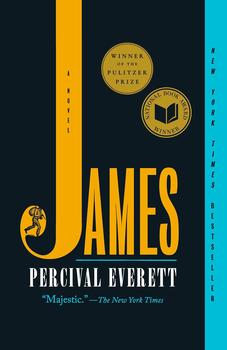
by Percival Everett
Published 2026
A brilliant, action-packed reimagining of Adventures of Huckleberry Finn, both harrowing and ferociously funny, told from the enslaved Jim's point of view. From the "literary icon" (Oprah Daily) and Pulitzer Prize Finalist whose novel Erasure is the basis for Cord Jefferson's critically acclaimed film American Fiction.
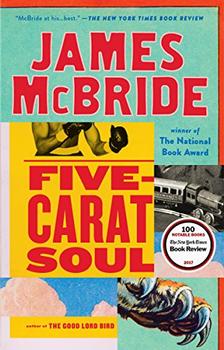
by James McBride
Published 2018
Exciting new fiction from James McBride, the first since his National Book Award–winning novel The Good Lord Bird.
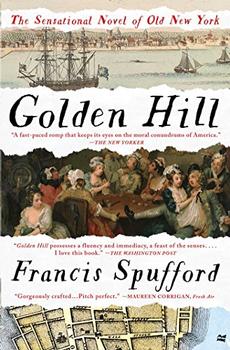
by Francis Spufford
Published 2018
Winner of the 2017 Costa First Novel Award.
The spectacular first novel from acclaimed nonfiction author Francis Spufford follows the adventures of a mysterious young man in mid-eighteenth century Manhattan, thirty years before the American Revolution, in "a first-class period entertainment" (The Guardian).

L.A. Women by Ella Berman
Two ambitious writers in 1960s LA face betrayal when one writes a novel based on the other's life.




Your guide toexceptional books
BookBrowse seeks out and recommends the best in contemporary fiction and nonfiction—books that not only engage and entertain but also deepen our understanding of ourselves and the world around us.

