
-
Your next favorite book
is waiting.
Summary | Excerpt | Reading Guide | Reviews | Beyond the book | Read-Alikes | Genres & Themes | Author Bio

A Novel
by Nell Stevens Book Reviewed by:
Money has always been bound up with marriage, for reasons of lineage and inheritance and more. The two concepts can become conflated, mirror one another, can each make the need for the other disappear. Marriage for money may seem crude or opportunistic, but marriage for love to someone who has money is a magic trick. It makes the need to think about money, and the associated crudeness, vanish. It can be a trick well or badly done. It's been done in fiction by Jane Austen and writers of modern rom-coms. Heterosexuality, or the appearance of it, can help. Monogamy, or the appearance of it, can also help. Crime, as we see in Nell Stevens' The Original, a drama beginning in 19th-century England, could be essential to overcoming the need for this trick in the first place.
In her aunt's country house, where she has lived since her parents were both sent to asylums, Grace Inderwick constantly thinks about escaping a world of dependence and tedious expectations. A queer, socially awkward woman with no immediate family to protect her, Grace has little power she can exercise in her aunt's household or out in the world, but she does have the advantage of a limited photographic memory and a knack for painting—or rather, copying paintings—nurtured in childhood by her cousin Charles. This is offset by a face blindness that prevents her from being able to recognize people, let alone paint them from scratch. The paintings she copies are existing currency, and copying them is, for her, a way of existing in a world that she otherwise lacks the ability to mimic or integrate herself into. Replicating the paintings allows her to make her own currency. And currency, by its very nature, is replication, so is what she's doing even really wrong? Stevens aptly explores this question and much more in a text full of suspense and shadows that is still sunnier in disposition than one might expect.
Events are set in motion by a man who claims to be Grace's cousin years after Charles was presumed lost at sea. Grace is not sure whether she believes this "Charles" is really her cousin, and isn't sure whether her aunt, Charles's mother, believes it either. But the question matters, urgently, because "Charles" is set to inherit the Inderwick family fortune, unless he's determined to be an imposter, in which case, Grace eventually discovers, the money will come to her as next heir. To complicate matters, "Charles" seems intent on interfering in Grace's life while remaining inscrutable to her. She suspects him of stealing the money she makes from selling her first forgery. He also appears to be aware of her sexual involvement with a woman, but seems unfazed by this. At one point he asks her to marry him. His motivations are easy to guess at but hard to pin down.
The Original will especially appeal to readers who enjoy character-driven suspense, but it has something for almost everyone. Not quite a romance and not quite a crime thriller, it hits familiar genre beats while staying true to its own charming, off-kilter vision. Stevens maintains interpersonal tension in a clever, lighthearted way that renders no turn of events too serious, but also portrays her protagonist's situation with gravity, making the reader invested in her problems. Grace has knowledge of her sexuality and a realistic understanding of her options; this isn't a coming-of-age plot of fraught, unbearable moments but more of a social drama running alongside a mystery that comes to a clear resolution. Philosophical substance sustains its structure.
Get married or find freedom in work. As much as many women today have escaped the singular edict "get married," this dichotomy still feels ever-present and inescapable—for anyone, really, who isn't born into money, regardless of gender. Working or scheming, either for wealth or love, are still the ways popular culture lets us imagine we can be free, and this is reflected in the fact that you can scarcely hope to find a television series, contemporary or historical, that doesn't in some way revolve around crime, romance, or someone's job. The Original suggests that however much we may be rooting for Grace in her undertakings, work and scheming can be all-consuming, making any freedom gained by it feel invalid. It shows us this true thing about money, and then it shows us something else. From a certain perspective, Stevens' novel could be seen to resolve in a predictable, too-perfect way, but from another, it performs a double trick, making both marriage and money disappear, or at least mutate into something else.
In the meantime, it immerses the reader not only in Grace's predicaments but her pleasures, including the art world. Real-life paintings such as Courbet's Le Sommeil and Jan van Eyck's Portrait of Giovanni Arnolfini and His Wife (see Beyond the Book) make an appearance, as does a hauntingly evoked fictional work called The Drag depicting an ancestor of Grace's who, deceived by her husband, cursed all the men of the family. Maybe this woman, described as generous and resourceful, as Grace also is—knew of some greater freedom; maybe Grace, the reader hopes, will know something of that freedom too.
 This review was originally published in The BookBrowse Review in July 2025, and has been updated for the
December 2025 edition.
Click here to go to this issue.
This review was originally published in The BookBrowse Review in July 2025, and has been updated for the
December 2025 edition.
Click here to go to this issue.

If you liked The Original, try these:
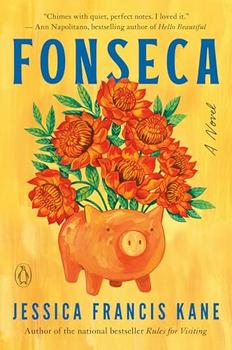
by Jessica Francis Kane
Published 2026
The story acclaimed English author Penelope Fitzgerald never wrote, of her real-life journey to Mexico with her son in search of a much-needed inheritance, by Jessica Francis Kane, bestselling author of Rules for Visiting.

by Victoria Redel
Published 2025
A "captivating" lesbian romance set in the "wonderfully atmospheric" art world of 1600s Amsterdam (Sarah Jessica Parker, SJP Lit).

by Olga Tokarczuk
Published 2025
The Nobelist's latest masterwork, set in a sanitarium on the eve of World War I, probes the horrors that lie beneath our most hallowed ideas.
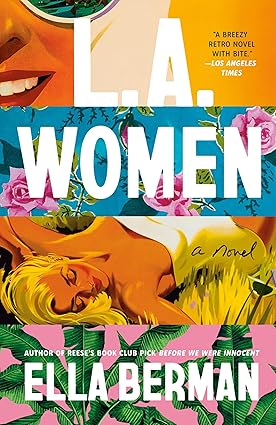
L.A. Women by Ella Berman
Two ambitious writers in 1960s LA face betrayal when one writes a novel based on the other's life.






Your guide toexceptional books
BookBrowse seeks out and recommends the best in contemporary fiction and nonfiction—books that not only engage and entertain but also deepen our understanding of ourselves and the world around us.

