
-
Your next favorite book
is waiting.
Summary | Excerpt | Reading Guide | Reviews | Beyond the book | Read-Alikes | Genres & Themes | Author Bio

A Novel
by Jayson Greene Book Reviewed by:
Jayson Greene's debut novel UnWorld is set in a speculative near future in which people can create digital copies of their memories and consciousness. But when these "uploads" proved to be sentient and able to exist independently from their creators, it sparked debate about their rights and led to the option of emancipation, whereby an upload can leave their human "tether" and exist in a kind of digital limbo, traveling between electronic devices and temporary human hosts, observing, learning, and developing their own thoughts and feelings.
With this science fiction world as the backdrop, UnWorld opens in the wake of a tragedy: Alex, a teenage boy, has died after falling from a great height. His loved ones must come to terms with this sudden loss, while also attempting to find out whether his death was an accident or suicide. Greene drops the reader in at the deep end, with very few contextual details to help us come to grips with this strange yet plausible future—making for a slightly bewildering start that aptly reflects the disorientation and confusion felt by the grieving characters. Also, by not getting bogged down in the technical details, Greene keeps the focus on his characters and the emotional weight of their situation. (This does mean, however, that readers who enjoy unpacking the intricate aspects of science fiction technology may be left wanting.)
UnWorld is told from four alternating perspectives: Anna, Alex's mother; Samantha, Alex's friend and the only witness to his death; Aviva, an upload who has emancipated from Anna; and Cathy, a recovering addict and professor of artificial intelligence. Each has a distinct voice and provides a unique view on the events of the book. Anna's sections are insightful into the nature of maternal grief; Samantha's show the emotional toll of witnessing death firsthand; and Aviva's sections bring AI's worldview into the novel, demonstrating the autonomy and branching personality of uploads who have emancipated. "Every day I'm a little less her and a little more… Whatever it is I'm supposed to be," Aviva says.
Both Anna and Aviva wrestle with guilt following Alex's death, worrying they may have played a role in some way or missed warning signs that he was struggling with his mental health. Because uploads are essentially a manifestation of someone's memories, by cutting ties with Aviva, Anna has symbolically distanced herself from her past. "I have these memories," Aviva says:
"I carry them around with me, like precious cargo. I guard them against everything else, from the world, and yet I can feel them fraying, dispersing. And what are they? They're contraband. They're not even mine. They're fragments of someone else's consciousness that I stole."
Through Anna and Aviva's intertwined stories, Greene makes the case that one must reconcile with their past in order to work through grief, find peace, and move towards the future.
Cathy, the fourth character, is the only narrator without an immediate personal connection to Alex. After encountering Aviva, she is drawn towards the group, and her chapters provide an analytical perspective on the difference between human and AI responses to trauma. UnWorld explores the question of whether our consciousness is a separate entity held back by the limitations of our physical selves, or if we need the viscera of our bodies to truly feel and understand our emotions. After connecting with Aviva, Cathy muses:
"At that moment, I understood several things about upload consciousness in rapid succession. [Aviva's] intelligence wasn't able to filter out or compartmentalize grief. She had no neurochemical responses flooding in to numb her pain, to soften its impact. A mind was eternal, unforgiving; a brain was a soft, plump cushion. Loss needed a brain… She was so much more than a human could ever become, and so much less."
Despite exploring such vast social and moral topics, UnWorld never feels dry. Instead, it is an immensely readable, heartfelt, and timely look at what technology could mean for the future of human connection, and at the ways we cope with loss.
 This review
first ran in the July 2, 2025
issue of BookBrowse Recommends.
This review
first ran in the July 2, 2025
issue of BookBrowse Recommends.

If you liked UnWorld, try these:

by Kotaro Isaka
Published 2025
A gripping novel mixing mythology, family drama, espionage, and high technology from the international bestselling author of Bullet Train, already in development for a major film starring Anne Hathaway and Salma Hayek.

by Anton Hur
Published 2025
Negotiating the terrain of Kazuo Ishiguro's Klara and the Sun and Emily St. John Mandel's Sea of Tranquility, a brilliant, haunting speculative novel from a #1 New York Times bestselling translator that sets out to answer the question: What does it mean to be human in a world where technology is quickly catching up to biology?
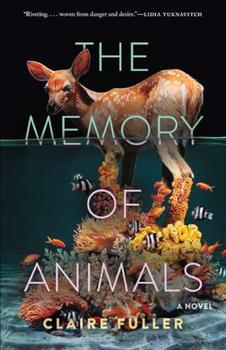
by Claire Fuller
Published 2024
From the award-winning author of Our Endless Numbered Days, Swimming Lessons, Bitter Orange, and Unsettled Ground comes a beautiful and searing novel of memory, love, survival—and octopuses.

L.A. Women by Ella Berman
Two ambitious writers in 1960s LA face betrayal when one writes a novel based on the other's life.






Your guide toexceptional books
BookBrowse seeks out and recommends the best in contemporary fiction and nonfiction—books that not only engage and entertain but also deepen our understanding of ourselves and the world around us.

