
-
Your next favorite book
is waiting.
Summary | Excerpt | Reading Guide | Reviews | Beyond the book | Read-Alikes | Genres & Themes | Author Bio

A Novel
by Susan Choi Book Reviewed by:
In Susan Choi's Flashlight, ten-year-old Louisa, the daughter of a Japanese-born Korean man and a white woman from the American Midwest, is found unconscious on a beach in Japan—her father, who was walking with her through the dark, flashlight in hand, is soon presumed drowned. That's the end of the story as far as anyone seems concerned. But this event, with its unknowns, reverberates forward, through the lives of Louisa and her mother Anne, both perceptibly and imperceptibly, linked to the past in ways they can't imagine.
Choi's novel is about the general impact of family secrets and trauma, and also specifically about Korean history and Korean culture loss (see Beyond the Book). Louisa's father, referred to in flashbacks to his childhood in Japan as Seok—alternated with Hiroshi, the Japanese name given to him during the occupation—and later as Serk starting with his time in the United States, never speaks of his Korean family to his American one, because his parents and siblings, save for a sister still in Japan he keeps in sporadic contact with, voluntarily relocated to North Korea. Their fates are uncertain, and Serk, without American citizenship, doesn't want to risk his residence by betraying ties to the DPRK. His assimilation into first Japanese and then American society, his silence, the languages he speaks and doesn't speak—these aren't accidents or choices, they're cultural erasure, colonialism and imperialism at work.
Despite its premise, Flashlight is less suspense-driven than a reader might expect, and more closely resembles straightforward literary fiction than Choi's National Book Award-winning Trust Exercise (2019). But it's a big swing with bold implications. Choi is relentless in her depiction of the necessarily violent consequences of borders, not just when it comes to the more obvious examples, like the complicity of global powers in North Koreans' isolation, but in less expected ways, such as when Louisa, traveling through Europe during college, runs into a barrage of bad luck and bureaucracy that affects the trajectory of her future. This violence is contrasted with the mundanity of life lived for long stretches without the direct interference of governments, militaries, and force, and realistic portrayals of how easy it can be to ignore the invisible atmosphere of assumptions we breathe, political and otherwise. Choi's descriptions of the fallibility of the human mind and memory are luminous:
"These are not the events Louisa recalls because she has never recalled them, they live nowhere in memory. If she was somehow aware of these events that she isn't aware of, she might wonder if the events, housed nowhere in her memory, buried in some unremembering stratum of her body or perhaps expelled like noxious vapors into the impersonal air, can even be said to have happened. … The story of her father's death by drowning is one she somehow both authored and received passively. It emerged in response to a logic and it equally dictated logic."
The book's more than four hundred pages hold many detours and deep dives into characters' individual stories. Flashlight amply displays Choi's stellar writing through a variety of moods and subjects, though it lacks a dynamism that could have been achieved through greater intentionality. The plot is also somewhat predictable, but destabilizingly refreshing in the precise manner of its unfolding, invigorating in its combination of drama and matter-of-factness. The seemingly central mystery is revealed, with little fanfare, in the second half, and the suspense subsequently flows into anticipation of the future. This switching of streams reflects how cultural and historical losses run below the surface of families and nations, below the normalizing, distracting narratives attached to them. We follow the story waiting to discover what happened to Serk, thinking of both the obvious and less obvious answers, waiting for a clever or unexpected turn, only to find that maybe we knew what happened to him all along and the real question has been what will happen now.
It's easy to read Choi's writing of Serk as heavyhanded, and some readers will probably feel the specifics of his life and fate are a bit much. It can appear like this unfortunate man carries all the weight of the Japanese occupation and the Korean War on his back, like he is an unlucky vessel filled with history, a human microcosm of a stolen and broken land. But even if he exemplifies this history, he is also a victim and actor in it, someone who has had intimate contact with it, not a metaphor or an analogy but a part of the whole, and luck may have less to do with everything than one might think. And after all, what is a realistic life? What does it mean to have lived one that seems unrealistic to others? Whose story is believed or not, and why?
If Choi's novel is about the violence and rigidity of borders, how they enforce one story as multiple stories teem around them, it's also about how rigid lines might blur and fade into one another, how borders and barriers become mutable when they encounter elements that can never be fully controlled—water, air, language. Flashlight will appeal to book clubs for discussion and to readers who like big, sprawling works of literary and historical fiction that weave global events with personal minutiae. It is mercilessly sad and dramatic, but in the way of tragedies that satisfy with the breadth of their emotion and stories that pull all their threads together at the last minute for a happy ending of sorts. It offers a world to get lost in and a deep historical consciousness.
 This review was originally published in The BookBrowse Review in July 2025, and has been updated for the
May 2026 edition.
Click here to go to this issue.
This review was originally published in The BookBrowse Review in July 2025, and has been updated for the
May 2026 edition.
Click here to go to this issue.

If you liked Flashlight, try these:

by Fran Fabriczki
Published 2026
A fresh and witty debut about a young immigrant mother and her increasingly inquisitive daughter, who wakes up one day and decides to find out who her father is.
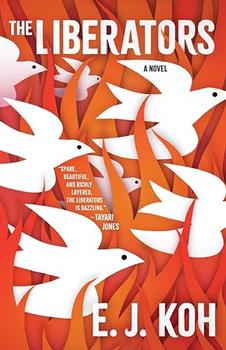
by E.J. Koh
Published 2023
Extraordinarily beautiful and deeply moving, The Liberators is an elegantly wrought family saga of memory, trauma, and empathy, and a stunning testament to the consequences and fortunes of inheritance.
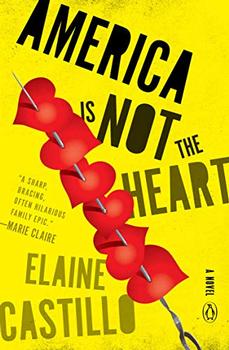
by Elaine Castillo
Published 2019
With exuberance, grit, and sly tenderness, here is a family saga; an origin story; a romance; a narrative of two nations and the people who leave one home to grasp at another.





He has only half learned the art of reading who has not added to it the more refined art of skipping and skimming
Click Here to find out who said this, as well as discovering other famous literary quotes!

Can you name the title?
Test your book knowledge with our daily trivia challenge!
Your guide toexceptional books
BookBrowse seeks out and recommends the best in contemporary fiction and nonfiction—books that not only engage and entertain but also deepen our understanding of ourselves and the world around us.
