
-
Your next favorite book
is waiting.
Summary | Excerpt | Reviews | Beyond the book | Read-Alikes | Genres & Themes | Author Bio

 Book Reviewed by:
The history of American segregation, along with changes to it in the 1960s, is sometimes taught and discussed today in a way that is very textbook. This is a great disservice to younger people, as it fails to humanize for them the everyday experiences of those who lived during the period. Some younger people may have never thought, for example, about what a day in the life of students in college dorms looked like during the horrific growing pains of desegregation. Or about how Black students navigated studying abroad at the time. Or, more broadly, about how Black people maneuvered in interracial relationships — romantic and otherwise. Diane Oliver's Neighbors and Other Stories spotlights these perspectives and challenged my own understanding of America, during and after de facto segregation. Each short story is an observation of individual lives. Oliver wrote many of these stories in her early 20s, during the early-to-mid '60s, and this posthumous collection brings a youthful, introspective twist to our comprehension of the time. It is a unique peek into the past, and, in many ways, a soothsaying of the future we're living in.
I felt most drawn to Oliver's explorations of the emotional labor involved in handling racial tension and the very real issues that arise with it. I found myself laughing in sad, familiar ways when reading some of these stories, simply because as a Black woman, I could relate to what the characters experience. "It was going to be such a relief to talk to people without trying to figure out if they were for or against the cause," Oliver writes in "Banago Kalt," "For once in her life she might not have to whip out the twenty-five-words-or-less speech of Negro life in Cadbury, Virginia." Many people who have felt a degree of marginalization can relate to the idea of constantly over-explaining why exactly they deserve to be treated as equal to everyone else, while still feeling pressured to make the explanation as palatable and brief as possible. Oliver also explores how, in more grave situations, being seen as a "model minority" is imperative to keeping safe, such as in "Before Twilight," when young Jenny becomes more resistant to the oppressive systems behind segregated spaces over time.
Oliver also showcases how the racial tension of the period shifted the way white people viewed other white people who were sympathetic to Black people. "Spiders Cry Without Tears" centers an interracial relationship formed right when many public businesses were starting to desegregate. Oliver describes a sort of social suicide that occurs when Meg, a white woman, falls in love with Walt, a Black man. It isn't so much that Meg's perspective of Black men changes; it is more that people around her change how they treat her over time, including her son, Jay.
As much as I enjoyed reading this collection, Neighbors and Other Stories might not be for everyone. Most of the narratives open with a specific point of tension, which is to be expected of any good story, but they usually end with the same tension they began with. In that sense, some of them feel stagnant. The stories that felt more dynamic (my metric for "dynamism" is that the character or the situation changes at least a little by the end) tended to be the most interesting to me. At the very least, I would have loved to see more of the stories that hold a point of tension show some kind of shift, even in how the main characters think about the same situation, as happens in the aforementioned "Before Twilight."
This collection is truly a gem that has been hidden for too long, and many of these stories should be a part of curriculums discussing segregated life in America. It is clear that Oliver pulled from her personal experiences, whether she observed the events she wrote first-hand or thought heavily about the world she inhabited up until her life was unfortunately cut short. Though she is not here to continue her writing journey, the work she has shared will live on.
 This review was originally published in The BookBrowse Review in February 2024, and has been updated for the
February 2025 edition.
Click here to go to this issue.
This review was originally published in The BookBrowse Review in February 2024, and has been updated for the
February 2025 edition.
Click here to go to this issue.

If you liked Neighbors and Other Stories, try these:

by Tayari Jones
Published 2026
A magnificent new novel from the bestselling, award-winning author of An American Marriage—Tayari Jones has written an unforgettable novel that sparkles with wit and intelligence and deep feeling about two lifelong friends whose worlds converge after many years apart in the face of a devastating tragedy.

by Carrie R. Moore
Published 2025
A debut collection of stories set across the American South, featuring characters who struggle to find love and belonging in the wake of painful histories. How can you love where you come from, even when home doesn't love you back?

by Mia McKenzie
Published 2025
In this vibrant, gratifying novel, a pious, small-town teenager travels to Atlanta to get an abortion and finds herself smack in the middle of the civil rights movement and the secret lives of queer Black people.
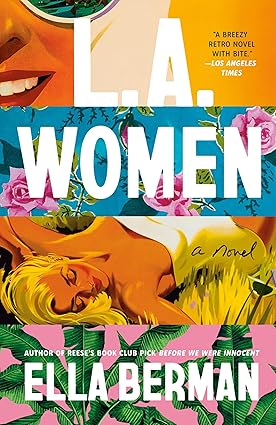
L.A. Women by Ella Berman
Two ambitious writers in 1960s LA face betrayal when one writes a novel based on the other's life.






Your guide toexceptional books
BookBrowse seeks out and recommends the best in contemporary fiction and nonfiction—books that not only engage and entertain but also deepen our understanding of ourselves and the world around us.

