
-
Your next favorite book
is waiting.
Summary | Excerpt | Reviews | Beyond the book | Read-Alikes | Genres & Themes | Author Bio
 Book Reviewed by:
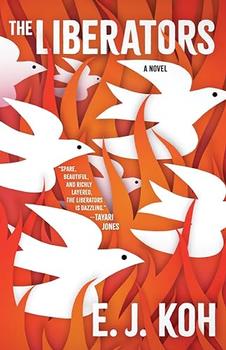
The Liberators begins in the city of Daejeon in South Korea. The year is 1980 and the country is ruled by a military regime that is imprisoning and disappearing suspected dissenters at an alarming rate. Twenty-three-year-old Insuk has fallen in love with a classmate at her university named Sungho. Her father Yohan approves of the match, but just as they're preparing to celebrate the union, Yohan fails to return home one evening. Insuk never sees him again.
Sungho and Insuk marry; their first night as man and wife sets the tone for their relationship going forward — Sungho's mother Huran, with whom he lives, lays a heavy guilt trip on the newlyweds for taking the bedroom, relegating Huran to a bed by the stove in the kitchen.
By 1988, Sungho and Insuk have a five-year-old son, Henry, and the family (including Huran) have relocated to San Jose, California. After years of conflict, Insuk and Huran grow closer, while Insuk and Sungho drift apart. Insuk develops a connection with her boss at the grocery store where she works, a fellow Korean immigrant named Robert who is a vocal evangelist for the reunification of North and South Korea.
The Liberators is about duos and dichotomies. Two Koreas (albeit this is up for debate), a husband and wife, a mother and daughter-in-law. The 34-year timeline the novel covers gives the author room to show how a relationship can evolve over the course of its life, how two people can go from enemies to friends, for instance, or how one person might drift away, unconsciously, and then return to where they belong.
It's also a story of persistent idealism. The other Koreans in the San Jose community believe reunification is an unrealistic fantasy, and Robert a foolish dreamer. Korea was not split in two until 1948, yet only a generation later, it seems unfathomable to most in the novel that things could be any other way.
In a flashback chapter, we see the match strike that lit Robert's idealism aflame — before he was born. He grew up on Jeju Island with his mother, who remembered the events of 1948 distinctly, including "when mainland South Korean police, backed by US troops, landed … in boatloads to slaughter would-be commies and refugees from the North … they chucked slabs of rock to grandfathers and grandsons, told them to stone each other to death. Then both were shot with a resounding end."
American responsibility for a split Korea (both for the initial fissure and its enduring existence) casts a long shadow across the novel. In just over 200 pages, EJ Koh covers a remarkable amount of 20th century Korean history, with enough detail to offer vital context for the characters' homesickness for a homeland that has become unrecognizable, that has been irreparably broken by political gamesmanship and imperialism.
Koh's writing has a natural elegance. She can set a scene with poetic acumen; the dry cleaning business Sungho opens is "in a building where green bottle flies as smooth as sea glass swarmed." She cleverly and aptly captures a character's essence with minimal description, as when Insuk describes her mother-in-law:
"Huran gives me the impression of a cat sprawling in the comfort of any arrangement so long as she can slip in and out of its fences."
The book's third part, which focuses on Henry as a young man, enamored of an activist named Jennie who works with Robert, is somewhat meandering. Koh gives room to even peripheral characters, such as Henry's pet dog, ably weaving an interconnected web of love and relationships. Since the novel is very slim, however, one might feel that some of these tangents are taking vital space from the more interesting and central characters.
Nevertheless, it's a pleasure to float in the current of Koh's narrative, following every drift and fork, traveling back and forth through time. Her characters tell the overarching story of the Korean diaspora in all its complicated and contradictory messiness. And while Robert's dream of reunification remains just that, The Liberators demonstrates that the existence of two separate Koreas is and has always been a fiction.
 This review
first ran in the January 24, 2024
issue of BookBrowse Recommends.
This review
first ran in the January 24, 2024
issue of BookBrowse Recommends.

If you liked The Liberators, try these:
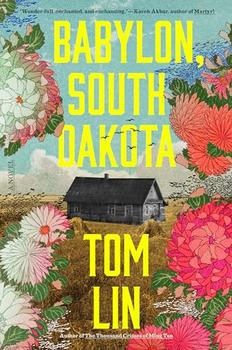
by Tom Lin
Published 2026
From the author of the Carnegie Medal in Fiction winner The Thousand Crimes of Ming Tsu comes a tantalizing, American West saga about a Chinese American family trying to survive on their Dakota farm as a powerful, mysterious, and morally dubious military secret shapes their lives.

by Susan Choi
Published 2026
A novel tracing a father's disappearance across time, nations, and memory, from the author of Trust Exercise.

by Han Kang
Published 2026
Han Kang's most revelatory book since The Vegetarian, We Do Not Part tells the story of a friendship between two women while powerfully reckoning with a hidden chapter of Korean history.
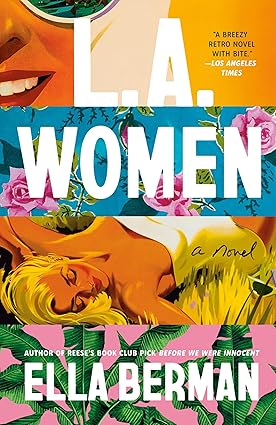
L.A. Women by Ella Berman
Two ambitious writers in 1960s LA face betrayal when one writes a novel based on the other's life.

Your guide toexceptional books
BookBrowse seeks out and recommends the best in contemporary fiction and nonfiction—books that not only engage and entertain but also deepen our understanding of ourselves and the world around us.

