
-
Your next favorite book
is waiting.
Summary | Excerpt | Reviews | Beyond the Book | Read-Alikes | Genres & Themes | Author Bio
 Book Reviewed by:
This article relates to What Hunger

 In 1975, the US military withdrew from Vietnam after having signed the Paris Peace Accords two years prior. This marked the end of the Vietnam War, and it left millions of Vietnamese citizens vulnerable—those who had had close ties to the US military were now under threat of being persecuted by the new communist regime. An estimated 125,000 were evacuated that year to resettle in the States, and waves of immigration followed over the next several decades. As of 2022 there was a Vietnamese immigrant population of 1.3 million in the US.
The Vietnam War left lasting scars on those who were displaced. Though in many cases their immigration was aided by the US government, they were often met with racism and xenophobia by Americans who did not approve of their government's resettlement programs. Many families and individuals battled social isolation, depression, grief at the loss of family members and cultural identity, and other forms of PTSD and psychological trauma.
Children of immigrants with this kind of history may feel and respond to family trauma in different ways throughout their upbringing and adulthood, and many have chosen to explore it through the lens of fiction.
Ocean Vuong's debut novel On Earth We're Briefly Gorgeous is written as a letter from a young man, Little Dog, to his mother, a Vietnamese immigrant, who will never read it as she is illiterate. The narrative that results is therefore vulnerable and unsparing, as Little Dog confesses to his struggles with assimilating to American society while still honoring his Vietnamese heritage, as the spectre of the war hangs over their family.
In K.T. Nguyen's debut thriller You Know What You Did, a first generation Vietnamese American immigrant slowly loses her grip on reality in the wake of the death of her mother, a Vietnam War refugee. As Annie gets caught up in a murder investigation, the shadows of her mother's past continue to haunt her, in a novel that manages to be both thrilling and a poignant exploration of how refugee trauma is passed down through generations.
Things We Lost to the Water by Eric Nguyen follows a woman, Huong, and her two sons who settle in New Orleans after the war, though the patriarch of the family, Cong, was forced to stay behind in Vietnam. She initially sends letters and holds out hope that she will be reunited with Cong one day, but eventually comes to terms with the fact that she will never see her husband again. Her two children grow older feeling their father's absence acutely as all three attempt to assimilate into American society in their own ways.
Monkey Bridge by Lan Cao tells two interlocking stories, one narrated by a mother, the other by her daughter. Both are Vietnamese refugees, but the daughter was so young when they escaped that she has no problem adjusting to American society, while her mother struggles. Published in 1998, Monkey Bridge was one of the first novels to grapple with intergenerational trauma in Vietnamese American families.
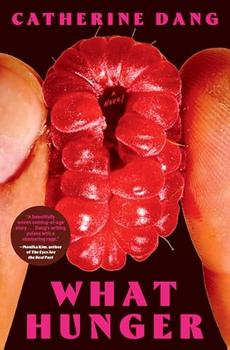
Catherine Dang's What Hunger navigates many of these same themes in a largely allegorical way, as teenage girl Ronny's rage and angst is channeled into a thirst for human flesh—a primal desire that she discovers ultimately connects back to her family's intergenerational trauma.
Filed under Reading Lists
 This article relates to What Hunger.
It first ran in the August 13, 2025
issue of BookBrowse Recommends.
This article relates to What Hunger.
It first ran in the August 13, 2025
issue of BookBrowse Recommends.
Theo of Golden by Allen Levi
One spring morning, a stranger arrives in the small southern city of Golden. No one knows where he has come from…or why…






Your guide toexceptional books
BookBrowse seeks out and recommends the best in contemporary fiction and nonfiction—books that not only engage and entertain but also deepen our understanding of ourselves and the world around us.

