
-
Your next favorite book
is waiting.
Summary | Excerpt | Reviews | Beyond the Book | Read-Alikes | Genres & Themes | Author Bio
 Book Reviewed by:
This article relates to Memorial

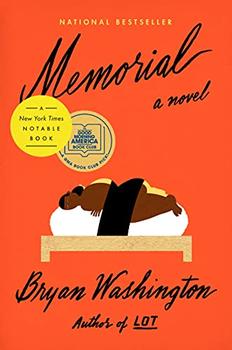
 A lack of quotation marks around dialogue is a pet peeve for some readers. Yet it seems to be an increasingly popular stylistic choice in literary fiction, and one that Bryan Washington opts to use in his debut novel Memorial. You may have also encountered this approach in books by Jesse Ball, Junot Diaz, Bernardine Evaristo, Kate Grenville, Kent Haruf, Daisy Johnson, Miranda July, Cormac McCarthy, Sarah Moss, Sigrid Nunez, Max Porter, Ali Smith, Sarah Winman and Jacqueline Woodson.
Quotation mark usage as we know it only dates back to the 16th century, making it a relatively new form of punctuation. Earlier manuscripts indicated speech in a variety of other ways: with the speaker's name, by italicizing speech or by underlining. The visual predecessor to quotation marks was the diple (>), a mark originating in ancient Greece that was placed in the margins of texts to draw attention to significant sections. When quotation marks ('') — or inverted commas, as they're called in British English — were first introduced, they appeared in the left margin beside lines of speech. A collection of English poems, the Mirour for Magistrates (1574), is the first documented work to use quotation marks within the text to separate speech. However, the practice didn't become common in English until the 18th century, gaining popularity with the realist novels of authors like Daniel Defoe and Samuel Richardson.
Different styles of quotation persist today. In the United Kingdom, speech is contained within single inverted commas ('like this') instead of the double ones standard in American English. British style uses single quotes (') for initial quotations, then double quotes (") for quotations within the initial quotation, while American style does the opposite. Many other languages use guillemets («like this»). In French novels, it is common to see lines of speech introduced by dashes.
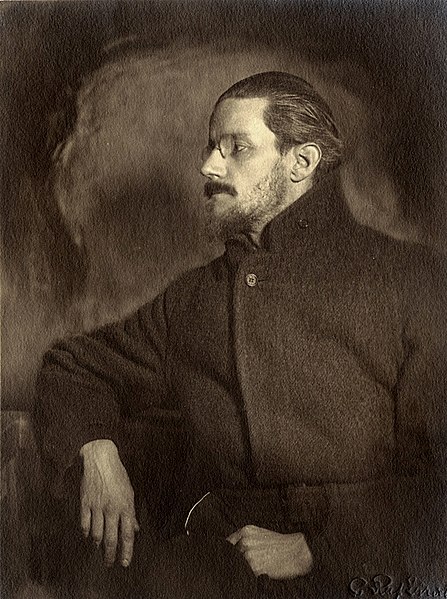
The forefather of omitting quotation marks in modern English literature is James Joyce, who referred to inverted commas as "perverted commas" and chose to mark speech with a dash instead. He may have been influenced by living in France, or by playwrights' customs. In a 2008 TV interview with Oprah Winfrey, author Cormac McCarthy acknowledged his debt to the Irish writer: "Joyce is a good model for punctuation. He keeps it to an absolute minimum. There's no reason to blot the page up with weird little marks. I mean, if you write properly you shouldn't have to punctuate." As McCarthy noted, though, you have to "write in such a way that it's not confusing about who's speaking." Sometimes this can be achieved through repetition of "[they] said," but blocks of speech can be attribution-free if the author makes each voice distinctive enough. Other contemporary writers who use unconventional punctuation for dialogue include novelist Tessa Hadley, who uses dashes, and Catherine Lacey, who puts the speech in her books in italics.
In a 2009 article for Salon, book critic Laura Miller, who calls the omission of quotation marks "a minor yet pointless inconvenience," hypothesizes that it may be a strategy for making readers pay better attention: "You will need to read…a little more slowly, if only to figure out whether any given sentence is dialogue or narration." Other possible reasons to eschew quotation marks are to streamline the appearance of prose, to create haziness around remembered dialogue, or to reduce the distance between author and reader and/or between characters.
Authors can also use the absence of speech marks to create a lyrical, stream-of-consciousness effect. For example, you'll find no quotation marks in Sally Rooney's debut, Conversations with Friends, but it is nevertheless full of communication, both digital and in-person, and readers are privy to the way thoughts and voices blend in main character Frances's head.
Reading a literary work without quotation marks takes some adjustment, but after a while the rhythm becomes second nature. You might surprise yourself by loving a book in this style. I particularly recommend Girl, Woman, Other by Bernardine Evaristo, Our Souls at Night by Kent Haruf and Memorial by Bryan Washington.
Author James Joyce in Zurich, c. 1918
Filed under Cultural Curiosities
 This "beyond the book article" relates to Memorial. It originally ran in November 2020 and has been updated for the
October 2021 paperback edition.
Go to magazine.
This "beyond the book article" relates to Memorial. It originally ran in November 2020 and has been updated for the
October 2021 paperback edition.
Go to magazine.
Theo of Golden by Allen Levi
One spring morning, a stranger arrives in the small southern city of Golden. No one knows where he has come from…or why…

Your guide toexceptional books
BookBrowse seeks out and recommends the best in contemporary fiction and nonfiction—books that not only engage and entertain but also deepen our understanding of ourselves and the world around us.

