
-
Your next favorite book
is waiting.
Summary | Excerpt | Reading Guide | Reviews | Beyond the Book | Read-Alikes | Genres & Themes | Author Bio
 Book Reviewed by:
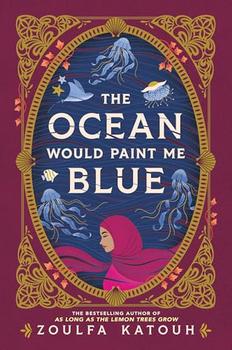
This article relates to The Ocean Would Paint Me Blue

 In The Ocean Would Paint Me Blue by Zoulfa Katouh, art becomes more than a creative outlet for Jihad. As she struggles with the death of her mother and the challenges of being a visibly Muslim teenager, art allows her to express emotions that often feel too overwhelming to say aloud. With elements of magical realism, Jihad's drawings begin to take on a life of their own, her artwork becoming a powerful reflection of her memories, fears, and hope. "Mama may be gone, but she will live in this art. She will survive outside the ghostly confines of this apartment. Her story will bring her to life." Katouh presents art not as a cure for grief, but as a way for Jihad to understand her pain and begin moving forward. This portrayal reflects the reality of a growing body of psychological research that suggests art can be a tool for healing.
Art therapy is a form of psychotherapy that uses creative expression to help people process difficult emotions. It is commonly used with individuals experiencing grief, trauma, anxiety, and depression. Researchers have found that creative activities can help people make meaning from loss, maintain healthy emotional connections with loved ones who have died, and express feelings that are difficult to communicate through words alone. In one paper that incorporated data from multiple studies, visual art interventions were associated with positive outcomes, such as "continuing bonds" with the deceased.
Grief affects everyone differently, which is one reason art can be so valuable in processing it. Unlike conversation, creating something does not require people to explain exactly how they feel. Instead, emotions can emerge through colors, images, or symbols. Researchers studying grief interventions have found that combining art with storytelling encourages reflection, helps participants process painful memories, and fosters resilience over time. Using art for healing does not require artistic talent. The goal is not to create a perfect painting or drawing, but to engage in the creative process itself. Whether someone sketches, keeps an art journal, paints, or creates a collage, the act of making something can provide a sense of control during an emotionally overwhelming period.
Katouh captures this idea beautifully through Jihad's journey. Her artwork cannot erase her grief or change what she has lost, but it gives shape to emotions that once felt impossible to understand. "I will tell the jellyfish there about Mama, and they'll pass her story all over the oceans and seas until it reaches the Mediterranean. Her story will reach her home." The Ocean Would Paint Me Blue reminds readers that healing is rarely about forgetting. Sometimes it begins by creating something that helps us carry our memories forward.
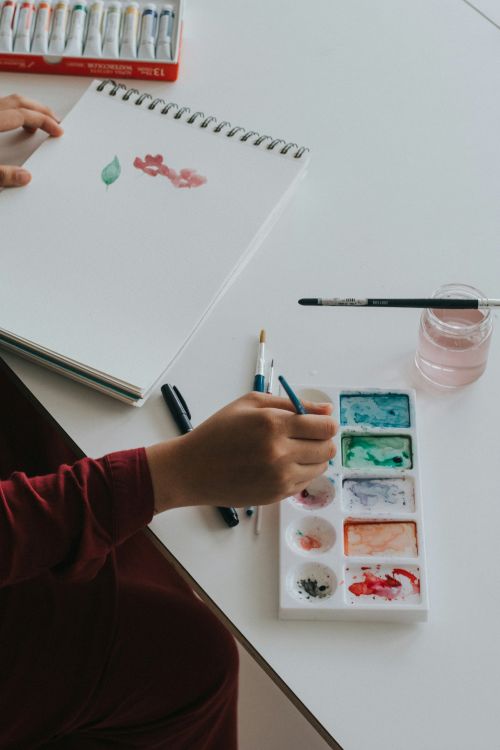
Person painting with watercolors
Photo by Rifqi Ali Ridho, via Unsplash
Filed under Medicine, Science and Tech
 This article relates to The Ocean Would Paint Me Blue.
It will run in the July 15, 2026 issue of BookBrowse Recommends.
This article relates to The Ocean Would Paint Me Blue.
It will run in the July 15, 2026 issue of BookBrowse Recommends.
Theo of Golden by Allen Levi
One spring morning, a stranger arrives in the small southern city of Golden. No one knows where he has come from…or why…






Your guide toexceptional books
BookBrowse seeks out and recommends the best in contemporary fiction and nonfiction—books that not only engage and entertain but also deepen our understanding of ourselves and the world around us.

