
-
Your next favorite book
is waiting.
Summary | Excerpt | Reviews | Beyond the Book | Read-Alikes | Genres & Themes | Author Bio
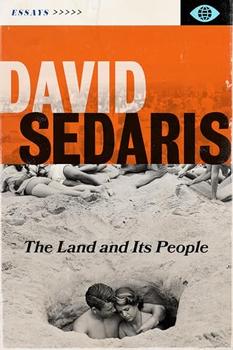
Essays
by David Sedaris Book Reviewed by:
This article relates to The Land and Its People

 In the early 1990s, when director Roger Allers went to Kenya, he heard the phrase "hakuna matata" from one of the safari guides. Upon his return, he told lyricist Tim Rice about the breeziness of the phrase and Rice anchored it in a quirky song for the movie The Lion King, as a turn in the plot from grief to humor. Audiences of The Lion King celebrated the idea that a carefree lifestyle is an antidote to the anxieties and stress of life. In the years since then, the phrase has been widely commercialized and criticized by those who perceive it as endorsing avoidance and irresponsibility.
The phrase "hakuna matata" originated in the coastal regions of East Africa, including Tanzania and Kenya. In Swahili, which is a Bantu language, "hakuna" means "there is/are not" and "matata" is a word for entanglements and troubles. It is interpreted not just literally but as a philosophy of living.
Swahili developed over centuries as a lingua franca in the multicultural atmosphere of trade between Arab and Persian speakers and Bantu-speaking Indigenous peoples on the East African coast, and it was in this environment, requiring cooperation and trust, that the phrase "hakuna matata" emerged. The tourism industry in the 1980s adopted it as a way to market Kenyan and Tanzanian culture to international visitors.
In East Africa today, "hakuna matata" can appear in a similar context to the Lion King film/play, as a kind of cultural etiquette to reassure friends, to water down the stressors of life, and to embrace empathy and understanding, though it is used primarily when communicating with tourists as a way of welcoming.
In his essay "Trophy Room," appearing in The Land and Its People, David Sedaris recalls visiting the Maasai Mara nature reserve in Kenya. "We saw every animal that was in The Lion King and then some. They were just there, like ants at a picnic, except they were elephants and giraffes." On his last day in Kenya, Sedaris and his husband Hugh saw eight elephants. Then they flew to Tanzania to stay on the resort island of Zanzibar. The local animals were lizards and snails. The beach was sugar-white, enveloped in palm trees. T-shirts for sale had the phrase "Hakuna Matata" splashed across the front, a phrase the hotel staff continually tossed out to guests. If you asked for coffee, "hakuna matata." If you mentioned you weren't feeling well, "hakuna matata." If you mentioned a large snail, "hakuna matata."
"It got to the point where you didn't dare say anything just because you didn't want to hear 'hakuna matata' again."
But there is a deeper meaning to the phrase in its original form, outside of its joyous leanings. It embraces emotional resilience in the face of uncontrollable events in the human experience. Being responsive instead of reactive is a healthier way of dealing with conflict and restoring harmony. As one article puts it, "Adopting a worry free attitude isn't about ignoring bills or deadlines; it is about tackling them with a calm, resilient energy rather than frantic worry…the best solution is simply to breathe and proceed at a human pace."
Beach on Zanzibar, Tanzania
Photo by Danai Tsoutreli, via Unsplash
Filed under Places, Cultures & Identities
 This article relates to The Land and Its People.
It will run in the July 15, 2026 issue of BookBrowse Recommends.
This article relates to The Land and Its People.
It will run in the July 15, 2026 issue of BookBrowse Recommends.
Theo of Golden by Allen Levi
One spring morning, a stranger arrives in the small southern city of Golden. No one knows where he has come from…or why…






Your guide toexceptional books
BookBrowse seeks out and recommends the best in contemporary fiction and nonfiction—books that not only engage and entertain but also deepen our understanding of ourselves and the world around us.

