
-
Your next favorite book
is waiting.
Summary | Excerpt | Reviews | Beyond the Book | Read-Alikes | Genres & Themes | Author Bio

A Novel
by Deb Olin Unferth Book Reviewed by:
This article relates to Earth 7

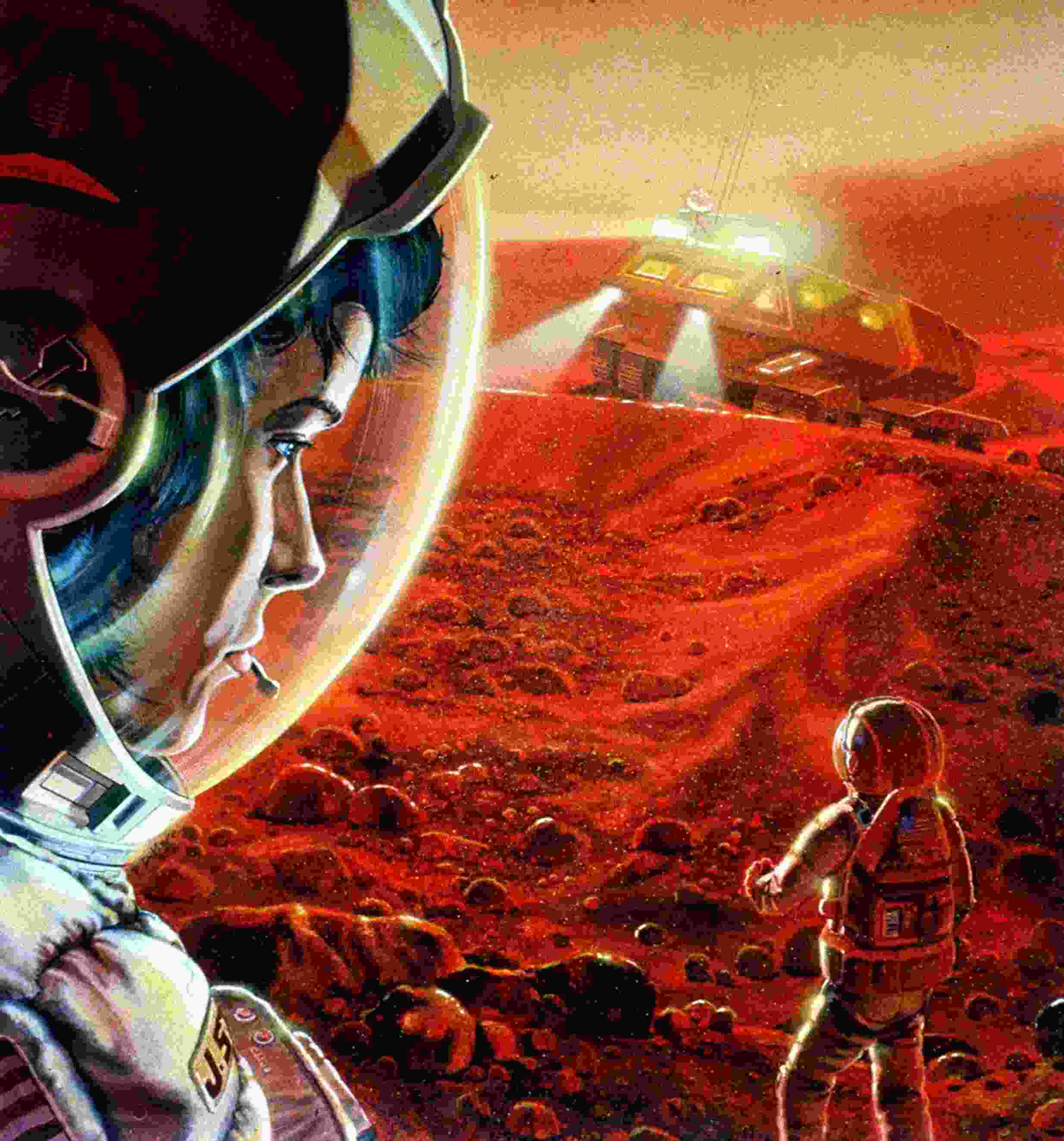 The title of Earth 7 raises the question, right away, of more than one Earth. "Earth 7" is not another planet, however; in the book, that name refers to a collection of Earth "traces," the preserved genetic materials of various Earth lifeforms. The people of Mars are intent on collecting these traces, so they might be able to mimic Earth-like life and conditions on their new planet. A small spoiler: their success is limited.
On our Earth, the question of settling outer space and escaping this rapidly-warming planet is hotly debated. Elon Musk's SpaceX, in the company's IPO filing, says that its mission is the "establishment of a permanent human colony on Mars with at least one million inhabitants" in order to create "species-level redundancy." Essentially, Earth is vulnerable, and we need a backup plan.
Climate activists have deployed the slogan "There is No Planet B" to emphasize the need for emissions reduction. This is our one Earth, one shot, they argue; settling other planets is too remote (and risky) a possibility. Astronomers for Planet Earth is a grassroots network advocating for sustainable practices in the field of astronomy, and against the idea of settling another Earth-like planet as the solution to climate change. Furthermore, the process of space exploration and settlement can itself be harmful to the environment: for example, SpaceX's launch and test site has raised concerns from local environmentalists for damaging a nearby wildlife refuge. (Not to mention that Musk's Department of Government Efficiency worked to cancel about $67.4 million in U.S. Environmental Protection Agency environmental grants in 2025, as well as removed federal workers responsible for climate monitoring and response across the EPA and NOAA, and that Twitter, now X, under Musk has become a breeding ground for climate dis- and mis-information.)
Beyond the concerns some may have around colonizing space, there is also the worry that diverting attention and resources to Mars settlement would actively take away from climate change mitigation efforts here on Earth. Developing and launching rockets takes billions of dollars (even as those costs are being reduced as the industry expands, primarily via SpaceX). Could that money be better invested in carbon storage, renewable energy, or sea walls?
Others argue that the technology to geoengineer Mars for human habitation should be used here on Earth, first, to adapt our environment to the new climate. Scientists in Earth 7 attempt this; they create a sky "full of sulfur and diamonds, shot into the air by cannons to scatter the sunlight," but it's too late for them. Is it too late for our planet, too?
Unferth's Martian residents long for memories of the pale blue dot they left behind. They got what they wanted, they escaped, but still, they think, "What a place Earth was. What a miracle. How they all wished they could go."
Astronauts in Martian dust storms, courtesy of Paul DiMare, NASA.
Filed under Society and Politics
 This article relates to Earth 7.
It first ran in the June 24, 2026
issue of BookBrowse Recommends.
This article relates to Earth 7.
It first ran in the June 24, 2026
issue of BookBrowse Recommends.

L.A. Women by Ella Berman
Two ambitious writers in 1960s LA face betrayal when one writes a novel based on the other's life.






Your guide toexceptional books
BookBrowse seeks out and recommends the best in contemporary fiction and nonfiction—books that not only engage and entertain but also deepen our understanding of ourselves and the world around us.

