
-
Your next favorite book
is waiting.
Summary | Excerpt | Reviews | Beyond the Book | Read-Alikes | Genres & Themes | Author Bio
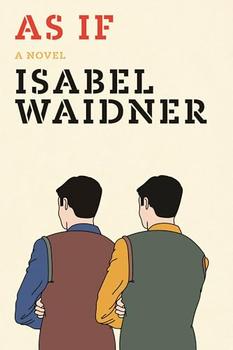
A Novel
by Isabel Waidner Book Reviewed by:
This article relates to As If

Isabel Waidner's novel As If focuses on two men who look uncannily like one another. Doppelgängers—unrelated people who look near-identical—have been a subject of fascination for centuries, and remain one today.
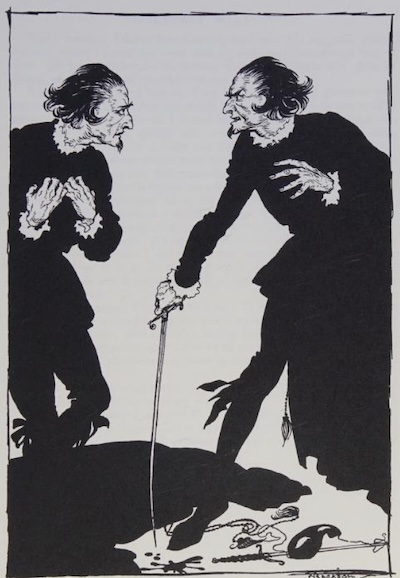 The word doppelgänger comes from German folklore, and translates to "double goer." It originally described an identical but invisible second self that all people were said to have had, a ghostly entity. These beings were sometimes believed to be the opposite of their human counterparts. Folklore said that if you met your doppelgänger, it was a sign that you would die soon. This became a popular trope in horror novels. A famous example of a doppelgänger appears in Fyodor Dostoyevsky's The Double, in which a man is killed by a more successful, identical being. In Edgar Allan Poe's short story "William Wilson," a man develops a lifelong frustration with a man so like himself that they even share a name. When the story ends in violence, readers are left wondering whether the man killed his double—or himself.
In popular modern usage, doppelgängers are simply people who bear a close resemblance. The Canadian photographer Francois Brunelle spent more than a decade on a labor of love that he called "I'm Not a Look-Alike." He photographed more than 200 pairs of unrelated strangers who could easily pass for siblings, if not exactly identical twins. Meanwhile, a 2023 documentary called Doppelgängers: Face to Face had people meet similar-looking strangers and find out if their lives resembled one another beyond their appearances.
While the doppelgängers in both of these projects do bear a strong resemblance, none are exactly identical. What are the chances that two unrelated people would actually be exact lookalikes? University of Adelaide scholar Teghan Lucas has actually calculated the odds! Lucas studies forensic science, so her study was based on whether "my double did it" could be a plausible legal defence. She carefully analyzed thousands of faces, measuring the distance between their features. She found that the chance of two people sharing eight dimensions was less than one in one trillion—meaning the odds are one in 135 that there's one pair of real doppelgängers somewhere out there. Lucas told the BBC: "Before you could always be questioned in a court of law, saying 'well what if someone else just looks like him?' Now we can say it's extremely unlikely."
So while you may strongly resemble a stranger or two, the chances of having a real doppelgänger are pretty slim. And based on what folklore tells us, that's probably a good thing!
Illustration by Arthur Rackham from "William Wilson" by Edgar Allan Poe, collected in Poe's Tales of Mystery and Imagination, published by George C. Harrap & Co., London, 1935, courtesy of Wikisource
Filed under Cultural Curiosities
 This article relates to As If.
It first ran in the June 24, 2026
issue of BookBrowse Recommends.
This article relates to As If.
It first ran in the June 24, 2026
issue of BookBrowse Recommends.
Theo of Golden by Allen Levi
One spring morning, a stranger arrives in the small southern city of Golden. No one knows where he has come from…or why…






Your guide toexceptional books
BookBrowse seeks out and recommends the best in contemporary fiction and nonfiction—books that not only engage and entertain but also deepen our understanding of ourselves and the world around us.

