
-
Your next favorite book
is waiting.
Summary | Excerpt | Reading Guide | Reviews | Beyond the Book | Read-Alikes | Genres & Themes | Author Bio
 Book Reviewed by:
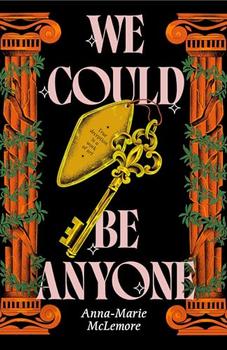
This article relates to We Could Be Anyone

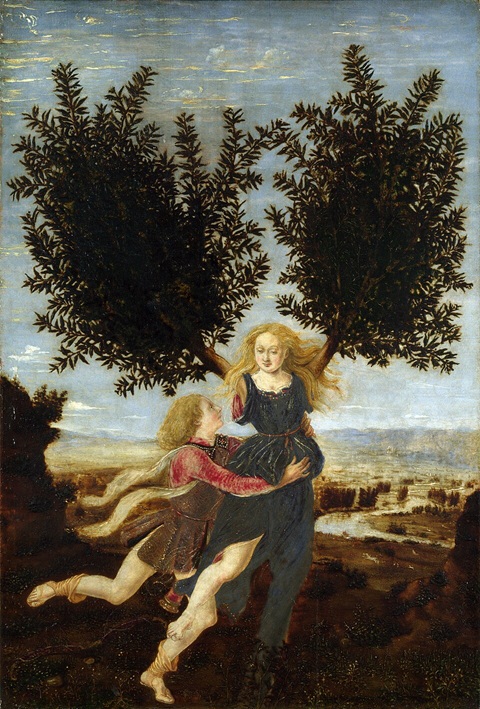 In We Could Be Anyone, one of the main characters, Lola, is turning into a tree, and she references instances from mythology where this happened to a female character. It's a surprisingly common phenomenon when looking at myths of various cultures. It is often specified what kind of tree a woman becomes, but it's generally unclear whether we are meant to assume every tree of that particular kind was once a woman, or for that matter how this plot twist came to be so popular.
One thing that's certain is that Ovid's Metamorphoses (a book that is important to Lola in the novel) has several stories where the gods have this particular kind of "mercy" on a woman who is being nonconsensually sexually pursued by a man. Yes, the merciful act is that she is turned into a tree forever! Ovid wrote from Hellenistic and Greek literature, as well as oral traditions. It's hard to know more than that about the origin of these myths. For instance, did they all start from the same original myth and were then altered differently by different cultures? Were they meant to be cautionary tales, and if so, for whom?
The myth most famous to Western audiences involving a woman becoming a tree is that of Apollo and Daphne, which was included in the Metamorphoses. This myth starts with Cupid getting sick of Apollo's boasting. Naturally, he deals with his frustration by shooting a special gold arrow into Apollo, and then also into a virginal nymph named Daphne for good measure. Apollo becomes obsessed with having sex with her despite her commitment to chastity. As soon as Apollo gets close enough to touch her, her father, the river god Peneus, takes mercy and turns her into a tree. (And you thought your parents' whims were inscrutable.) In Greek, the word for the laurel tree is "daphne."
That's hardly the only time that Greco-Roman gods stopped a man's aggressive pursuit by doing the sensible, easy thing and turning the woman into a tree. In another story, Pan and the god Boreas (of the northern forest) are both pursuing a dryad named Pitys, who is then turned into a pine tree by Gaia, complete with sap resin that symbolizes her tears.
In perhaps the darkest tale (which is saying a lot), Aphrodite places a curse on Myrrha, whose father is the King of Cyprus. The curse? Aphrodite causes Myrrha to be deliriously sexually attracted to her own father. She attempts suicide because she thinks her desire will never be fulfilled. A healer saves her and helps her craft a plan to meet her father in a dark room, which works until her father recognizes her and tries to kill her. She flees and wanders around Arabia, and by the way, is now pregnant, until Zeus—can you guess?—shows mercy by turning her into a myrrh tree. I don't really believe in this myth, but the scent of myrrh is so otherworldly I can believe some divine presence was involved in its creation.
It seems that the concept of women becoming trees—this should have its own term, like gynoarborism or gender dendrology—has its bleakest roots (sorry) in Greek mythology. My admittedly brief research into other gynoarborism myths found examples of women becoming trees when they died so they could rest in the sun, and women who hid from danger in hollow logs. So far, nothing has explained why the gods felt they could not directly intervene to stop men from chasing women and thought the best mercy was to turn the women into trees. And then did it again. And again.
If the idea of a woman turning into a tree intrigues you, Lola from We Could Be Anyone is good company. And if you need to know how to conceal your vines and woody knots while you're pretending to be a ghost, she's definitely the one to call.
Apollo and Daphne (c 1470) by Piero del Pollaiuolo, courtesy of Wikimedia Commons
Filed under Cultural Curiosities
 This article relates to We Could Be Anyone.
It first ran in the June 24, 2026
issue of BookBrowse Recommends.
This article relates to We Could Be Anyone.
It first ran in the June 24, 2026
issue of BookBrowse Recommends.
Theo of Golden by Allen Levi
One spring morning, a stranger arrives in the small southern city of Golden. No one knows where he has come from…or why…






Your guide toexceptional books
BookBrowse seeks out and recommends the best in contemporary fiction and nonfiction—books that not only engage and entertain but also deepen our understanding of ourselves and the world around us.


