
-
Your next favorite book
is waiting.
Summary | Excerpt | Reviews | Beyond the Book | Read-Alikes | Genres & Themes | Author Bio

Murder, Betrayal, and the Making of a Monster
by Shelley Puhak Book Reviewed by:
This article relates to The Blood Countess

 One thing that quickly becomes clear in Shelley Puhak's The Blood Countess is that Elizabeth Bathory, accused of being a serial killer, wasn't alone in whatever her activities were. She had a mysterious confidant, Anna Darvulia—to some, a sadistic torturer; to others, a skilled midwife and healer caught in political and patriarchal games.
Darvulia as a killer
The primary evidence linking Darvulia to Bathory's alleged crimes comes from statements collected during the 1610 investigations against Bathory. They claim that beginning when Bathory met Darvulia in 1601, her personality changed completely and she turned into a cruel and sadistic woman. They further mention that Darvulia was a "wild beast in a female body." The most striking claim, however, is that she was the one who taught Bathory how to kill by becoming the countess's demonic tutor.
As in the case of accusations against Bathory, however, these testimonies were gathered under threats and torture. The servants who accused Darvulia were themselves facing execution for their participation in the alleged crimes and therefore had every incentive to shift blame onto a conveniently dead outsider (Darvulia had died of a stroke in early 1609 and therefore could neither confirm nor refute the allegations against her).
Darvulia as a healer
An alternative narrative depicts Darvulia as a skilled midwife and healer from Vienna whose specialties included surgery, bloodletting, and cauterization. Her practices were likely normal for the times she lived in, when bloodletting and cauterization, for example, were common treatments for fevers and infections, while alternate hot and cold baths were used to treat various illnesses. These could seem like torture from afar, but they were considered legitimate healing practices.
In addition, epidemics of plague and typhus ravaged central Europe in the early 1600s, the dates of deaths at Bathory's castle coincide with known local epidemics, and one of the castle's functions was caring for the sick. So if Darvulia was tending to ill people using harsh-looking methods, people around her who were unfamiliar with these medical practices could easily have interpreted them as torture, resulting in wrongful accusations.
Darvulia as a victim
Any assessment of Darvulia must also account for the patriarchal and political environment of her time. Midwives and female healers were in a precarious position. Across Europe, they were frequently accused of witchcraft; their use of herbal remedies and attempts to ease childbirth pain clashed with church doctrine, which held that pain in childbirth was punishment for Eve's sin. Because of this, as well as the fact that male physicians dominated the medical profession, female healers were distrusted and accused of witchcraft or malpractice. In this climate of suspicion, it would have been easy for a midwife like Darvulia to be labeled a witch or a monster.
In addition, the whole Bathory affair was entangled in high politics, as Puhak demonstrates in The Blood Countess. Upon her husband Ferenc Nádasdy's death in 1604, Bathory was not only one of the richest widows in Hungary but had castles at strategic locations and political power (she took her husband's role as lord-lieutenant). King Matthias II was also heavily in debt to Nádasdy, making Bathory a creditor. And since Darvulia was already suspicious in the eyes of many, and had close relations with Bathory, her "monstrousness" may have been exaggerated as a means of building a stronger case against the countess.
Conclusion
In light of the lack of primary sources on Darvulia and the extremely biased nature of the available testimonies, it is impossible to definitively say whether she was an honest healer or a sadistic killer. However, when examining the evidence, several things become clear. The accusations of witchcraft and inciting Bathory to her crimes are based on testimonies obtained under torture and written decades after the events in question, making them dubious. The death rate at Bathory's castle was high, but it was also a time when plague and typhus epidemics occurred, and it is possible that the victims died of natural causes. Finally, the patriarchal suspicion of female healers and the political desire to destroy Bathory's power would have made Darvulia a convenient target.
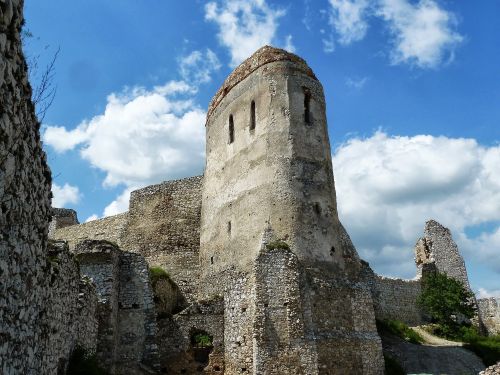
Main tower at Cachtice Castle, Slovakia
Photo by Jacomoman78, CC BY-SA 3.0
Filed under People, Eras & Events
 This article relates to The Blood Countess.
It first ran in the April 22, 2026
issue of BookBrowse Recommends.
This article relates to The Blood Countess.
It first ran in the April 22, 2026
issue of BookBrowse Recommends.

L.A. Women by Ella Berman
Two ambitious writers in 1960s LA face betrayal when one writes a novel based on the other's life.






Your guide toexceptional books
BookBrowse seeks out and recommends the best in contemporary fiction and nonfiction—books that not only engage and entertain but also deepen our understanding of ourselves and the world around us.


