
-
Your next favorite book
is waiting.
Summary | Excerpt | Reviews | Beyond the Book | Read-Alikes | Genres & Themes | Author Bio

 Book Reviewed by:
This article relates to A Bad, Bad Place

A Bad, Bad Place, the excellent debut novel from Frances Crawford, is set in Glasgow, Scotland's biggest city. For those with any knowledge of the country and its literature, the title will seem like a knowing wink: over the past century, Glasgow has developed a literary reputation for being a very bad place indeed, one where poverty, crime, and drugs run rampant.
The origins of this reputation can be traced back to the inter-war years and the novel No Mean City (1935). Based on short stories by Alexander MacArthur, an unemployed baker, which were subsequently reworked for publication by the journalist H. Kingsley Long, the book recounts the exploits of the "razor gangs" that roamed the tenement slums of the British Empire's "second city." With its lurid, sensationalist depictions of sex and violence, it was hardly a critical success. But that didn't stop the novel from having an almost immediate impact on the public imagination: in the words of one local paper, it branded the city "a collection of thugs and harlots." It was a reputation that was to stick.
The physical and moral state of the city has been a preoccupation of Scottish writers ever since—especially as its tenements and slums only began to degrade further after the Second World War. The poet Edwin Morgan, who would become the city's first Poet Laureate in 1999, used the poetry of romantic love in his Glasgow Sonnets (1972) to rail against this creeping social deprivation. The first and most famous poem of the collection paints a stark picture of a city where, 40 years after the publication of No Mean City, "the cracks deepen, the rats crawl," and unemployed men let their "coughs fall / thinly into an air too poor to rob."
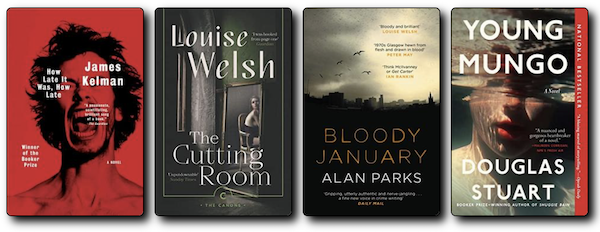
Both culturally and socially, Glasgow was marginalized in Britain for much of the twentieth century. Things were to change, however, when James Kelman's seminal How Late It Was, How Late unexpectedly won the Booker Prize in 1994. A stream-of-consciousness novel narrated in a frenetic Glaswegian, it follows Sammy, an ex-convict who wakes up blind after being beaten by two plainclothes policemen. The book's language, in particular, provoked a firestorm of controversy, criticized for being both "inaccessible" and a "riot of four-letter words" that was "hard to admire." It seemed unthinkable to some that it had any artistic merit whatsoever—including to one of the Booker judges, who allegedly labelled it "crap" and threatened to resign if it was awarded the prize. In his acceptance speech, Kelman laid out a forceful defense of his novel and, by extension, the city from which it sprang: "My culture and my language have the right to exist," he declared, "and no one has the authority to dismiss that right."
In the 30 years since Kelman's win, Glasgow's reputation for violent crime and poverty has little changed. In excellent crime thrillers like Louise Welsh's The Cutting Room (2001) and Alan Parks's Bloody January (2017), it remains the Gothic backdrop against which all the depravities of modern life play out. But while Glasgow is yet to fully shrug off its reputation as "no mean city," the seminal Glasgow novels of the past decades have done much to make sure that different voices can be heard from its streets. Douglas Stuart's Young Mungo (2022) and Shuggie Bain (winner of the 2020 Booker Prize) explore gay relationships in narratives where the language and culture of working-class Glasgow is as vital as it is in Kelman's work. And in A Bad, Bad Place itself, Frances Crawford has given voice to marginalized women young and old—a rare thing in a city whose literary reputation has been built on "hard men" narratives. While it's unlikely that writers will abandon depicting Glasgow's gritty image any time soon, it seems that authors and readers are finally opening up to new stories that better represent the vibrant, diverse people who live there.
Filed under Books and Authors
 This article relates to A Bad, Bad Place.
It first ran in the March 25, 2026
issue of BookBrowse Recommends.
This article relates to A Bad, Bad Place.
It first ran in the March 25, 2026
issue of BookBrowse Recommends.
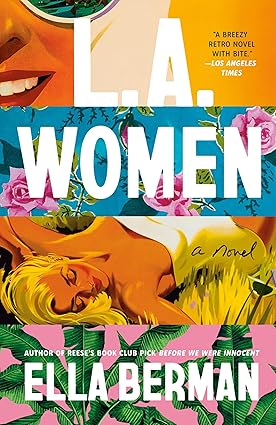
L.A. Women by Ella Berman
Two ambitious writers in 1960s LA face betrayal when one writes a novel based on the other's life.






Your guide toexceptional books
BookBrowse seeks out and recommends the best in contemporary fiction and nonfiction—books that not only engage and entertain but also deepen our understanding of ourselves and the world around us.

