
-
Your next favorite book
is waiting.
Summary | Excerpt | Reviews | Beyond the Book | Read-Alikes | Genres & Themes | Author Bio

A Novel
by Tina Harnesk Book Reviewed by:
This article relates to The Secret of Snow

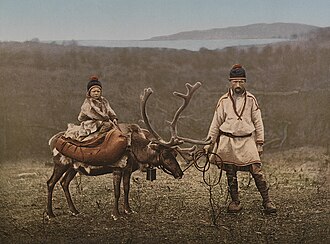 In Alice Menzies's translation of The Secret of the Snow into English, a few words remain italicized. These are not remnants from the Swedish edition of the novel, but Sámi terms with specific cultural context and meaning to the narrative. The most prominent of these untranslated terms is joik—a traditional Sámi form of song, similar in sound to chanting.
"That was when it came to him, the joik," Harnesk writes of Máriddja's beloved husband's experience joiking for a new baby in the family. "From the feeling that filled his chest as the little one lay against his bare skin. From springs in his soul he had never drunk from before… It encompassed all his longing, his love, and his family history. It was as melancholy as the day his parents were forced to leave their home in Karesuando, setting off on a long walk toward an unknown future. It was as soft as the boy's cheeks, his skin. It was as bright and lively as the youngster's gaze."
While joiking—a term that encompasses the South Sámi vuelie and the northern luohti, among others—does not necessarily create a song or melody, it is known as one of the oldest forms of singing in Europe. It is typically done solo, often improvised, and has become more popular as an art form over time, especially as Sámi artists integrate elements of joiking and musical instruments to create fusion songs on stages from Sweden's Got Talent to Eurovision.
During the conversion of the Sámi people into Christianity in the 17th and 18th centuries, Sámi traditions, religions, and cultural expression were suppressed. The joik was no exception: shamanic drums used to accompany their performance were burned, and in schools in Sámi-speaking areas in the 1950s, joiking was banned entirely. It was not until 1968 that the first album was released by a Sámi artist, featuring many iconic joiks: Joijuka by the writer, artist, and musician Nils Aslak Valkeapää (stage name Áillohaš). (For an example of Valkeapää's work, listen to "Sámi Eatnan Duoddariid".) Artists like Mari Boine continued to raise joiking's profile on the world stage in the 1980s, inspiring a generation of young Sámi artists.
Crucially, the joik embodies its subject. Sámi musician Ánnámáret (Anna Näkkäläjärvi-Länsman) states: "When we joik, we do not joik about something, we joik the thing itself." And in northern Sámi culture, many joiks are tied to a specific person, often made for them when they are born. For example, in The Secret of Snow, Biera joiks his beloved nephew's presence:
"The sound had wrapped itself around them, binding them together. Tying an unbreakable bond between their souls. Biera had used his voice to share all his hopes and dreams for the little one, for his future and his path through life. Painting, showing, wordlessly sketching out his vision of his nephew and the world they shared. The boy had drifted off to sleep as he listened to the joik, lulled by his own nuances in his uncle's voice.
Decades later, Biera stood quietly, wistfully, remembering the boy's luohtit, his joik, a song that still lingered in the walls of the kitchen where it had first come to him."
In Harnesk's writing, Biera is not exactly joiking about his nephew, but rather, the sound is his nephew's presence; for the nephew, the nuances "in his uncle's voice" are "his own nuances."
Image courtesy of the National Library of Norway, CC BY 2.0.
Filed under Music and the Arts
 This article relates to The Secret of Snow.
It first ran in the March 11, 2026
issue of BookBrowse Recommends.
This article relates to The Secret of Snow.
It first ran in the March 11, 2026
issue of BookBrowse Recommends.

L.A. Women by Ella Berman
Two ambitious writers in 1960s LA face betrayal when one writes a novel based on the other's life.


Your guide toexceptional books
BookBrowse seeks out and recommends the best in contemporary fiction and nonfiction—books that not only engage and entertain but also deepen our understanding of ourselves and the world around us.


