
-
Your next favorite book
is waiting.
Summary | Excerpt | Reading Guide | Reviews | Beyond the Book | Read-Alikes | Genres & Themes | Author Bio

A Novel
by Claire Oshetsky Book Reviewed by:
This article relates to Evil Genius

In the author's note for Evil Genius, Claire Oshetsky writes that their novel "owes its existence" to John Cheever's short story "The Five Forty-Eight."
Published in The New Yorker in 1954, "The Five Forty-Eight" is a story about Blake, a businessman who has a coercive sexual encounter with a secretary named Ms. Dent and then fires her. Full of despair and rage, she follows him and forces him at gunpoint to kneel before her with his face in the dirt. As he prostrates and weeps, she says, "Now I can wash my hands of you, I can wash my hands of all this."
The text suggests Blake raped Ms. Dent without explicitly saying so. Cheever writes: "If he had had any qualms, they would have been practical. Her diffidence, the feeling of deprivation in her point of view, promised to protect him from any consequences. Most of the many women he had known had been picked for their lack of self-esteem. When he put on his clothes again, an hour or so later, she was weeping. He felt too contented and warm and sleepy to worry much about her tears."
In their author's note, Oshetsky writes: "Ever since I first read 'The Five Forty-Eight' in 1976 I've wanted to put a weapon in Ms. Dent's hand, and to give her the confidence to defend herself against Blake's needy fondles." The resulting novel is not a retelling of "The Five Forty-Eight," but does feature a scene inspired by it—with a very different ending. In an homage to Cheever's story, the characters involved are named Celia Dent and Blake.
 In Oshetsky's version, Blake is a stranger Celia meets on the train. When train service is interrupted before Celia's stop, he offers to give her a ride home, but suggests they stop by his house so she can meet his new puppy. Drunk, feeling impulsive, and dreading going home to her abusive husband, Celia agrees, even though she knows he likely has ulterior motives. When they get to his sprawling mansion and Blake keeps fondling her after she repeatedly says no, Celia retrieves a knife from her boot and slashes his midsection. He is not majorly injured, but shocked and frightened enough to stop pursuing her. With that, she leaves and skips "merrily down the road toward home."
Blake is a similar character in both versions—a wealthy, married businessman who won't take no for an answer. "The Five Forty-Eight" centers his perspective, but not sympathetically, showing his clear lack of concern for other people. We don't get a glimpse inside the head of Cheever's Ms. Dent, knowing only what she reveals through dialogue, but we get to watch her get catharsis via revenge. It's an empowering message, especially considering the story was written by a male author in the mid-twentieth century. By making Blake kneel before her, Ms. Dent is able to reclaim her dignity and what little power she has. She gets to feel a sense of control over a situation that will not be rectified.
But Oshetsky flips the script. Here Celia Dent pulls a weapon on Blake nearly as soon as his unwanted sexual behavior starts. In many ways, the ease with which she pulls the knife on him, and the lack of consequences as she waltzes away, feel like a feminist fantasy. It's not just the outcome the author wanted for Ms. Dent, but a dream scenario that rarely plays out in the real world. Here, readers get to imagine a just world where creepy men's actions are thwarted, and Celia's actions provide both comfort and a sense of empowerment. In the wider plot of the book, this scene is a symbol of Celia's growing confidence and loss of the need to please others.
Both of these stories have their merits, and they're best read in conversation with one another. In its own way, each portrays a woman getting some semblance of justice.
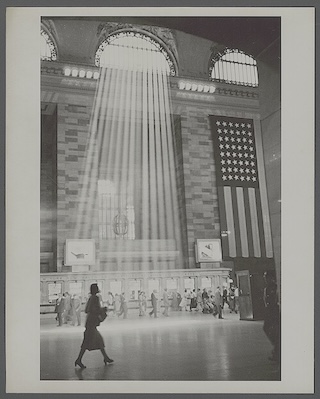
Grand Central Terminal in 1953, photograph by Angelo Rizzuto, courtesy of the Anthony Angel Collection at the Library of Congress.
Filed under Books and Authors
 This article relates to Evil Genius.
It first ran in the February 25, 2026
issue of BookBrowse Recommends.
This article relates to Evil Genius.
It first ran in the February 25, 2026
issue of BookBrowse Recommends.
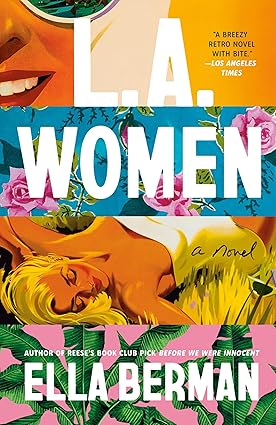
L.A. Women by Ella Berman
Two ambitious writers in 1960s LA face betrayal when one writes a novel based on the other's life.






Your guide toexceptional books
BookBrowse seeks out and recommends the best in contemporary fiction and nonfiction—books that not only engage and entertain but also deepen our understanding of ourselves and the world around us.

