
-
Your next favorite book
is waiting.
Summary | Excerpt | Reading Guide | Reviews | Beyond the Book | Read-Alikes | Genres & Themes | Author Bio

 Book Reviewed by:
This article relates to Wuthering Heights

 Though I'm not really the kind of person who has a "favorite book," when people ask if I do, I have, since the first time I read it, told them Wuthering Heights. This first reading would have been when I was a deeply romantic and dramatic young teenager, and I was turned inside out by the unrequited passion between Heathcliff and Catherine Earnshaw. I'm not the only one—pop songs have been written about their love, it has been cited as an influence by writers as wildly divergent as Sylvia Plath and Stephanie Meyer of Twilight fame. There have been at least fifteen television and film adaptations.
I read Wuthering Heights again in my twenties and was still struck by Catherine and Heathcliff's obsessive, undying devotion. But now, at forty-three, I was surprised to find that it felt like a completely different reading experience. It's easy to forget, when you haven't read it in a while, that Catherine Earnshaw dies about halfway through, and thus her storyline with Heathcliff is largely side-lined in favor of her daughter's upbringing and relationships with the inhabitants of Wuthering Heights. This part of the book is much less romantic and much more straightforwardly gothic. I found myself considerably more interested in the narrator Nelly Dean as a character this time around as well. When the reader is focused on Catherine and Heathcliff, it's easy to see Nelly as a vacant vessel for the delivery of their story. In fact, she is a rather heroic figure, desperately fighting to protect Cathy from Heathcliff's designs on her.
When one sets aside the love story that kicks off the narrative, it is also easier to marvel at the intricate, twisted story structure Brontë has crafted, with Nelly Dean at the center, often putting events into motion (whether intentionally or otherwise). The 2025 edition of the book published by Unnamed Press's Smith & Taylor imprint features a conversation between award-winning author and poet Derrick Austin and author and University of Bristol lecturer Noreed Masud. Among other topics, they hit upon this very centrality. Many novels use a framing device like that featured in Wuthering Heights, where a narrator is telling a story of something that happened in the past to an eager listener, but Nelly is both the book's center and its frame, her influence spiraling from the middle out. Masud notes that "In so many ways, she is the one who always takes the real risks in the novel." She is constantly moving the plot forward, both protecting Cathy and driving her deeper into danger. (Even Heathcliff, who at one point kidnaps her and holds her hostage for a week, treats Nelly—and only Nelly, really—with respect.)
Without Nelly to deliver their letters, Cathy and Linton's relationship may have withered from lack of contact. She ultimately makes the choice to let Cathy go to the Heights and visit Linton, a turn of events that allows for them both to be held hostage by Heathcliff and Cathy and Linton to be wed. She is one of the few morally upright characters, and the only one who expresses religious faith, but she is not pious or overly virtuous (at one point she lashes out at Linton, calling him a "little idiot"). Having been ensconced in both Thrushcross Grange and Wuthering Heights, she is also the only character from whom virtually nothing is hidden. She is the only person not of the younger generation who survives the events of the novel. She raises, protects, and nurtures both Young Cathy and Hareton, allowing for their ultimate happy ending together.
Perhaps most importantly, she models a kind of steadfast, nurturing, and protective love that is in stark contrast to the wild and destructive ardor of Catherine and Heathcliff.
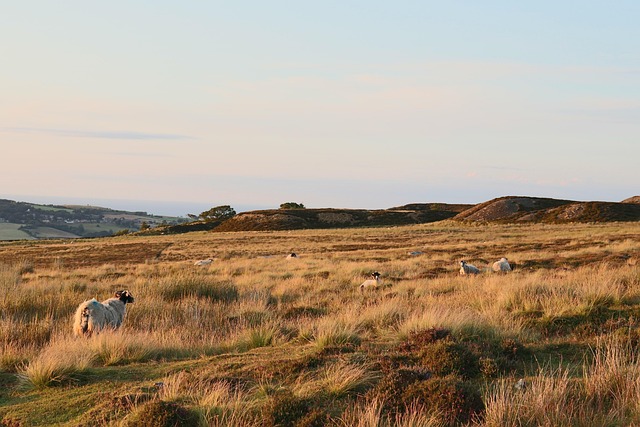
The Yorkshire moors
Photo by Martina Backes, via Pixabay
Filed under Books and Authors
 This article relates to Wuthering Heights.
It first ran in the January 28, 2026
issue of BookBrowse Recommends.
This article relates to Wuthering Heights.
It first ran in the January 28, 2026
issue of BookBrowse Recommends.

L.A. Women by Ella Berman
Two ambitious writers in 1960s LA face betrayal when one writes a novel based on the other's life.






Your guide toexceptional books
BookBrowse seeks out and recommends the best in contemporary fiction and nonfiction—books that not only engage and entertain but also deepen our understanding of ourselves and the world around us.

