
-
Your next favorite book
is waiting.
Summary | Excerpt | Reading Guide | Reviews | Beyond the Book | Read-Alikes | Genres & Themes | Author Bio
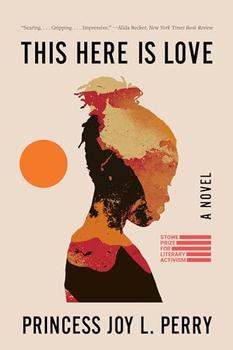
A Novel
by Princess Joy L. Perry Book Reviewed by:
This article relates to This Here Is Love

 In This Here Is Love, Princess Joy L. Perry tells the stories of Bless, David, and Jack as they grow from children into adulthood in the late 17th and early 18th centuries in Tidewater, Virginia. At first glance, they appear to be bound by shared hardship: Bless and David are enslaved, while Jack is an indentured servant. But as the novel unfolds, it becomes clear that their paths, though parallel in suffering, diverge sharply when it comes to power and possibility. Jack, initially powerless, eventually becomes an enslaver himself, a development that is only possible because he is white, and one that reflects the reality of this historical era in which indentured servants could rise in socioeconomic status by stepping on the backs of the enslaved.
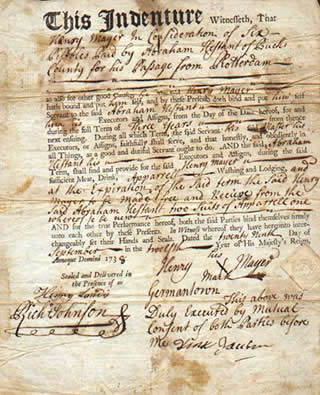
In colonial Virginia, indentured servitude and slavery coexisted for decades. Both systems relied on forced labor, but they were not equal in structure or in outcome. Indentured servants, often poor Europeans, signed contracts to work for a set number of years, usually in exchange for passage to the colonies. Their bondage was temporary, and they retained some legal rights. Enslaved Africans, by contrast, were legally considered property for life, not people, and in this time and place they were unlikely to ever experience freedom.
Beginning in the late 1660s, the Virginia Slave Laws hardened these distinctions, codifying race as the dividing line between those who could eventually be free and those who could not. For instance, one law stated that a child's status would be defined by that of their mother, ensuring that a white European servant would likely never be classified as enslaved, whereas the child of an enslaved person was born enslaved. The character David in the novel would have been classified as a slave at birth based on this law because his mother was enslaved, though his father was not. The other colonies used the Virginia legislation as a model.
Another one of the Virginia Slave Laws defined slavery by religious status, stating that non-Christian servants who came to America were automatically designated slaves. Again, this was to the benefit of most white Europeans who came with indentured servitude contracts, and intentionally designed to enslave Africans. Thus, whiteness provided a potential ticket out of oppression while Blackness was a life sentence.
Like Jack in This Here Is Love, some white European indentured servants came to the colonies, completed the terms of their indentured servitude contract, and went on to acquire land, wealth, and, in some cases, enslaved laborers to work on that land. While indentured servants were also treated horribly, there was generally an end to their oppression and some potential for upward mobility, none of which was likely for the enslaved.
An indentured servitude contract from 1738, courtesy of the Immigrant Servants Database and Wikimedia Commons
Filed under People, Eras & Events
 This "beyond the book article" relates to This Here Is Love. It originally ran in November 2025 and has been updated for the
August 2025 edition.
Go to magazine.
This "beyond the book article" relates to This Here Is Love. It originally ran in November 2025 and has been updated for the
August 2025 edition.
Go to magazine.
L.A. Women by Ella Berman
Two ambitious writers in 1960s LA face betrayal when one writes a novel based on the other's life.






Your guide toexceptional books
BookBrowse seeks out and recommends the best in contemporary fiction and nonfiction—books that not only engage and entertain but also deepen our understanding of ourselves and the world around us.

