
-
Your next favorite book
is waiting.
Summary | Excerpt | Reviews | Beyond the Book | Read-Alikes | Genres & Themes | Author Bio

 Book Reviewed by:
This article relates to Shadowbahn

Laurie Anderson's "O Superman" is a song caught between centuries. Released in 1981, it appears to have traces of postwar optimism—optimism about technology, about institutions, about one's own country—but those traces are weaponized, suffused with an icy dread for what's to come. "Here come the planes," Anderson warns, her vocoded voice simultaneously warm and cold, before she tries to save face like a robot flight attendant reassuring her passengers when the engines fail. "They're American planes," she chirps, "made in America! Smoking or non-smoking?" Twenty years later, the planes would come (American planes, made in America), and Anderson would perform the song at The Town Hall in New York City, just days after the Twin Towers fell.
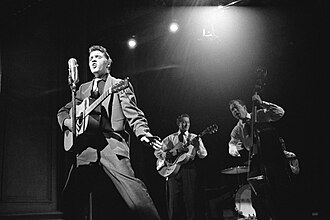 In Shadowbahn, the late father of Parker and Zema, a failed novelist and DJ, is haunted by "O Superman" not long before his death—specifically, by one line whose words he can't recall. "Here come the planes / so you better—" So you'd better…what? He doesn't remember until it's too late. "So you better get ready / ready to go." In the "liner notes" he wrote for the massive playlist he made for his children, he describes the Elvis Presley cover of the aria that inspired "O Superman" as "a musical bulletin from the American future." (The aria, from the opera Le Cid, is real; the Elvis Presley cover of it is fictional.) But how many of us would recognize a message from the future as the truth?
Dozens of other songs are described throughout the book, but very few of the artists responsible for them are referred to by name. Laurie Anderson is "a female performance artist from the Midwest"; Miles Davis is "a St. Louis dentist's son with a horn"; Hank Williams is "a long-dead country star." The artists may have recorded the songs, but they don't own them: they are conduits, just like the Twin Towers are, as they broadcast songs to those visiting "American Stonehenge" in the Badlands; and just like Parker and Zema's car is, as the siblings track music across the desolate countryside.
But what, exactly, are they conduits for? One passage theorizes that the Twin Towers are "located at temporal coordinates rather than spatial ones"—that the buildings have been in the Badlands ever since they fell in New York, and that it's only some trick of chronology that they can be seen now. The music that comes from the Towers, then, is "time's audiotape, the tunes of chronometry": a manifestation of cause and effect, one thing leading to another over the minutes, hours, days, years, centuries.
Jesse Presley's plot bears this out. Because Jesse was the surviving Presley twin and not Elvis, rock music never took hold in America and became only a passing fad in Europe, thanks to the efforts of a few British expats in Hamburg who are and are not the Beatles. Rock music, of course, was built upon the bedrock of the blues, which was built upon African American spirituals and field hollers, which were built upon African musical traditions, and so on. With Elvis, this lineage continues until it creates the musical environment we recognize today. Without him, we get…well, it's not exactly clear: jazz is still culturally dominant, but certain people are haunted by the feeling that something is missing.
Whether or not that's what an Elvis-less world would look like is beside the point. The point is not that a world without Elvis would be a world without rock (we don't know, and can't know, if there would be anyone to fill the vacuum), but that music, like everything else, only exists in its current state due to thousands of years of history—the same cause and effect that resulted in the genocide of America's indigenous population (a recurring background motif in Shadowbahn), that resulted in a culture of racism and hatred in which Black people could be lynched with impunity (one character has a traumatic memory of her grandfather taking her to the aftermath of one such lynching), and that resulted in two planes (American planes, made in America) flying into the Twin Towers in September 2001.
Parker and Zema's father devoted his life to engaging with the history of music, albeit in a somewhat narcissistic way. He prides himself on creating playlists, forming narratives that are neater and more poetic than reality. "The problem with musicians," he muses, "is that they're not novelists; they have no sense of narrative." But while he writes eloquently and perceptively about the various songs on his playlist in recurring sections throughout the novel, he seems to believe that this gives him some control over the music, and perhaps by extension the history behind it. September 11 disabuses him of this notion; he says that "there wasn't a single song worthy of the event or undiminished by it, or that didn't diminish the event in return." The things in Shadowbahn that nag at characters, that drive them to insanity—the forgotten line of "O Superman"; the anomalous record Jesse receives of his dead brother singing—are those that prod across time and space, reminding them that history is a nightmare from which no one can ever truly wake.
Watch the music video for Laurie Anderson's "O Superman" below:
Image of Elvis Presley courtesy of Wikimedia Commons.
Filed under Books and Authors
 This article relates to Shadowbahn.
It first ran in the November 5, 2025
issue of BookBrowse Recommends.
This article relates to Shadowbahn.
It first ran in the November 5, 2025
issue of BookBrowse Recommends.
L.A. Women by Ella Berman
Two ambitious writers in 1960s LA face betrayal when one writes a novel based on the other's life.






Your guide toexceptional books
BookBrowse seeks out and recommends the best in contemporary fiction and nonfiction—books that not only engage and entertain but also deepen our understanding of ourselves and the world around us.


