
-
Your next favorite book
is waiting.
Summary | Excerpt | Reading Guide | Reviews | Beyond the Book | Read-Alikes | Genres & Themes | Author Bio
 Book Reviewed by:
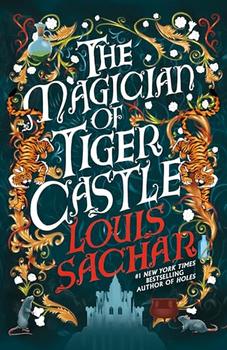
This article relates to The Magician of Tiger Castle

 The first tiger gets introduced just a few pages into The Magician of Tiger Castle as part of the wedding dowry for Princess Tullia, who is set to marry Prince Dalrympl of Oxatania. (Tigers aren't native to Oxatania, a fictional kingdom in what is now France, which makes the dowry an act of olden time regifting.) The tigers are put to use in the castle's moats, where they defend the castle's occupants from invaders and gobble up unfortunate prisoners.
Both Oxatania and Esquaveta, Tullia's kingdom, are, of course, fictional—but other, very real countries and empires in Europe have captured and kept tigers throughout history.
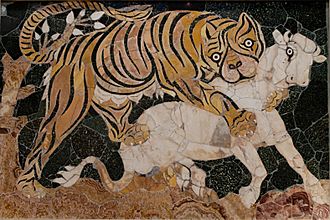
The Roman Empire made use of their tigers in much the same way Dalrympl did: by using them for entertainment in brutal hunting games in colosseums; and as a form of popular capital punishment called damnatio ad bestias ("condemnation to beasts"). (The stereotype is that Romans would feed persecuted Christians to lions, but tigers got in on the action, too; in general, tigers were much rarer than lions and more fascinating to the crowd.) There were also one-on-one death matches between different species, often between animals that would never encounter one another in the wild, including tigers versus lions. A large trade network crisscrossed the Roman Empire, capturing and transporting tigers from Armenia as well as other wild animals from northern Europe and North Africa.
Future empires would use tigers in a slightly less macabre way. Tigers were kept on display in the Royal Menagerie in the Tower of London, which was established in the 1200s. The French king Louis XIV had a menagerie at Versailles in the mid-1600s, where he would often stage animal fights.
In the 19th century, menageries and traveling circuses became popular types of public entertainment in the Western world. As demand for exotic animals grew, animal dealers began bringing more animals such as tigers from overseas and establishing supply chains from other continents. The process of capturing and transporting the animals was brutal and cruel. Moreover, the economics of poaching—the huge potential for profit for the western traders and the low compensation for local hunters in Asia and Africa—as well as the exploitation of native animals makes the animal trade itself (then and now) a form of colonialism. Today, there are fewer than 4,000 tigers remaining in the wild but over 850 in Europe and around 5,000 captive tigers in the US.
Image of Roman artwork from Marie-Lan Nguyen / Wikimedia Commons (Public Domain).
Filed under Cultural Curiosities
 This article relates to The Magician of Tiger Castle.
It first ran in the September 10, 2025
issue of BookBrowse Recommends.
This article relates to The Magician of Tiger Castle.
It first ran in the September 10, 2025
issue of BookBrowse Recommends.

L.A. Women by Ella Berman
Two ambitious writers in 1960s LA face betrayal when one writes a novel based on the other's life.







Your guide toexceptional books
BookBrowse seeks out and recommends the best in contemporary fiction and nonfiction—books that not only engage and entertain but also deepen our understanding of ourselves and the world around us.


