
-
Your next favorite book
is waiting.
Summary | Excerpt | Reading Guide | Reviews | Beyond the Book | Read-Alikes | Genres & Themes | Author Bio
 Book Reviewed by:
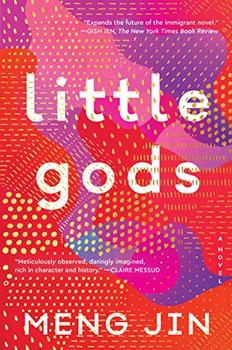
This article relates to Little Gods

 One of the largest public squares in the world, Tiananmen Square lies in the heart of Beijing. It's named after a monumental gate built in the 1400s leading into the Forbidden City; Tiananmen means "Gate of Heavenly Place." Despite the serene undertones of the name, however, Tiananmen Square has long been a site of political unrest and violence.
The most notable event in its history is a series of student protests that culminated in a brutal massacre on June 4, 1989. Earlier that same year, in April, liberal Communist Party leader Hu Yaobang died, and the streets were flooded with mourners, mostly students. This mourning soon took the form of protest—students took to the streets in order to demand political and economic reform. Throughout the 1980s, the Communist Party in China had seen a significant division between those who wanted the state to retain control and those who advocated for change. Students largely fell into the latter category, and had been devastated by the loss of Hu Yaobang, in whom they saw a democratic leader they could trust.
The crowds that flooded Tiananmen Square in the summer of 1989 were estimated to include up to one million people at their largest. The protests, which began in May and included hunger strikes, were largely ignored by the government at first, as party officials were not in agreement over how to respond. But, on May 20 martial law was declared, and troops were stationed throughout the city. Undeterred, the protestors created a statue they called "Goddess of Democracy" as a hub, and returned to the square every day.
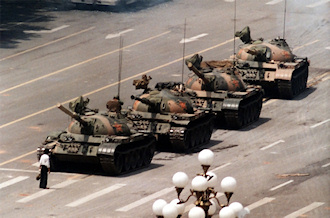
On June 3, over 200,000 soldiers began advancing on the square, together with armored military vehicles, and a day later, they began firing shots into crowds of protesters and indiscriminately arresting whoever they could capture. No warning was given before they started shooting. Some protesters fled, some fought back and some simply stood witness, including the famous "Tank Man," who was photographed with a shopping bag, staring down a line of tanks. The man was pulled away by two protesters, and his identity and fate remain unknown, but the photo is still one of the defining images of the protests.
After the massacre, the government began to hunt down and imprison anyone suspected to be involved with the demonstrations; thousands of people were imprisoned and charged with counter-revolutionary crimes. Anyone who lost a loved one in the massacre was forbidden from publicly mourning.
The brutality displayed by the Chinese government was so shocking that the aftermath was global. In the United States, Congress voted to impose economic sanctions against China, and Japan enacted a similar edict. Global leaders denounced the Chinese government, including Soviet ally Gorbachev, who declared that he was saddened by the events.
The exact death toll of the massacre is still unknown; estimates range from as low as 300 into the thousands, with about 10,000 arrested. Even now the Tiananmen Square Massacre is a deeply sensitive subject in China, whose government regularly removes posts pertaining to the event from the internet. Automated censors are used to identify incriminating web content, and posts that mention dates or names associated with the protests, or which include images of the protests, are automatically removed. The Cyberspace Administration of China, or the CAC, cites "falsifying the history of the Communist Party" as grounds for these removals. Hong Kong is the only place in China where the massacre is openly commemorated.
The massacre plays a peripheral yet integral role in Meng Jin's Little Gods—the central character gives birth in Beijing on the very night it occurred, and her husband's role in the events is uncovered by their daughter, years later.
"The Tank Man," by Jeff Widener
Filed under People, Eras & Events
 This "beyond the book article" relates to Little Gods. It originally ran in February 2020 and has been updated for the
January 2021 paperback edition.
Go to magazine.
This "beyond the book article" relates to Little Gods. It originally ran in February 2020 and has been updated for the
January 2021 paperback edition.
Go to magazine.
Theo of Golden by Allen Levi
One spring morning, a stranger arrives in the small southern city of Golden. No one knows where he has come from…or why…






Your guide toexceptional books
BookBrowse seeks out and recommends the best in contemporary fiction and nonfiction—books that not only engage and entertain but also deepen our understanding of ourselves and the world around us.

