
-
Your next favorite book
is waiting.
Summary | Excerpt | Reading Guide | Reviews | Beyond the Book | Read-Alikes | Genres & Themes | Author Bio
 Book Reviewed by:
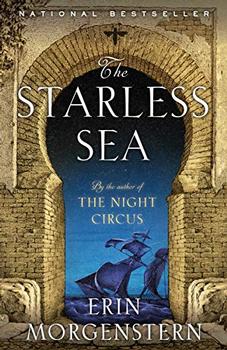
This article relates to The Starless Sea

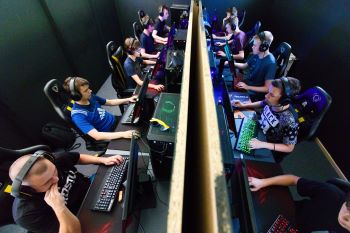 Computer-based role-playing games (RPGs) of the sort Zachary covets in The Starless Sea became popular in the early 1980s with the introduction of Wizardry and Ultima. Both of these games series borrowed liberally from table-top role-playing games, in particular, Dungeons & Dragons, that had become popular during the 1970s. In turn, Wizardry and Ultima would go on to influence later classics such as Dragon Quest (1986) and Final Fantasy (1987).
For a period of time in the 1990s, interest in the computer-based RPG format dwindled. However, despite RPG games experiencing a fallow period, the dialogue surrounding the viability of digital media and video games as a platform for storytelling through immersive, complex, participatory narratives continued to grow.
1997 saw the publication of Janet Murray's seminal academic work Hamlet on the Holodeck, which championed computer-based technologies, proposing that they would become the staging ground for "a new medium for storytelling." The book, an optimistic reflection on interactive narrative possibilities in developing technologies, likened the cynicism and awe propagated about video games and immersive tech to similar sentiments following the introduction of the printing press, radio and cinematograph.
In the years since the publication of Hamlet on the Holodeck, Murray's theories have proven prophetic. RPG games have experienced a resurgence in popularity, with developers such as Rockstar Games ("Red Dead Redemption"), Bethesda ("The Elder Scrolls") and CD Projekt ("The Witcher") creating richly detailed alternate worlds that allow players to actively participate as characters in intricately constructed fictions while being free to explore tangential story lines and environments at their leisure.
At the same time, print and film storytellers continue to warn of the potential hazards posed by interactive technologies and virtual realities. In Ernest Cline's Ready Player One, published in 2011, paying participants immerse themselves in a nostalgic digital game universe controlled by shady corporate overlords to the detriment of the world around them. Film productions such as David Cronenberg's Existenz and Steven Spielberg's big screen adaptation of Ready Player One depict game worlds in which the interacting characters are enslaved, exploited or lost between conflicting actualities.
However, despite concerns regarding the negative psychosocial impact of games on participants, and mounting evidence that suggests excessive gaming can contribute to social anxiety and other problems (Zachary in The Starless Sea is a socially anxious individual more at home in the realms of fantasy than the real world around him), growth in the sector shows no signs of slowing.
While video game narratives are still sometimes dismissed by the broader literary community for lacking aesthetic worth or posing psychosocial and dystopian hazards, arguments for and against the medium have become more balanced. There is a growing consensus amongst academics and journalists that games are worthy of literary study and criticism in their own right. This is supported to an extent by The Starless Sea, a novel that celebrates storytelling in all its myriad forms and has a hero in Zachary Ezra Rawlins, its central protagonist who is heavily invested in the fictional world of gaming.
With the success of recent interactive Netflix releases such as Charlie Brooker's Black Mirror series and Bandersnatch, as well as technological advances in virtual reality headsets and home gaming systems for RPGs, one thing is sure: The way we tell our stories and the way in which we engage with them is changing.
Filed under Society and Politics
 This "beyond the book article" relates to The Starless Sea. It originally ran in January 2020 and has been updated for the
August 2020 paperback edition.
Go to magazine.
This "beyond the book article" relates to The Starless Sea. It originally ran in January 2020 and has been updated for the
August 2020 paperback edition.
Go to magazine.

L.A. Women by Ella Berman
Two ambitious writers in 1960s LA face betrayal when one writes a novel based on the other's life.






Your guide toexceptional books
BookBrowse seeks out and recommends the best in contemporary fiction and nonfiction—books that not only engage and entertain but also deepen our understanding of ourselves and the world around us.

