
-
Your next favorite book
is waiting.
Summary | Excerpt | Reading Guide | Reviews | Beyond the Book | Read-Alikes | Genres & Themes | Author Bio
 Book Reviewed by:
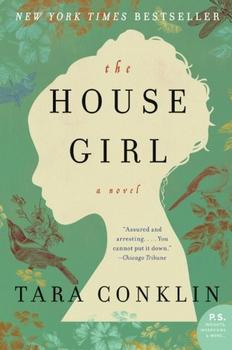
This article relates to The House Girl

Tara Conklin's novel The House Girl weaves two stories together: 17-year-old Josephine, a slave who flees a tobacco farm in West Virginia in 1852, and Lina, a lawyer seeking reparations for the descendants of African American slaves in 2004. While the idea of reparations is not new, it has gained more of a spotlight within the last decade.
To understand its concept, it is useful to understand the philosophy of Restorative Justice, which seeks to restore harm done to both the victim of a particular crime and the community from which the victim comes. Unlike Retributive Justice, which focuses specifically on punishment for the breaking of laws, it addresses the wider social network: the people who are affected by those broken laws, and the communities in which they live. According to the tenets of Restorative Justice, only by addressing the real and specific harm that has been done to actual individual people and their communities can healing begin to occur. Restitution, or reparation, is an important tool in the Restorative Justice process. It is a sort of tangible righting of a wrong – an understanding on the part of the perpetrator of benefits gained and imbalance created (or perpetuated), and a concrete solution to begin to fix that.
 Restorative Justice in the context of slavery means re-evaluating what was legal at one time through the lens of modern day humanity, and restitution in this context means African Americans being compensated for the nearly two and a half centuries of the practice of slavery in the United States. Although it has been an idea that has been slow to adopt, it has gained momentum within the last decade, especially in terms of corporate restitution. According to a 2001 New York Times article, the momentum has occurred on a few different fronts, including a California law which requires insurance companies to research their histories and report if they had ever sold slave owners policies that insured them against the loss of their slaves, as well as the issue of restitution being front and center at the UN World Conference Against Racism in August 2001 (but which was eclipsed almost entirely in the news because 9/11 happened on its heels.)
Of course, restitution is not only about admitting to slavery connections or focusing time and energy on the topic; it is also about reparations in the form of payment. This is not a new concept, nor is it limited to African Americans and slavery. The United States has paid reparations to Japanese-Americans for their imprisonment during World War II, as well as to Native Americans for violation of treaty rights. And some European governments have paid Holocaust survivors. There are differing opinions about the benefit of these kinds of reparations for African Americans. Some opposed to them feel that, while Holocaust survivors, for instance, were obviously directly affected by the Holocaust, slave descendants, a few generations removed from slavery, were not affected by the actual practice. Those who view restitution in this light, feel that other remedies, such as affirmative action and focusing laws and money on education for African American children, are much more useful processes in which to engage. Proponents, on the other hand, believe that the negative ripples of slavery are still felt today and as such, restitution is a reasonable and fair tool for righting wrongs. According to the National Coalition of Blacks for Reparations in America (N'COBRA), "Reparations are a way of making peace with the past."
Making peace with the past is an important part of the healing process, but slavery restitution is an intense debate today and will, most likely, continue to be so into the future.
Filed under Society and Politics
 This "beyond the book article" relates to The House Girl. It originally ran in March 2013 and has been updated for the
November 2013 paperback edition.
Go to magazine.
This "beyond the book article" relates to The House Girl. It originally ran in March 2013 and has been updated for the
November 2013 paperback edition.
Go to magazine.

L.A. Women by Ella Berman
Two ambitious writers in 1960s LA face betrayal when one writes a novel based on the other's life.





Your guide toexceptional books
BookBrowse seeks out and recommends the best in contemporary fiction and nonfiction—books that not only engage and entertain but also deepen our understanding of ourselves and the world around us.

