
-
Your next favorite book
is waiting.
Summary | Excerpt | Reading Guide | Reviews | Beyond the Book | Read-Alikes | Genres & Themes | Author Bio
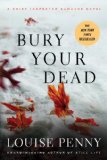
A Chief Inspector Gamache Novel, #6
by Louise Penny Book Reviewed by:
This article relates to Bury Your Dead

The province of Quebec is Canada's second most populous province, after Ontario. It is the only Candian province to have French as its sole official language, and has a predominantly French speaking population with 4 out of 5 ranking French as their first language, and 95% able to speak it. Eight percent state that English is their first language, and about 40% claim to be bilingual in French and English. Most of the province's 7.5 million population live in urban areas near the St. Lawrence River between Montreal and the capital, Quebec.
 So, one might ask, how did the people of Quebec end up speaking French, when the rest of Canada has English as its official language?
The story starts in 1534, when Frenchman Jacques Cartier made the first of three voyages to "New France". Landing close to the Iroquoian village of Stadacona, he asked the inhabitants the name of their village to which they replied kanata ("village"). So, on claiming the area for France, Cartier designated it Canada.
A little over seventy years later, in 1608, Samuel de Champlain chose Stadacona as the location of the fur trading outpost that he named l'Habitation. L'Habitation later became known as Quebec - from the Algonquin word kébec ("where the river narrows"), which originally referred to a specific area close to Quebec City where the St Lawrence River narrows to a cliff-lined gap.
For over 200 years, the French controlled New France with little interruption - until 1760 when the British captured the area during the Seven Years' War. The British quickly established control of the region but the expected influx of British colonists did not come, so, with unrest growing in the colonies and a pressing need to appease the 70,000 or so French speaking subjects of the British crown, the governor of Quebec convinced the British government that the predominantly French population should be governed according to familiar laws. Thus, in 1774, the British Parliament approved the Quebec Act which guaranteed religious freedom for Roman Catholics and restored the use of French civil law for private matters while maintaining English common law in other areas.
The Act also extended Quebec's borders to include much of what is now southern Ontario, plus the area to the west and south of the Great Lakes (now Illinois, Indiana, Ohio, Wisconsin and Minnesota). The Quebec Act, intended to placate one North American colony, infuriated inhabitants of the Thirteen Colonies further south. In fact, it was one of the five "Intolerable Acts" cited by colonists as arbitrary violations of their rights in the events leading up to the American Revolution (and the only one of the acts not passed in response to the Boston Tea Party of 1773).
Over the next almost century, Quebec's borders changed a number of times until, in 1867, The British North America Act created the Dominion of Canada (map), with Quebec as one of its provinces. Quebec retained French as its official language and its bijuridical legal system.
Sovereignty is a hot topic in Quebec. In 1995 Quebec voters narrowly rejected a referendum proposal that called for independence for Quebec by a vote of 50.6% to 49.4%.
Today, some supporters advocate for full independence from Canada while others want "sovereignty association" - so that Quebec would be a country in its own right but still maintain economic and political relationships with Canada. According to an April 2010 poll, 40% of Quebecers support separation, 53% are opposed and 7% are undecided - a split that has been relatively stable since 2000.
Filed under Places, Cultures & Identities
 This "beyond the book article" relates to Bury Your Dead. It originally ran in October 2010 and has been updated for the
August 2011 paperback edition.
Go to magazine.
This "beyond the book article" relates to Bury Your Dead. It originally ran in October 2010 and has been updated for the
August 2011 paperback edition.
Go to magazine.
Theo of Golden by Allen Levi
One spring morning, a stranger arrives in the small southern city of Golden. No one knows where he has come from…or why…






Your guide toexceptional books
BookBrowse seeks out and recommends the best in contemporary fiction and nonfiction—books that not only engage and entertain but also deepen our understanding of ourselves and the world around us.

