
-
Your next favorite book
is waiting.
Summary | Excerpt | Reading Guide | Reviews | Beyond the Book | Read-Alikes | Genres & Themes | Author Bio
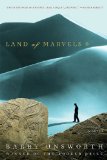
A Novel
by Barry Unsworth Book Reviewed by:
This article relates to Land of Marvels

The fictional John Somerville's interest in archeology was typical for his time. Most so-called archeologists of the period were, like him, self-taught because there were virtually no academic courses offered. Additionally, his desire to secure a rich benefactor to fund his excavations was standard operating procedure in the field; for example, the discovery of the tomb of Tutankhamun in 1923 was made by archaeologist Howard Carter, but financed by the wealthy George Herbert, 5th Lord of Carnarvon.
Archeology as a science is a relatively recent discipline. Before the 19th
Century what passed for archeology was little more than grave
pillaging with the plundered artifacts removed far from their point of origin to grace the curio cabinets of well heeled private collectors. A relatively
few artifacts ended up in museums.
According to the
Encyclopedia Britannica, "The development of scientific archaeology in
19th-century Europe from the antiquarianism and treasure collecting of the
previous three centuries was due to three things: a geological revolution, an
antiquarian revolution, and the propagation of the doctrine of evolution."
What's more, as far as Mesopotamia is concerned, the demise of the Ottoman
Empire and growth of the European Empire in the Middle East meant diplomats and
adventurers began to develop an interest that sparked awareness in the general
European public. The embers of this new consciousness were fanned when, in the
latter part of the 19th Century, "systematic excavation revealed a
previously unknown people, the Sumerians, who had lived in Mesopotamia before
the Babylonians and Assyrians."
 With all this excitement it isn't hard to picture a young John Somerville being
spellbound by the mystery and excitement of discovering past cultures. Indeed,
it is how Tutankhamen archeologist and Egyptologist
Howard Carter was first introduced to the field. When he was seventeen the
young Carter, son of artist Samuel Carter, traveled with a family friend to
Egypt where he recorded a dig and copied scenes from tomb walls. He even
reportedly spent his nights sleeping in the tombs with the bats and spider webs.
After his single, career-making, discovery he more or less retired from active
field work and became an antiquities collector. He died in 1939 preceded by the
eerily-King Tut-related deaths of Lord Carnarvon and ten other staffers who were
present at the opening of the fabled king's tomb.*
With all this excitement it isn't hard to picture a young John Somerville being
spellbound by the mystery and excitement of discovering past cultures. Indeed,
it is how Tutankhamen archeologist and Egyptologist
Howard Carter was first introduced to the field. When he was seventeen the
young Carter, son of artist Samuel Carter, traveled with a family friend to
Egypt where he recorded a dig and copied scenes from tomb walls. He even
reportedly spent his nights sleeping in the tombs with the bats and spider webs.
After his single, career-making, discovery he more or less retired from active
field work and became an antiquities collector. He died in 1939 preceded by the
eerily-King Tut-related deaths of Lord Carnarvon and ten other staffers who were
present at the opening of the fabled king's tomb.*
 The University of California credits German excavations of the ancient
city-state of Babylon in 1899 (on behalf of the Deutsche Orient-Gesellschaft -
German Oriental Society), with the birth of archeology as a scientific
discipline. Since then, standards for conducting digs have been tightened up
largely thanks to British diplomat and archeologist
Gertrude Bell (1868-1926), once head of the Iraqi Antiquities Service under
the British Mandate, who is credited as a seminal participant in establishing
both the National Museum of Iraq and the modern-day borders of Iraq (the region of Baghdad and Basra were formed into a single country in 1921, the region of Mosul was added five years later). Sadly, following the 2003 United States' invasion of Iraq, thousands of historical documents and
artifacts from both the museum and outlying excavations have been lost due to
looting. Most likely they will never be retrieved.
The University of California credits German excavations of the ancient
city-state of Babylon in 1899 (on behalf of the Deutsche Orient-Gesellschaft -
German Oriental Society), with the birth of archeology as a scientific
discipline. Since then, standards for conducting digs have been tightened up
largely thanks to British diplomat and archeologist
Gertrude Bell (1868-1926), once head of the Iraqi Antiquities Service under
the British Mandate, who is credited as a seminal participant in establishing
both the National Museum of Iraq and the modern-day borders of Iraq (the region of Baghdad and Basra were formed into a single country in 1921, the region of Mosul was added five years later). Sadly, following the 2003 United States' invasion of Iraq, thousands of historical documents and
artifacts from both the museum and outlying excavations have been lost due to
looting. Most likely they will never be retrieved.
*It should be noted that many retain a fair degree of skepticism about
King Tut's Curse.
Photos: Top: Howard Carter; Bottom: Gertrude Bell
Filed under Medicine, Science and Tech
 This "beyond the book article" relates to Land of Marvels. It originally ran in January 2009 and has been updated for the
January 2010 paperback edition.
Go to magazine.
This "beyond the book article" relates to Land of Marvels. It originally ran in January 2009 and has been updated for the
January 2010 paperback edition.
Go to magazine.

L.A. Women by Ella Berman
Two ambitious writers in 1960s LA face betrayal when one writes a novel based on the other's life.






Your guide toexceptional books
BookBrowse seeks out and recommends the best in contemporary fiction and nonfiction—books that not only engage and entertain but also deepen our understanding of ourselves and the world around us.

