
-
Your next favorite book
is waiting.
Books › Lists › Best Books About Mental Health
Powerful fiction and memoir about depression, anxiety, bipolar disorder, and recovery — reviewed by BookBrowse’s expert editors.
Books about mental health matter for a specific reason: the inner experience of depression, anxiety, bipolar disorder, and trauma is genuinely difficult to describe — and yet literature has sometimes come closer than clinical language to capturing what it actually feels like from the inside. The books on this list include canonical literary fiction, groundbreaking memoir, and contemporary novels that have given language to experiences that readers had lived without words for.
These are not books about mental health as spectacle. They are books about the ordinary life of the mind when it turns against itself — and about recovery, which in these pages is rarely triumphant and almost always ambiguous. BookBrowse’s expert editors have reviewed each of these titles with care for the nuance they require. Reading guides are available for titles commonly used in educational or therapeutic contexts. These books have helped readers feel less alone — which is the thing that matters most.
by Sylvia Plath
Esther Greenwood’s breakdown in 1950s New York is rendered in prose of knife-edge precision. Plath’s semi-autobiographical novel is the definitive literary account of depression’s phenomenology — the glass bell jar of isolation and deadness that descends around a person, invisible to everyone outside it.
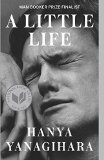
by Hanya Yanagihara
Brace yourself for the most astonishing, challenging, upsetting, and profoundly moving book in many a season. An epic about love and friendship in the twenty-first century that goes into some of the darkest places fiction has ever traveled and yet somehow improbably breaks through into the light.
by Stephen Chbosky
Charlie, a first-year high student with an unprocessed trauma, writes letters to an unnamed friend as he tries to navigate his first real friendships. Chbosky’s novel is for teenagers and adults equally — one of the few books that accurately describes dissociation and the experience of recovering memory.
by Kay Redfield Jamison
Psychiatrist Kay Redfield Jamison wrote the scientific text on bipolar disorder — and then wrote this memoir about having it. The combination of clinical knowledge and first-person experience makes it the most authoritative and most personal account of bipolar disorder in the literature.
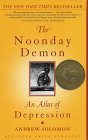
by Andrew Solomon
An amazingly rich and absorbing work -- encompassing not only the author's own ordeal but also keen inquiries into the biological, social, and political aspects of depression.
by Matt Haig
Haig’s memoir about his breakdown at 24 — written twenty years later — is deliberately accessible: short chapters, direct address, the explicit goal of being useful to someone in crisis. It has sold millions of copies and saved lives. Less literary than some entries on this list, but more important to more readers.
by Ottessa Moshfegh
A young woman in early-2000s Manhattan undertakes a year of near-total sedation with the help of a reckless psychiatrist. Moshfegh’s novel is darkly comic about what depression looks like when it is performed through affluence — and bracingly honest about the desire to disappear.
by Esmé Weijun Wang
Wang’s essay collection about living with schizoaffective disorder is precise, literary, and rigorous — she resists the temptation to make her illness either heroic or pathetic. One of the finest American essay collections about mental illness, and a model for how to write about psychiatric experience without condescension.
by Ned Vizzini
Craig, a fifteen-year-old in New York, checks himself into a psychiatric hospital after suicidal ideation and meets a community of patients who change his understanding of himself. Vizzini’s YA novel — semi-autobiographical, funny and sad in equal measure — has been a touchstone for teenage readers navigating their own mental health.
by Elizabeth Wurtzel
Wurtzel’s 1994 memoir about depression and medication was controversial on publication for its voice — raw, grandiose, brilliant, difficult. It captured the arrival of antidepressants as a cultural moment and remains the most viscerally personal account of young women’s depression in an era when it was still stigmatized.
BookBrowse members get full access to professional reviews, reading guides, and discussion questions for all 10 books above — free.
Join BookBrowse freeAlready a member? Log in →
Your guide toexceptional books
BookBrowse seeks out and recommends the best in contemporary fiction and nonfiction—books that not only engage and entertain but also deepen our understanding of ourselves and the world around us.
