
-
Your next favorite book
is waiting.
Books › Lists › Best Coming-of-Age Books
The most enduring novels about adolescence, identity, and the threshold between childhood and adulthood.
Coming-of-age literature endures because adolescence is the one experience that nearly everyone shares — that particular state of provisional selfhood, when identity is being hammered out in public and everything is for the first time. The books on this list range from mid-century American classics to debut novels of the last decade, from realism to the uncanny. What they share is an honest reckoning with the cost of becoming.
Not all of these books are easy reading. Some are funny; several are devastating. A few were banned. All of them take seriously the inner life of a young person, which is exactly what young people rarely feel is being taken seriously. BookBrowse has reviewed each of these titles in full, with notes on themes, context, and — for titles commonly taught in schools — supplementary discussion materials. These are the coming-of-age books that hold up.
by J.D. Salinger
Holden Caulfield, expelled from his fourth school, wanders New York for two days trying to protect what he loves from what he calls the phoniness of the adult world. Salinger’s 1951 novel invented the modern alienated adolescent narrator — and still feels like it was written yesterday.
by Harper Lee
Scout Finch grows up in Depression-era Alabama during her father Atticus’s defense of a Black man falsely accused of rape. Lee’s Pulitzer-winning novel is many things — a legal drama, a social history — but at its heart it’s about the specific education that childhood offers on questions of justice and empathy.
by Stephen Chbosky
Charlie is a first-year high schooler who observes more than he participates, until two seniors take him in. Chbosky’s epistolary novel about trauma, mental health, and the redemptive power of being truly seen by other people became a generation’s secret text for good reason.
by Betty Smith
Francie Nolan grows up in turn-of-the-century Brooklyn in a family that is poor, Irish-American, and held together by love that isn’t always kind. Smith’s 1943 novel is about class and aspiration and the specific education that libraries can offer children who can’t afford any other kind.
by Sandra Cisneros
Esperanza Cordero grows up in a Latino neighborhood in Chicago and wants, above everything, a house of her own. Cisneros’s vignette novel is an early feminist coming-of-age story — sharp about what girlhood costs — and one of the most-taught books in American high schools.
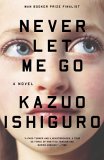
by Kazuo Ishiguro
A tale of deceptive simplicity that slowly reveals an extraordinary emotional depth and resonance – and takes its place among Kazuo Ishiguro's finest work.
by Sylvia Plath
Esther Greenwood, a talented college student interning at a New York magazine in the summer of 1953, watches herself disappear into depression. Plath’s semi-autobiographical novel is one of the few books that captures the interior experience of mental collapse — and it remains the definitive literary account of young women’s ambition and its costs.
by Haruki Murakami
A Tokyo student in the late 1960s is haunted by the suicide of his best friend and falls into an aching, impossible relationship with the friend’s girlfriend. Murakami’s most realistic novel is a coming-of-age book about loss as initiation — and about the specific grief of the young for the young.
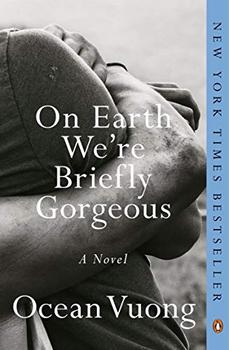
by Ocean Vuong
Poet Ocean Vuong's debut novel is a shattering portrait of a family, a first love, and the redemptive power of storytelling.
by Curtis Sittenfeld
Lee Fiora earns a scholarship to a New England boarding school and spends the next four years learning, mostly, how class works. Sittenfeld’s 2005 debut is bracingly honest about social ambition and self-sabotage — the coming-of-age novel that American elite education produced and then tried to suppress.
BookBrowse members get full access to professional reviews, reading guides, and discussion questions for all 10 books above — free.
Join BookBrowse freeAlready a member? Log in →
Your guide toexceptional books
BookBrowse seeks out and recommends the best in contemporary fiction and nonfiction—books that not only engage and entertain but also deepen our understanding of ourselves and the world around us.
