
-
Your next favorite book
is waiting.
“Bring home the bacon” means to earn a living; provide for one’s family.
Many scholars believe that the genesis of this idiom dates back to 1104 CE. Legend has it that the wealthy Lord Fitzwalter and his wife dressed as humbly as possible and presented themselves to the Augustinian Priory of Little Dunmow in Essex, England, requesting a blessing for their marriage. The Prior, impressed with their devotion, gave them a flitch (side) of bacon. Fitzwalter revealed his true identity at that point and gave the priory land on the condition that a flitch of bacon be given to any couple who could prove they were similarly devoted.
Over time this evolved into an extremely popular and well-attended event known as the Dunmow Flitch Trials. Couples applying for the flitch were to appear before a judge and jury (comprised of six maidens and six unmarried men) and present their case, with contestants seeking to convince the panel that they hadn’t quarreled with their spouse “in a year and a day.”
The Trials are mentioned in The Vision and Creed of Piers Ploughman, a 1362 poem by William Langland (“Though they go/to Dunmow/they never fetch/the Flitch.”). Geoffrey Chaucer also references it in The Canterbury Tales' “The Wife of Bath's Tale” (1395):
But never for us the flitch of bacon though,
That some may win in Essex at Dunmow.
More expressions and their source
Challenge yourself with BookBrowse Wordplays
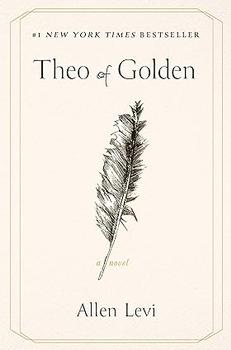
Theo of Golden by Allen Levi
One spring morning, a stranger arrives in the small southern city of Golden. No one knows where he has come from…or why…




Your guide toexceptional books
BookBrowse seeks out and recommends the best in contemporary fiction and nonfiction—books that not only engage and entertain but also deepen our understanding of ourselves and the world around us.

