-
Your next favorite book
is waiting.
Someone who’s very popular may be referred to as the toast of the town.
This saying begins with toast — the way we prepare bread from time to time, particularly for breakfast. Toast has been around for centuries, and it’s thought that the practice was originated by Egyptians around 3000 BCE as a way to use stale bread.
The practice of saving bread by toasting it made its way to Rome, where the word for toast — tostum, meaning “scorched” — came into being. (Incidentally, it was illegal to serve Rome’s elites darkened bread under penalty of law.)
The Greeks started the practice of raising a goblet of wine at dinner parties, and this was adopted by Romans (as was much of Greek culture). Wine was served in pitchers, and the host would pour wine from it into their own goblet and drink it in front of the guests, demonstrating that the beverage wasn’t poisoned. This evolved into the host saluting the assembly with kind words before consuming the liquid.
Here’s where the toast comes in: Romans figured out that placing toasted breadcrumbs in the wine reduced its acidity. Saluting one’s guests with wine to which charred bread was added eventually became known as a toast. The practice of drinking to another’s health became so important in Roman culture that it was decreed that a toast to the Emperor be included at every meal.
The practice of putting toast in wine continued for centuries and spread all over Europe. By Shakespeare’s day, it was common practice. In Act III, Scene V of his Merry Wives of Windsor, Falstaff calls for a quart of sack (a fortified wine similar to sherry) and tells Bardolph to “put a tost in’t.”
In England, all-male drinking clubs became popular in the late 17th/early 18th centuries, where members continued adding toast to their wine and saluting one another. The “toast” became a euphemism for the woman who was currently the belle of society, and club members were invited to raise a glass to her — the toast of the town. Over time, the idiom came to be applied to anyone who was exceptionally popular.
The phrase is still used, although perhaps not as commonly as it once was. It may even be applied critically, where to be called the toast of the town isn’t meant as a compliment.
Interestingly, the term “toast” has also come to mean that someone’s in trouble (e.g., “You’re toast!”). According to Phrases.org.uk, it came from the 1984 film Ghostbusters. “The scriptwriters wrote the line ‘I’m gonna turn this guy into toast’ but what Bill Murray, in his role as Dr. Peter Venkman, said was ['This chick is toast.'] It is quite likely that the expression was US street slang that was taken up by the Ghostbusters’ writers, but the film is what propelled it into the popular consciousness.”
More expressions and their source
Challenge yourself with BookBrowse Wordplays
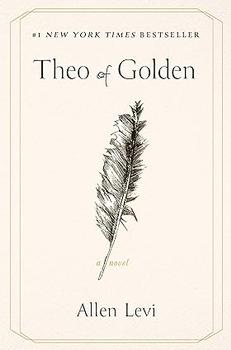
Theo of Golden by Allen Levi
One spring morning, a stranger arrives in the small southern city of Golden. No one knows where he has come from…or why…

Your guide toexceptional books
BookBrowse seeks out and recommends the best in contemporary fiction and nonfiction—books that not only engage and entertain but also deepen our understanding of ourselves and the world around us.