
-
Your next favorite book
is waiting.
When the person who’s responsible for order isn’t around for one reason or another, some will take advantage of the situation and misbehave. Examples include students getting rowdy when their teacher leaves the room, teenagers throwing a party when their parents are absent for the weekend, or employees leaving early if the boss isn’t around.
The core of this proverb is actually quite ancient, with some speculating that it began as one of Aesop's fables. If Aesop existed at all — a fact still hotly debated — it’s thought he was a Greek storyteller who lived around 600 BCE. There’s no existing tale that illustrates this particular moral, but the saying’s age and reliance on animals acting anthropomorphically lead many to draw parallels to the other works attributed to this legendary figure.
Regardless of who first coined it, the earliest version of the phrase shows up in the 14th century, in Latin: “Dum felis dormit, mus gaudet et exsi litantro,” which translates to “When the cat sleeps, the mouse leaves its hole, rejoicing.” The proverb was so apt and easily relatable that it began showing up all over Europe, starting in the 14th century. According to History of English, examples include:
- French: “Ou chat na rat regne” (“Where there is no cat, the rat is king”)
- Spanish: “Cuando el gato no está los ratones hacen fiesta” (“When the cat is away, the mice have a party”)
- German: “Wenn die Katze aus dem Haus ist, tanzen die Mäuse auf dem Tisch” (“When the cat is away, the mice dance on the table”)
- Russian: "bez kata mysham razdolje’" (“Without a cat, mice have freedom”)
But there's a saying very old and true,
'If that you will France win,
Then with Scotland first begin:'
For once the eagle England being in prey,
To her unguarded nest the weasel Scot
Comes sneaking and so sucks her princely eggs,
Playing the mouse in absence of the cat,
To tear and havoc more than she can eat.
More expressions and their source
Challenge yourself with BookBrowse Wordplays
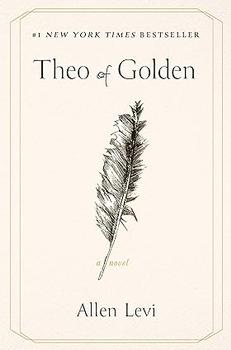
Theo of Golden by Allen Levi
One spring morning, a stranger arrives in the small southern city of Golden. No one knows where he has come from…or why…






Your guide toexceptional books
BookBrowse seeks out and recommends the best in contemporary fiction and nonfiction—books that not only engage and entertain but also deepen our understanding of ourselves and the world around us.

