Why do we say "The apple of my eye"?

Well-Known Expressions

The apple of my eye

Meaning:

The apple of one’s eye is something or someone that’s cherished.

Background:

Originally the “apple of the eye” was an anatomical term, referring literally to the eye’s aperture, aka the pupil. It’s believed the word derives from the Anglo-Saxon “arppel,” which meant both apple and pupil. At the time the pupil was thought to be a round, solid object like an apple, hence the connection.

The phrase is one of the older ones still popular today, dating back at least 1400 years. Its first known appearance in English was in a work by King Alfred of Wessex in 885 CE – a translation of Cura pastoralis (Pastoral Care, 590 CE) by Pope Gregory the Great. Interestingly, Aelfred’s translation was the first time the word “apple” appeared in English in print in any context.

It’s also used several places in the King James version of the Bible (1611), specifically in the Old Testament:

- Deuteronomy 32:10: He found him in a desert land, and in the waste howling wilderness; he led him about, he instructed him, he kept him as the apple of his eye.
- Psalm 17:8: Keep me as the apple of the eye, hide me under the shadow of thy wings.
- Proverbs 7:2: Keep my commandments, and live; and my law as the apple of thine eye.
- Lamentations 2:18: Their heart cried unto the Lord, O wall of the daughter of Zion, let tears run down like a river day and night: give thyself no rest; let not the apple of thine eye cease.

The phrase employed in these verses is ‘iyshown 'ayin. It may mean “dark of the eye,” but many feel ‘iyshown is the diminutive of the word for man - 'iysh – which would make the translation closer to “little man of the eye” – which kind of makes sense. Regardless, the scholars and clergymen responsible for the KJV translated ‘iyshown to the world “apple,” and so it remains in most versions of the Bible available today. In these verses the idiom can be read either as the physical center of the eye or as the object of adoration.

William Shakespeare used the term as well, although he was clearly referring to its definition as a part of one’s anatomy. In A Midsummer Night's Dream, the fairy king Oberon instructs his servant Puck to drop a love potion in a young man’s eyes:

Flower of this purple dye,
Hit with Cupid's archery,
Sink in apple of his eye.
When his love he doth espy,
Let her shine as gloriously
As the Venus of the sky.
When thou wak'st, if she be by.
Beg of her for remedy.

Surprisingly, the idiom actually wasn’t common until the early 19th century. In 1816, it appeared in Sir Walter Scott’s novel, Old Mortality (“Poor Richard was to me as an eldest son, the apple of my eye.”) At that point, the phrase entered popular culture and has been widely used since.

More expressions and their source

Challenge yourself with BookBrowse Wordplays
BookBrowse Book Club

  • Book Jacket
    How to Kill a Crime Writer
    by Sarah Lotz
    A young woman joins forces with her late mother's fictional heroine to solve her murder.
  • Book Jacket
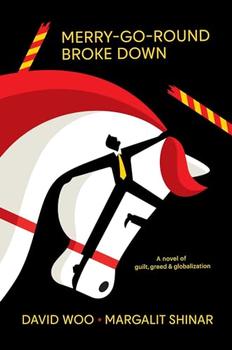
    Merry-Go-Round Broke Down
    by David Woo, Margalit Shinar
    Nine linked stories reveal how globalization sparks life-changing consequences across continents.
  • Book Jacket
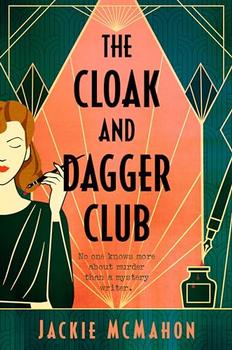
    The Cloak and Dagger Club
    by Jackie McMahon
    Inspired by Agatha Christie's Detection Club, a murder mystery and second-chance romance collide.

Members Recommend

  • Book Jacket
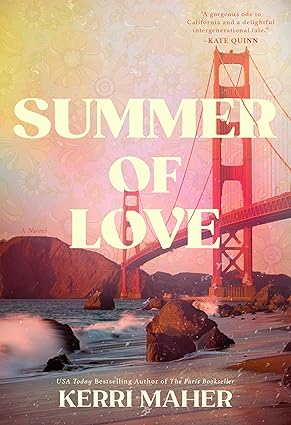
    Summer of Love
    by Kerri Maher
    Three women reshape their family's Napa Valley winery after the 1967 Summer of Love.
  • Book Jacket
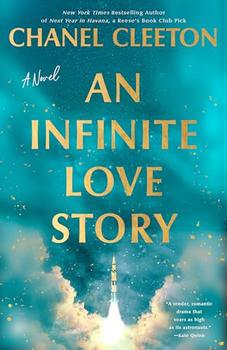
    An Infinite Love Story
    by Chanel Cleeton
    “A tender, romantic drama that soars as high as it’s astronauts.” —Kate Quinn
  • Book Jacket
    Tenderness
    by Rowan Beaird
    A 1970s island wedding is threatened when a bride's sinister former cult resurfaces.
  • Book Jacket
    Henry Tudor Must Die
    by Jillian Laine
    One exiled. One condemned. Two queens unite for revenge against Henry VIII.
Who Said...

Children are not the people of tomorrow, but people today.

Click Here to find out who said this, as well as discovering other famous literary quotes!

Book
Trivia
  • Book Trivia

    Can you name the title?

    Test your book knowledge with our daily trivia challenge!

Wordplay

Solve this clue:

Y C T an O D N T

and be entered to win..

Your guide toexceptional          books

BookBrowse seeks out and recommends the best in contemporary fiction and nonfiction—books that not only engage and entertain but also deepen our understanding of ourselves and the world around us.